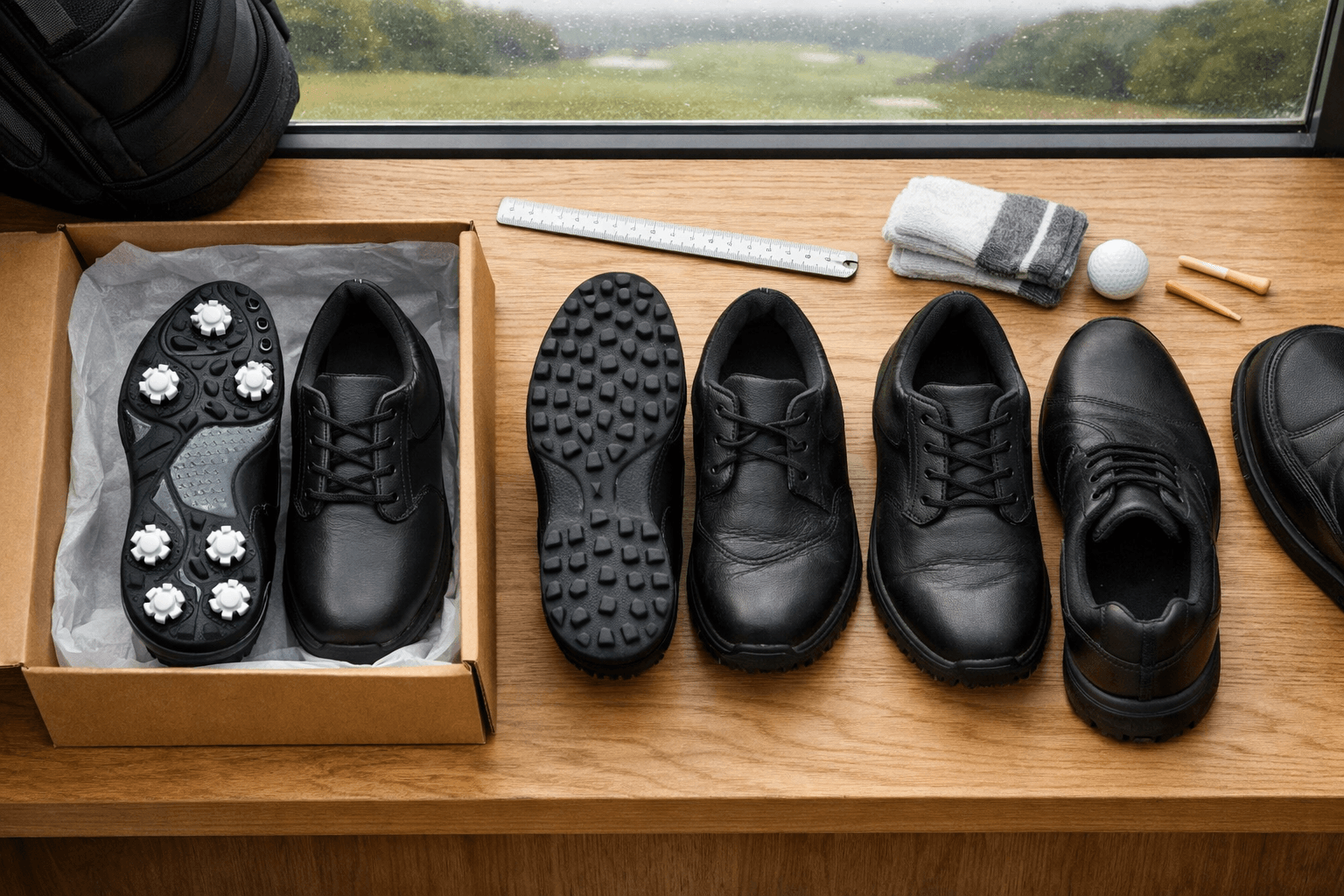
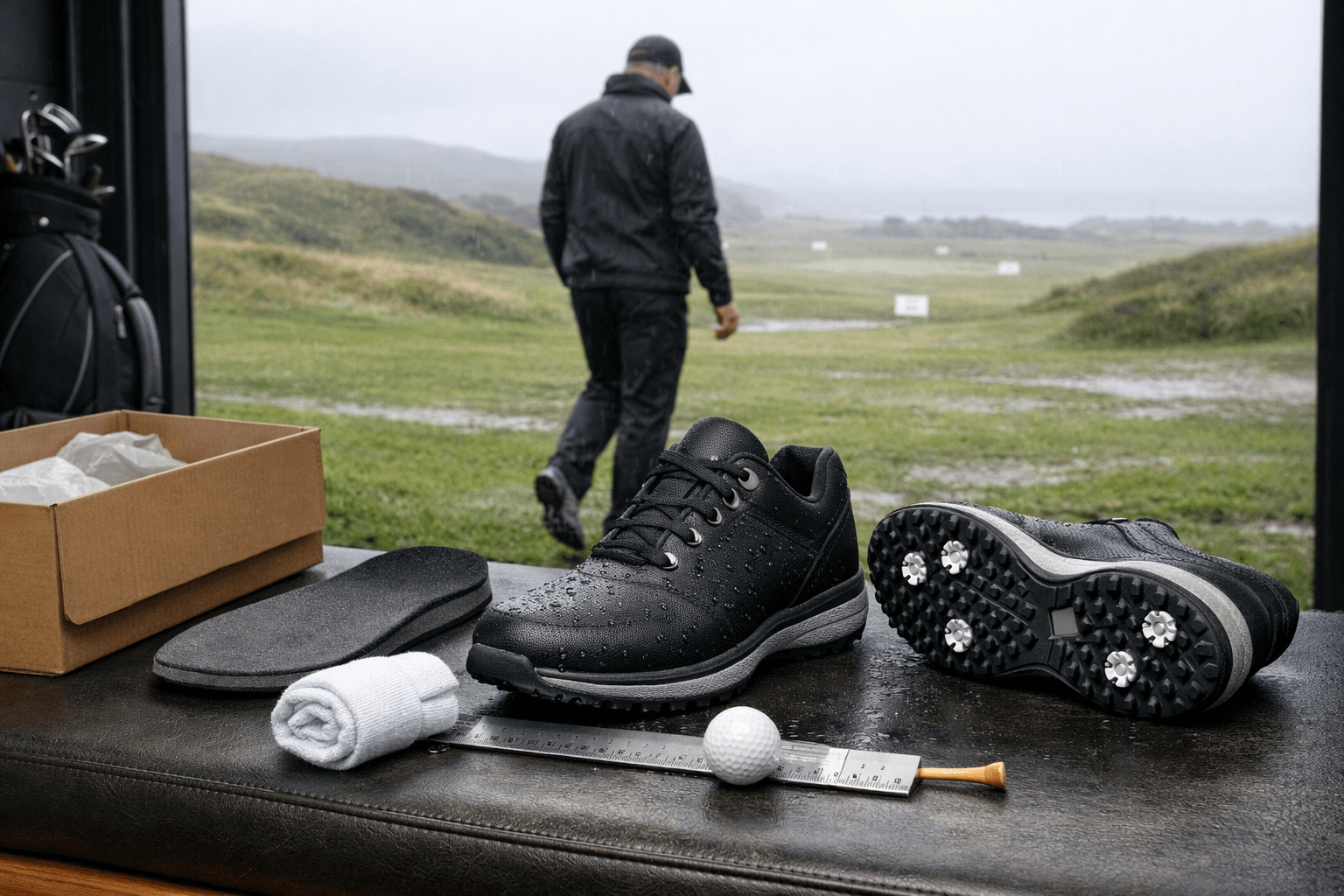
Your feet will slide on a wet fairway before your swing ever falls apart. That’s the moment most golfers realise their shoes have been the weak link all along. If you’re shopping for golf shoes men actually wear round on soggy links and dry parkland alike, fit and traction matter more than the logo on the side.
Most people buy golf shoes the way they buy trainers, then wonder why their heel slips mid-downswing or their toes go numb by the back nine. Golf shoes work differently, and getting the basics right saves you money and blisters.
Why Fit Matters More Than Style in Golf Shoes Men Buy
The right fit means a snug heel, secure midfoot and roughly a thumb’s width of room at the toe, not the loose, cushioned feel of a casual trainer. Golf shoes need to lock your foot down during the swing, because any slide inside the shoe costs you power and accuracy.
A lot of beginners size golf shoes exactly like their Nike Air Max or New Balance trainers. That’s the wrong approach. Golf shoes are built for lateral stability, not straight-line running, so a shoe that feels roomy standing still can feel unstable the moment you rotate through impact.
Getting Width Right
Standard, wide and occasionally narrow fits exist for a reason. If you’ve got a broader foot and squeeze into a standard width, expect blisters on the outside edge of your little toe within a few rounds. Brands like FootJoy and Adidas both offer wide options in their popular ranges, and it’s worth trying both in-store before ordering online.
The Break-In Trap
Never wear brand-new golf shoes for the first time in a competition or a big society day out. Leather and synthetic uppers need a handful of rounds, sometimes 3 to 5, to soften around the ankle and forefoot. Wear them on the range or a casual nine-holer first, and you’ll dodge the hot-spot blisters that ruin an otherwise good scorecard.
Spiked vs Spikeless: The Traction Decision Nobody Explains Properly
Spikeless shoes give you enough grip for dry, flat courses and everyday practice, while soft spikes are the better call on wet, hilly or heavily sloped layouts. This is the decision most guides skip, and it’s the one that actually stops you slipping mid-swing.
Spikeless outsoles use dense rubber lug patterns, similar to a hiking shoe. They’re comfortable, lightweight and fine for a firm summer round at somewhere like a dry municipal course in July. But drop the same shoe onto a wet, sloping fairway after a typical British autumn downpour, and that grip advantage disappears fast.
Soft-spike shoes, using replaceable cleats (Q-Lok or Pins-style fittings are common on FootJoy and Puma models), bite into turf and hold you steady on side-slopes and damp ground. If you play a links course on the Ayrshire or Kent coast, or anywhere with real elevation change, soft spikes aren’t a luxury. They’re the difference between a balanced finish and a swing that ends with your back foot skidding out from under you.
Matching Traction to Your Course and Swing
Firm, dry, flat course: spikeless is fine and more comfortable for walking 18.
Wet or heavily dew-covered mornings: soft spikes, no exceptions.
Hilly or links-style courses: soft spikes for stability on slopes.
Aggressive, fast swing with a big weight shift: soft spikes reduce slip risk.
Casual pitch-and-putt or driving range sessions: spikeless, save the spikes for the course.
Buying one pair and expecting it to cover every condition is the mistake. Serious golfers often keep two pairs and rotate based on the forecast.
Waterproofing, Cushioning and Breathability: The Comfort Trio
Waterproofing keeps your socks dry through a wet round, cushioning protects your joints over 18 holes of walking, and breathability stops your feet overheating in summer. Skimp on any one of these and comfort falls apart by hole 12.
Most mid-range and premium golf shoes now carry a waterproof membrane, often with a one or two-year waterproof guarantee from the manufacturer. FootJoy’s Pro/SL and HydroLite ranges, and Adidas’s Tour360, are built specifically around this. Cheaper spikeless casual shoes sometimes skip the membrane entirely, so check the spec before assuming any golf shoe is rain-ready.
Cushioning technology has moved on hugely from flat foam soles. Boost foam (Adidas), DNA cushioning (FootJoy) and various gel inserts across Nike and Puma ranges all aim to absorb impact over a 6 to 10 kilometre walk, which is roughly what an 18-hole round covers. If you already suffer from sore knees or lower back pain, don’t cheap out here.
Breathable mesh uppers matter more than people realise on warm days. A fully waterproof shoe with no breathable panel can leave your feet sweating by the turn, so look for a balance rather than maximum waterproofing at all costs.
Price, Brands and When to Replace Your Golf Shoes
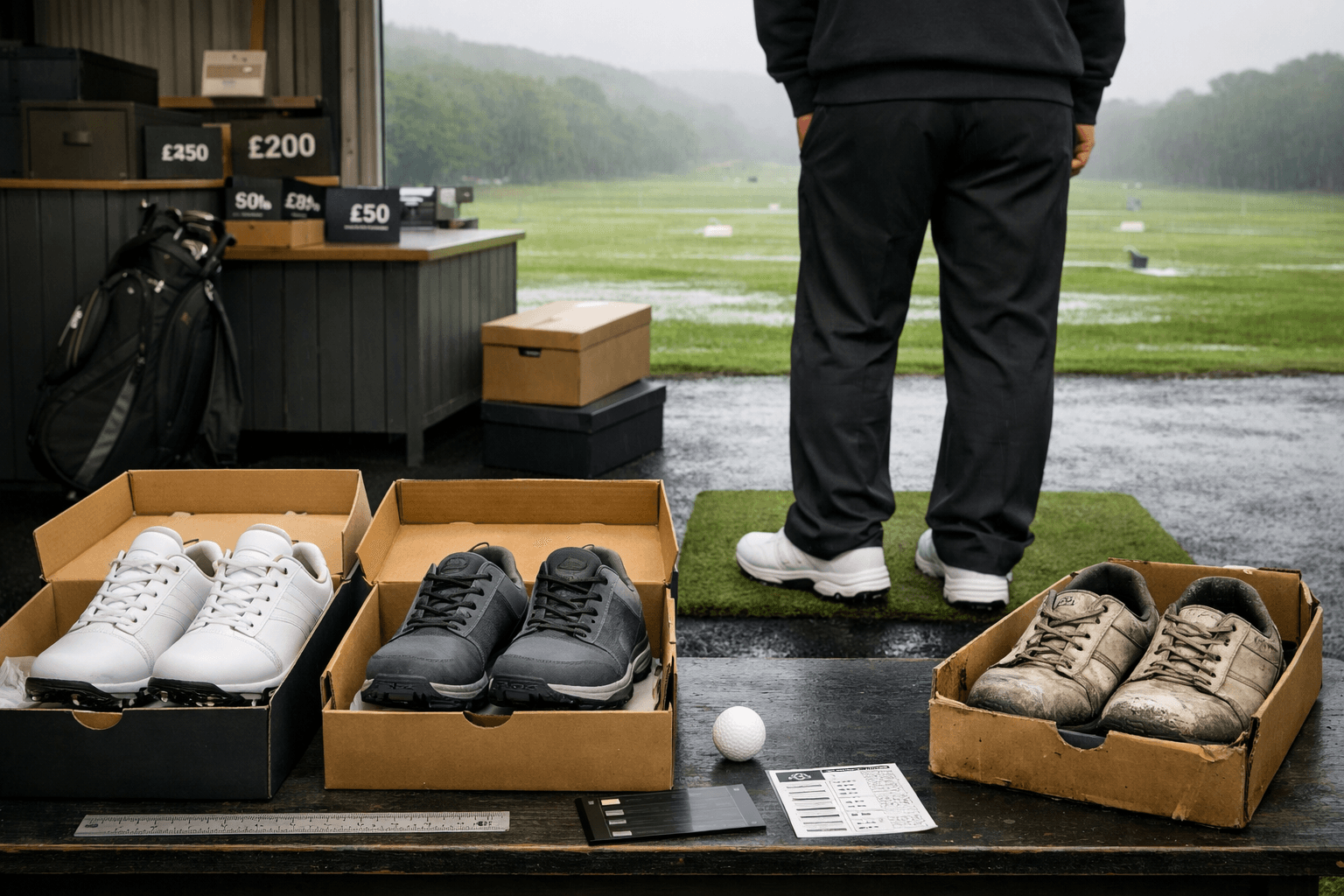
Budget spikeless shoes from Puma or Skechers Go Golf start around £60 to £80, mid-range spiked options from FootJoy, Adidas and Nike sit between £90 and £140, and premium tour-level shoes (FootJoy Premiere, Adidas Tour360) run £150 to £200. Pay for the traction and waterproofing you’ll actually use, not the flashiest colourway.
Category
Typical Price (GBP)
Best For
Budget spikeless
£60–£80
Casual rounds, driving range
Mid-range spiked
£90–£140
Regular weekend golfers, mixed conditions
Premium tour-level
£150–£200
Frequent players, all-weather links golf
Replace your golf shoes when the outsole grip visibly wears smooth, the upper cracks at the flex points, or the waterproofing stops working after heavy rain leaves your socks damp. For someone playing weekly, that’s typically every 12 to 18 months. Occasional players can often stretch a decent pair to 2 or 3 years.
If you’re building a full beginner kit rather than just replacing shoes, golfyet.com has a wider gear checklist that’s worth a look before you spend on anything else.
Frequently Asked Questions
Do golf shoes really need to fit differently to trainers?
Yes. Golf shoes should feel snug through the heel and midfoot with a thumb’s width of toe room, unlike the looser fit of a casual trainer, because lateral stability during the swing matters more than straight-line comfort.
Are spikeless golf shoes actually any good, or just a comfort compromise?
Spikeless shoes give solid grip on dry, firm courses and are genuinely comfortable for walking, but they lose their edge on wet or sloping ground, where soft spikes hold your footing far better.
How long should I wear golf shoes before playing an important round in them?
Break them in over 3 to 5 casual rounds or range sessions first. Wearing brand-new shoes straight into a competition risks blisters exactly where you can’t afford a distraction.
Golf tournaments, especially charity events and fundraisers, frequently adopt the scramble format due to its engaging team dynamics and faster play pace.The team format allows golfers of various skill levels to participate together, creating a…
The concept of "bedroom golf" has been a humorous euphemism for decades, carrying its own set of rules and guidelines that have been passed down through generations as a form of adult humor.This playful "game"…
Zero major championships. Twenty-plus years inside the world's top 25. That combination alone makes Matt Kuchar one of the strangest success stories in modern golf, and it's exactly why so many casual fans search "kuchar…