The Italian Open golf tournament has been running since 1925, making it one of the oldest national open championships in Europe. That’s not a typo. While many fans assume it’s a relatively modern event, the Italian Open predates most of what we now think of as the professional tour circuit. Today it’s a full DP World Tour sanctioned event, carrying real ranking points and serious prize money — not a regional curiosity.
If you’ve been watching European Tour coverage and wondered about the tournament’s backstory, you’re in the right place. The history here is genuinely interesting, and it tells you a lot about how professional golf grew across the continent.
Key Takeaways
Italian Open dates to 1925 — one of Europe’s oldest national opens
WWII caused a 12-year gap; sponsorship issues caused shorter ones
Flory Van Donck leads all-time wins with four titles (1953–1960)
Seve Ballesteros won three times; Rory McIlroy won 14 years apart
Marco Simone’s 2023 Ryder Cup hosting elevated the Italian Open’s global profile
Prize fund reached ~€7M in 2023, firmly upper-tier DP World Tour
A Tournament Born in 1925: The Italian Open’s Long Road to the DP World Tour
The first Italian Open was played in 1925, putting it in the same era as some of golf’s oldest majors. That’s nearly a century of history. For most of that time, it ran under the umbrella of what became the European Tour, and today it sits firmly on the DP World Tour schedule as a co-sanctioned event drawing top-ranked players from around the world.
The Italian Open is one of only a handful of national open championships in Europe with an unbroken lineage stretching back to the 1920s, placing it among the continent’s most historically significant professional events.
The tournament didn’t always look the way it does now. Prize funds were modest, fields were smaller, and the event struggled at times to maintain consistency. But its longevity alone earns it a place in the conversation about European golf’s most important tournaments.
How Wartime Gaps and Venue Rotations Shaped the Tournament’s Identity
The Italian Open’s history isn’t a clean, uninterrupted line — and that’s actually what makes it interesting. The gaps and the constant venue changes tell you more about European professional golf than a simple winners list ever could.
The Interrupted Years: Gaps That Reflect European Golf’s Bigger Story
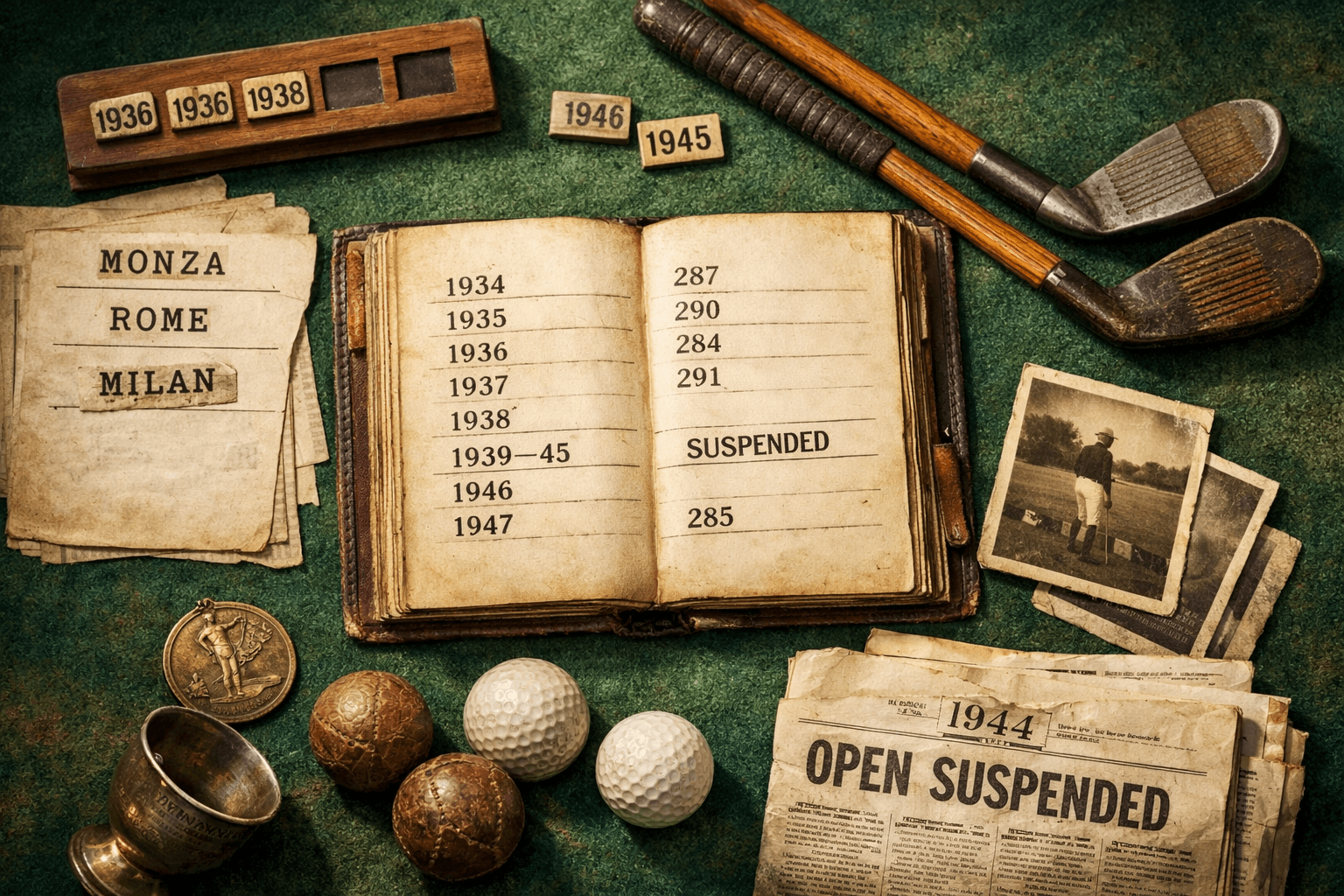
The most significant interruption came during World War II. The Italian Open went dark from 1935 through 1947, a 12-year gap that mirrored the broader collapse of organized professional sport across Europe during the war years. This wasn’t unique to Italy — many national opens on the continent faced similar suspensions — but the Italian Open’s break was one of the longer ones.
There were also shorter gaps in the decades that followed, often tied to sponsorship difficulties and organizational changes rather than any geopolitical crisis. Professional golf in Europe didn’t have the same commercial infrastructure that the PGA Tour had built in the United States, so events like the Italian Open were sometimes vulnerable to losing a title sponsor and going dark for a year or two. The fact that the tournament kept coming back each time is worth noting.
When the European Tour (now rebranded as the DP World Tour) formalized its structure in the early 1970s, events like the Italian Open gained more stability. Consistent scheduling and shared prize fund structures gave national opens a foundation they hadn’t had before.
Rotating Courses and What That Tells You About Italian Golf Culture
Unlike the British Open, which rotates among a fixed rota of links courses, the Italian Open has never settled on a permanent home. Over the decades it has been played at courses across northern and central Italy, including venues in Rome, Milan, and the surrounding regions.
This rotation reflects something real about Italian golf culture: the sport has historically been concentrated in pockets rather than spread evenly across the country. Golf in Italy grew up around private clubs in wealthier urban areas, which meant there was no single iconic venue that naturally claimed the tournament year after year.
From a practical standpoint, the rotating format also meant the Italian Open’s character changed depending on where it landed. A parkland course outside Rome plays very differently from a tighter layout near Milan. Players couldn’t build a specific game plan around a known venue the way they might for Augusta or St Andrews. That kept the tournament somewhat unpredictable from a betting and fan perspective, which some viewers find appealing.
The arrival at Marco Simone Golf and Country Club in recent years changed that dynamic significantly, giving the Italian Open a flagship venue with genuine international recognition.
The Champions Who Defined the Italian Open
The Italian Open’s winners list reads like a who’s who of European golf, with some of the sport’s biggest names appearing multiple times. The tournament has consistently attracted elite fields, especially since the European Tour’s consolidation in the 1970s and 1980s.
Player
Wins
Years
Flory Van Donck
4
1953, 1956, 1958, 1960
Seve Ballesteros
3
1978, 1983, 1984
Colin Montgomerie
2
1992, 2002
Rory McIlroy
2
2009, 2023
Ian Woosnam
2
1987, 1988
Seve Ballesteros and the European Tour Era
Seve Ballesteros won the Italian Open three times: in 1978, 1983, and 1984. His victories track almost perfectly with the rise of the European Tour as a serious circuit. His 1978 win came when he was just 21 and already establishing himself as the most exciting player in European golf. By the time he won again in 1983 and 1984, he was a two-time Masters champion and the undisputed face of the tour.
Ballesteros winning three Italian Opens wasn’t a purely statistical achievement. It signaled that the tournament was attracting the best players at the peak of their powers, not just regional specialists filling out a schedule. His presence helped raise the event’s profile during a period when the European Tour was actively competing for legitimacy against the PGA Tour.
Rory McIlroy and the Modern Benchmark
Rory McIlroy first won the Italian Open in 2009 at age 19, which at the time made him one of the youngest winners in the tournament’s modern era. He returned to win again in 2023 at Marco Simone, the same course that had hosted the Ryder Cup just weeks earlier. That second win carried extra weight given the venue’s fresh international profile.
McIlroy’s 2023 victory came with a prize fund of roughly €7 million for the overall event, reflecting how significantly the DP World Tour’s commercial scale has grown. The gap between his two Italian Open wins is 14 years, itself a record of how much the tournament changed over that stretch.
Multiple Winners Worth Knowing
The Belgian player Flory Van Donck is the Italian Open’s all-time multiple-win leader with four victories between 1953 and 1960, a run that’s easy to overlook because it predates most fans’ frame of reference for European golf. Ian Woosnam won back-to-back in 1987 and 1988. Colin Montgomerie claimed the title in 1992 and again a full decade later in 2002. Back-to-back wins and decade-spanning wins both tell you something about how the tournament rewards players who understand its varying conditions across different host venues.
Marco Simone and the Ryder Cup Connection
Marco Simone Golf and Country Club, located about 20 miles northeast of Rome in Guidonia Montecelio, is now the Italian Open’s most recognizable home. The course’s connection to the 2023 Ryder Cup turned it from a respected Italian venue into one of the most watched golf courses in the world during a single September week.
Why Marco Simone Became the Center of Italian Golf
The course was selected to host the 2023 Ryder Cup after years of investment in its infrastructure and layout. Parkland design with elevation changes and water features made it visually distinctive on television, which matters enormously for a tournament trying to grow its international audience. Italy had never hosted the Ryder Cup before 2023, so the selection was a genuine milestone for the country’s golf scene.
The Italian Open had been played at Marco Simone in the years leading up to the Ryder Cup, which was a deliberate strategy to build familiarity with the course among tour professionals. Hosting the Italian Open there wasn’t a coincidence — it was groundwork.
Here’s what that connection produced in practical terms:
Course infrastructure received significant upgrades ahead of the 2023 Ryder Cup, directly benefiting the Italian Open’s production quality.
International broadcast deals for the Ryder Cup brought Marco Simone to audiences in markets that had never followed Italian golf.
European and American Ryder Cup players became familiar with the course, raising the competitive credibility of the Italian Open field.
Spectator facilities expanded to handle Ryder Cup crowds, giving the Italian Open a venue that could support large attendance numbers.
Sponsorship interest in the Italian Open increased after the Ryder Cup’s global exposure put Marco Simone on the map.
How Hosting the 2023 Ryder Cup Changed the Course’s Profile
Europe won the 2023 Ryder Cup 16.5 to 11.5, and the images of packed grandstands around Marco Simone’s finishing holes were broadcast globally. That visibility attached itself permanently to the course’s identity. When Rory McIlroy won the Italian Open at Marco Simone just weeks after the Ryder Cup concluded, the venue already carried a weight that most Italian Open host courses had never had.
The course’s greens complex design — with several severely sloped putting surfaces — drew attention from analysts during Ryder Cup coverage and gave the Italian Open a built-in talking point that extends well beyond Italian golf fans.
Prize Money, Format, and Where the Italian Open Stands on the DP World Tour Today
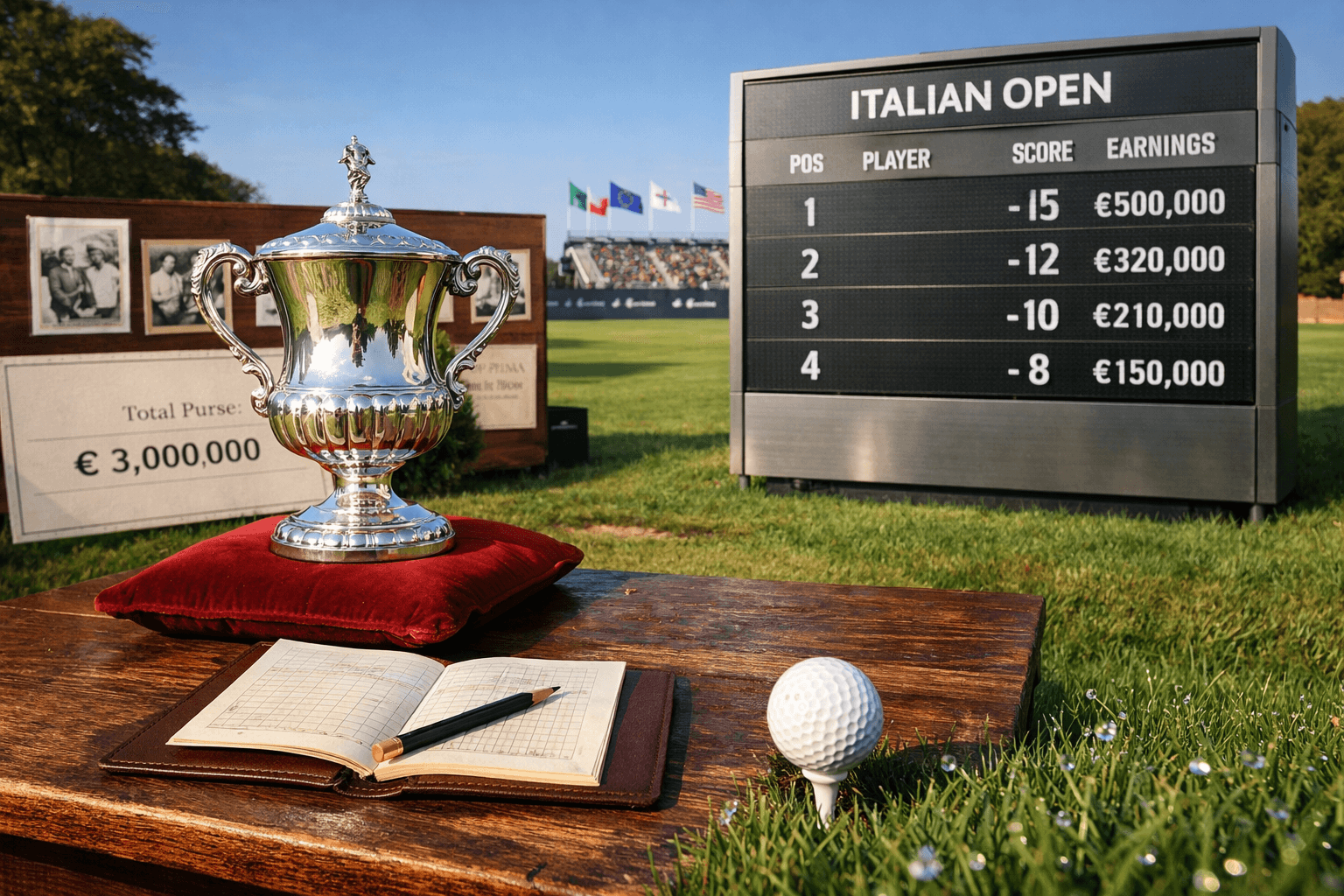
The Italian Open is a full DP World Tour sanctioned event, which means it counts toward the Race to Dubai season-long standings and draws a field of roughly 150 players. The 2023 edition carried a total prize fund of approximately €7 million, placing it in the upper tier of regular European Tour events. It’s not at the level of a Rolex Series event, but it sits well above the tour’s baseline events.
The format is standard 72-hole strokeplay over four days, with a cut after 36 holes that typically reduces the field to around 65 players plus ties. Players who make the cut earn Race to Dubai points, which adds strategic value beyond the prize money itself for anyone chasing end-of-season rankings.
The Italian Open’s current position on the calendar, usually in late summer or early autumn, puts it in a competitive stretch of the schedule when top players are actively accumulating points. That timing helps the field quality. It’s not a tournament players skip lightly if they’re in a rankings battle.
The event has held co-sanctioned status with other tours at various points, which has occasionally brought in players from outside the DP World Tour’s regular membership.
Most Memorable Moments in Italian Open History
A few moments stand out beyond the winners list.
Seve Ballesteros’s 1978 victory at age 21 is the oldest on this list, but it’s the one that set the tone for what the Italian Open could be. He was already playing with the kind of improvised creativity that made European golf genuinely exciting, and winning in Italy added to a run of form that announced him as the continent’s next superstar.
Rory McIlroy’s 2009 win at age 19 remains one of the tournament’s most-cited results because of how early it came in his career. He hadn’t yet won a major, but the Italian Open showed he could close out a professional field under pressure.
The 2023 edition produced a different kind of memorable moment. Playing the same course that had hosted the Ryder Cup weeks earlier, McIlroy won his second Italian Open title in front of a crowd that was still buzzing from the team event. The leaderboard that final Sunday included several Ryder Cup participants, which gave the finish an unusual sense of continuity from one event to the next.
Flory Van Donck’s four-win run through the 1950s deserves a mention too — four victories in eight years on a tour with far fewer events per season is a concentration of dominance that no one has matched since.
Frequently Asked Questions
When did the Italian Open golf tournament start?
The Italian Open first took place in 1925, making it one of the oldest national open tournaments in European golf. It predates the formal European Tour by decades. That’s easy to forget given how naturally it fits into the current DP World Tour calendar.
Has the Italian Open always been played at the same course?
No. The tournament has rotated across numerous Italian venues over its history, including courses in Milan, Rome, and the surrounding regions. Marco Simone Golf and Country Club near Rome is its most recent and prominent home, but no single course has held permanent host status.
Who has won the Italian Open the most times?
Belgian player Flory Van Donck holds the record with four victories, all between 1953 and 1960. Among more recent winners, Rory McIlroy has won twice, in 2009 and 2023, with 14 years between titles.
Is the Italian Open a major tournament or a minor regional event?
It’s a full DP World Tour sanctioned event, not a regional one. The 2023 edition carried a prize fund of approximately €7 million and awarded Race to Dubai points, putting it firmly in the upper tier of regular European Tour events. If you want a broader look at how tour events are structured and ranked, golfyet.com covers DP World Tour formats in plain terms worth bookmarking.
Searching "langer golf" brings up one man, not a brand: Bernhard Langer, the German who won the Masters in 1985 and 1993, became the first world No. 1 and starred in the Ryder Cup. He…
The luxury golf cart market has seen significant growth as golf enthusiasts seek to enhance their experience on the course. With the rise of premium golf carts, the game has become more enjoyable and accessible.Named…
The demand for premium personal transportation vehicles is on the rise, with many seeking comfort and luxury in their daily commutes, whether on or off the golf course.The Yamaha Drive2 PTV is a top contender…