Your driver goes 180 yards left of where you aimed, and you’ve got no clue why. Sound familiar? Most golfers don’t need another glossy photo of a tour pro mid-swing. They need to know why their ball curves the way it does and what single change actually fixes it.
Golf tips on swing improvement work best when they start with your fault, not a textbook ideal. A slice, a hook, and a fat shot all come from different root causes, and chasing a “perfect” model swing rarely solves any of them on its own.
Spot Your Fault Pattern Before Changing Anything
Every golfer has a repeating miss. Fix that one pattern and your scores drop faster than trying to rebuild your whole swing from scratch.
The Slice: Ball Curves Hard Right
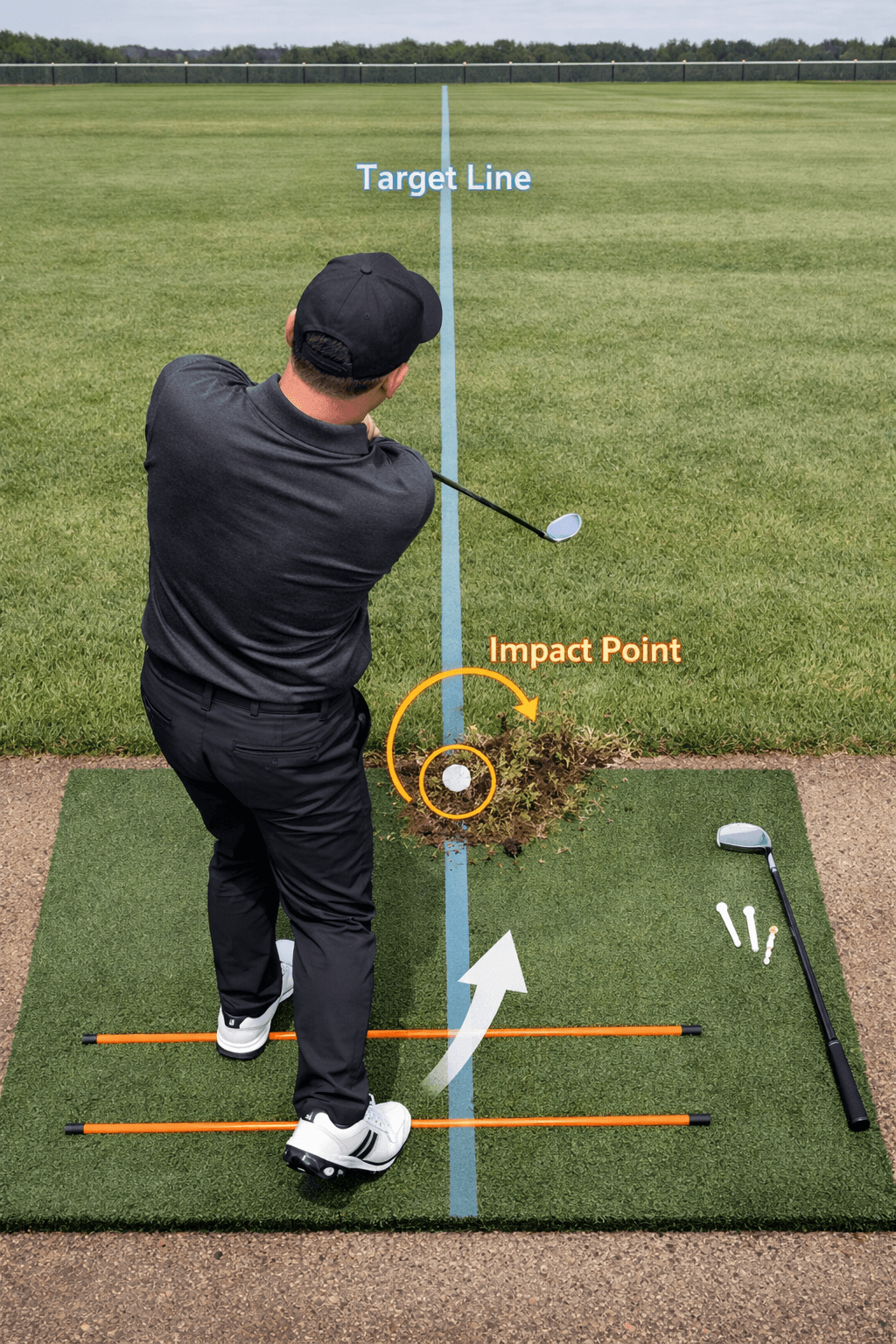
A slice happens because your clubface is open relative to your swing path at impact. Your swing path is cutting across the ball from outside to inside, and the face hasn’t squared up in time. The instinctive fix, aiming further left, actually makes it worse because it steepens the cut even more.
The real fix is closing the face and shallowing your path. Try feeling like you’re swinging out toward mid-off if you’re standing at the crease, rather than yanking the club across your body. Strengthen your grip slightly, rotating both hands a touch clockwise on the handle, and the ball starts finding the middle of the fairway again.
The Hook: Ball Dives Left
A hook is the slice’s evil twin: face closed relative to path, often from an over-strong grip or too much hand rotation through impact. Weekend golfers who’ve “fixed” a slice by strengthening their grip too far often swing straight into this one.
Ease the grip back toward neutral and let your body rotation, not your hands, close the face naturally.
The Fat Shot: Chunked Ground Before Ball
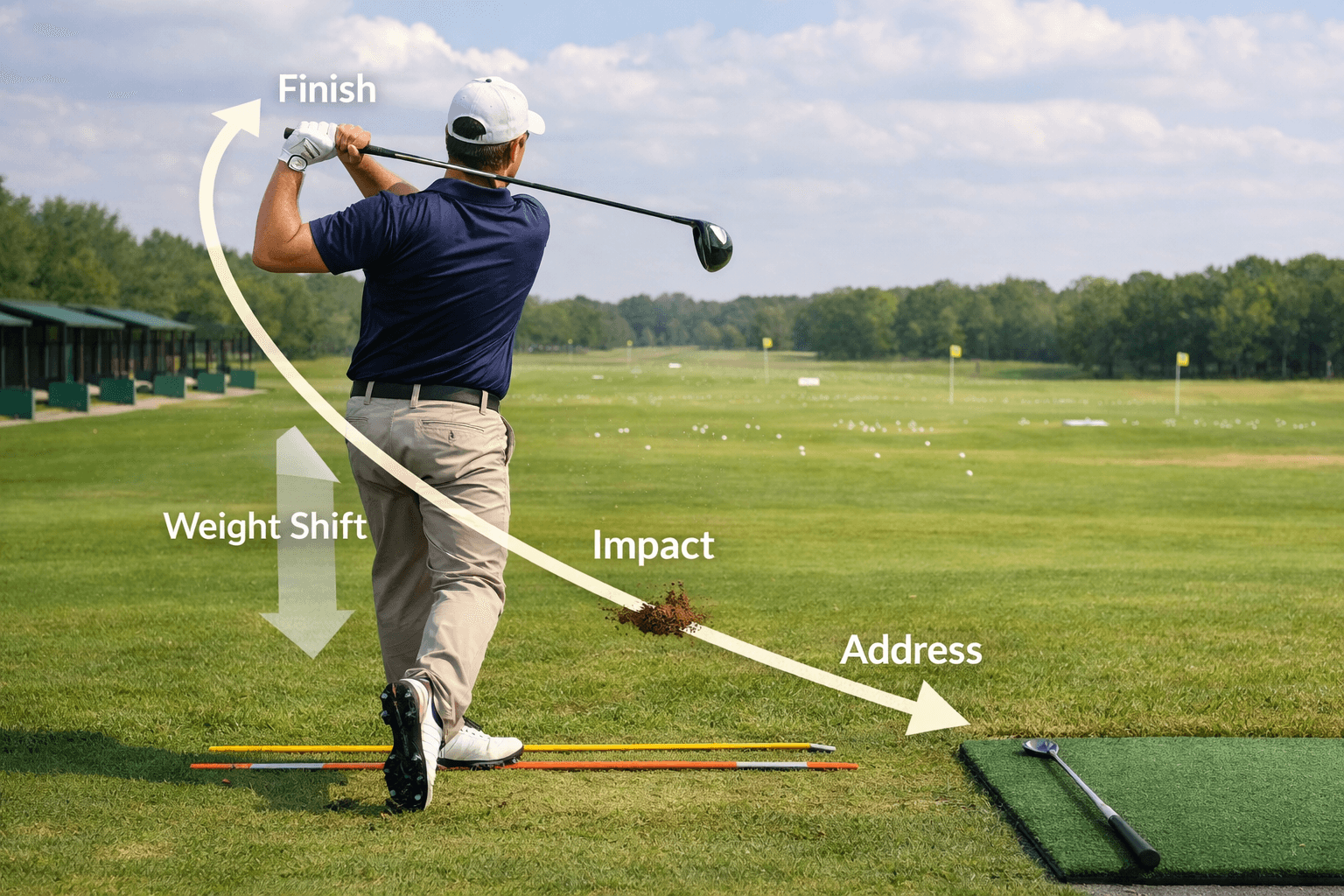
Fat shots come from weight staying on your back foot at impact instead of shifting forward. You’re essentially trying to lift the ball rather than compress it. Shift roughly 70% of your weight onto your front foot by the time the club reaches the ball, and the club bottoms out after contact instead of before it.
Grip and Setup: The Foundation Most Golfers Rush
Your grip and stance decide 80% of what happens before you even start the club moving. Get this wrong and no amount of swing thoughts will save you.
Grip Pressure Matters More Than Grip Style
Whether you use an overlap, interlock, or ten-finger grip, pressure matters more than style. Gripping the club like you’re strangling it restricts your wrist hinge and kills clubhead speed. Aim for a grip pressure around a 4 out of 10, firm enough to control the club, loose enough to let your wrists hinge freely on the backswing.
Stance Width and Posture
Set your feet roughly shoulder-width apart for a mid-iron, widening slightly for a driver. Bend from your hips, not your waist, with a straight-ish back and knees softly flexed. Ball position shifts forward as the club gets longer, from just behind centre with a wedge to inside your front heel with a driver.
Backswing, Downswing, and the Rotation Nobody Trusts
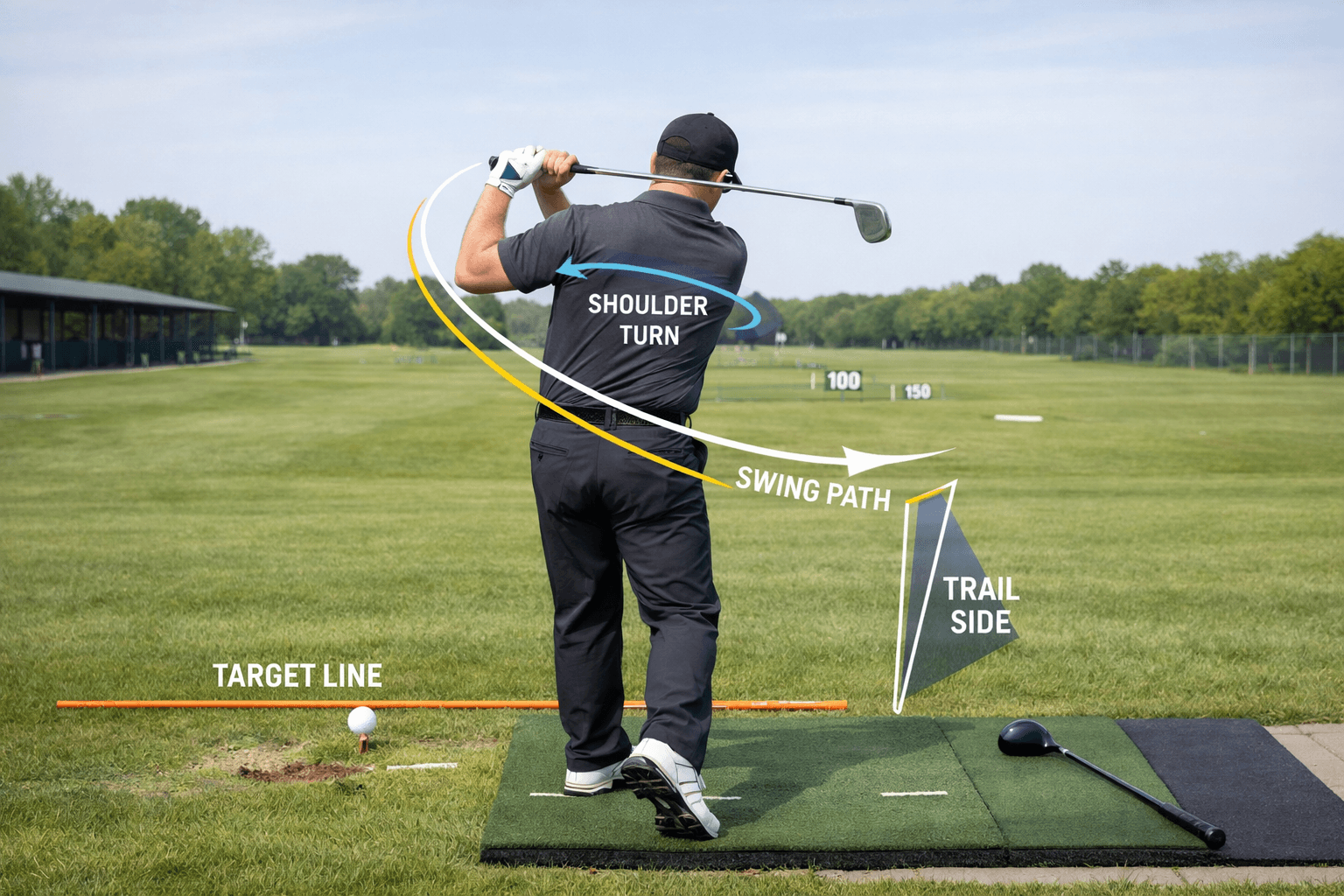
Most amateurs believe more arm strength equals more power. It doesn’t. Power comes from hip and shoulder rotation, storing energy in your torso and releasing it through the ball, not from muscling the club with your arms.
Building the Backswing Correctly
Turn your shoulders roughly 90 degrees against a hip turn of about 45 degrees on the backswing. That difference creates torque, like winding a spring. Keep your lead arm reasonably straight without locking it, and let your wrists hinge naturally as the club swings up, rather than lifting it with your shoulders alone.
The Downswing Sequence
The downswing starts from the ground up: hips unwind first, then the torso, then arms, then the club releases last. Golfers who start the downswing with their arms or shoulders end up “over the top,” which is the exact move behind most slices. Feel like your front hip is clearing out of the way before your hands do anything.
Weight Transfer and Follow-Through
Weight transfer isn’t optional polish, it’s where the power actually lands. If you finish your swing with weight still on your back foot, you’ve left distance on the table and probably hit it thin or fat. A full, balanced finish with your chest facing the target and weight on your front foot is the single clearest sign your sequence worked.
Swing Fault
Likely Cause
One Fix to Try
Slice (curves right)
Open face, out-to-in path
Shallow the path, strengthen grip slightly
Hook (curves left)
Closed face, over-strong grip
Ease grip back toward neutral
Fat shots
Weight stuck on back foot
Shift weight forward before impact
Thin shots
Standing up through impact
Maintain spine angle to the finish
Weak, high slices
Excess hip stall, poor rotation
Turn hips through, don’t just swing arms
Tempo, Plane, and Alignment: The Details That Hold Everything Together
Even a technically sound swing falls apart without consistent tempo and a plane that matches your body type. There’s no single “correct” swing plane that fits every golfer, and pretending otherwise sets you up for frustration.
A taller golfer with long arms naturally swings on a steeper plane than a shorter, stockier player, and that’s fine. Trying to force a flat, sweeping swing onto a tall frame (or vice versa) usually creates more problems than it solves.
Tempo matters just as much as mechanics. A rushed backswing throws off your entire sequence before the club even changes direction. Counting “one-and-two” through your swing, backswing on one, downswing on two, keeps your rhythm smooth and repeatable.
Alignment is the cheapest fix in golf and the most ignored. Lay a spare club on the ground pointing at your target before every practice session, then check your feet and shoulders against it.
Here’s a practical order to work through faults on the range, since fixing everything at once never works:
Check grip pressure and hand position first, since it affects everything downstream.
Confirm stance width and ball position match the club in your hands.
Work on rotation, feeling shoulders turn further than hips on the backswing.
Practise the downswing sequence, hips leading rather than arms.
Groove your weight transfer with a full finish onto your front foot.
Add tempo counting once mechanics feel repeatable.
Finish with alignment checks using an alignment stick or spare club.
If you want illustrated breakdowns of specific faults like the slice or the shank, golfyet.com has dedicated guides that pair each fault with the exact drill to fix it, which is worth a look once you’ve identified your own pattern.
Frequently Asked Questions
Why do I still slice the ball after fixing my grip?
Grip alone rarely cures a slice because the swing path usually still cuts across the ball. Check your downswing sequence, hips should lead, not your shoulders, or you’ll stay “over the top” regardless of grip.
How long does it take to fix a swing fault?
Most golfers see noticeable change within 3-4 range sessions of focused practice, roughly 200-300 balls, though full consistency on the course often takes 6-8 weeks of repetition.
Should I use the same swing for every club?
No. Your ball position, stance width, and swing length all shift with the club, but your core sequence, rotation before arms, weight shifting forward, should stay consistent across the bag.
Mastering the driver swing is a crucial skill for any golfer, especially beginners. The driver is often considered the most challenging club in a golfer's bag, but with the right techniques, it can significantly improve…
Golf is a game of precision, patience, and integrity. For female golfers, understanding the USGA women's golf rules is crucial to playing the game correctly and confidently. The rules of golf are designed to create…
Mastering golf swing technique is crucial for players of all skill levels. It involves understanding the fundamentals and practicing the correct sequencing to connect the club head and golf ball with precision.A golf swing combines…