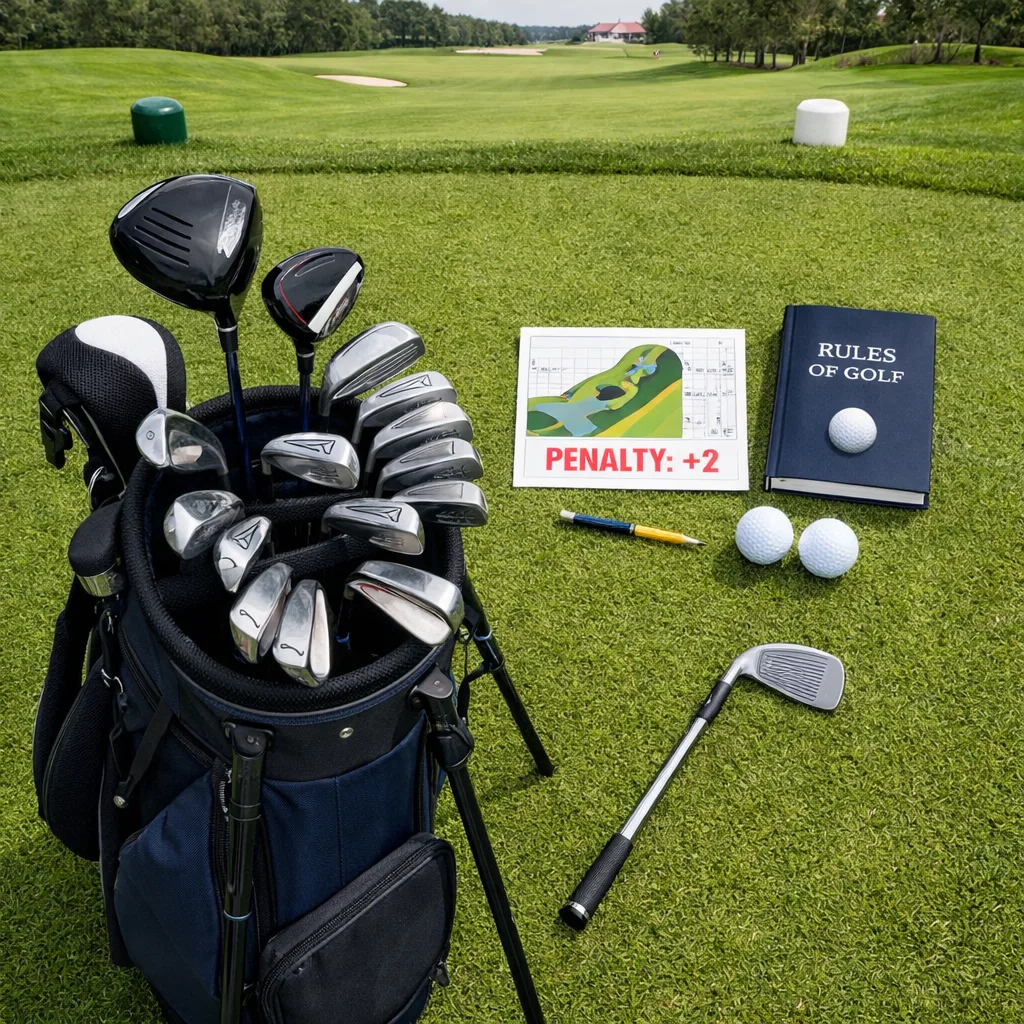
Fourteen. That’s the number the rulebook allows in your bag, and almost every golfer treats it like a quota they have to fill. Rummage through most weekend bags and you’ll find three wedges nobody practices with, a 3-iron nobody can hit, and a 5-wood collecting dust since 2019.
Here’s the thing nobody tells beginners: the 14-club limit is a ceiling, not a requirement. The USGA and R&A set the max at 14 to keep equipment costs and bag weight from spiraling — not to tell you what you need. If you’re asking how many clubs in golf bag setups actually require, the honest answer is fewer than you think, and carrying less might be the fastest way to shoot lower scores.
What the 14-Club Rule Actually Says
The rule comes straight from USGA Rule 4.1 and the matching R&A Rules of Golf, and it caps your bag at 14 clubs — it does not set a minimum. You could legally play an entire round with a putter and six irons if you wanted to. Most golfers just don’t realize the number is a maximum, not a mandate.
Where the Confusion Starts
New golfers assume 14 clubs is the “correct” set because that’s what pro shops sell and what tour pros carry on TV. But a touring pro’s bag is built for tournament-level precision across every yardage gap. Your Saturday foursome doesn’t need that. Nobody is disqualified for playing with 10 clubs — you’re only in trouble for having too many, never too few.
The Penalty for Going Over
If you tee off with 15 or more clubs, you don’t get tossed from the course. The penalty is two strokes per hole where the violation occurred, capped at four strokes total for stroke play, and you have to declare the extra club out of play immediately once you discover it. In match play, it’s one hole deduction per hole affected, max two holes. Nobody’s card gets torn up over this — it’s a scorecard hit, not a disqualification, though it’s still a hit nobody wants to explain in the clubhouse.
Why Fewer Clubs Often Means Better Golf
Carrying 10 to 12 clubs instead of a full 14 isn’t a compromise — for most weekend players, it’s an upgrade. The extra clubs in a typical 14-club bag are usually the ones causing indecision, not the ones saving strokes.
Think about what actually slows a group down on the course. It’s rarely the swing itself. It’s the guy standing over his ball for 45 seconds deciding between a 4-iron, a 5-wood, and a hybrid that all go roughly the same distance. That hesitation is analysis paralysis, and it’s a pace-of-play killer that gets you side-eyed by the group behind you.
Fewer Choices, Faster Decisions
Trim your bag to a tighter lineup and you remove the redundant clubs that create that mental traffic jam. If you carry one hybrid instead of a 3-iron and a 5-wood that both fly 190 yards, you stop debating and start swinging. Faster decisions mean faster rounds, and faster rounds mean happier playing partners.
Better Feel, Fewer Excuses
A simplified bag also builds sharper feel. When you only have a handful of clubs to master, you hit them more often, in more situations, and you learn exactly what each one does under pressure. Carrying 14 clubs you barely touch doesn’t make you a better golfer — it just gives you more ways to second-guess yourself on the tee box.
Building a Leaner Bag That Still Covers Every Shot
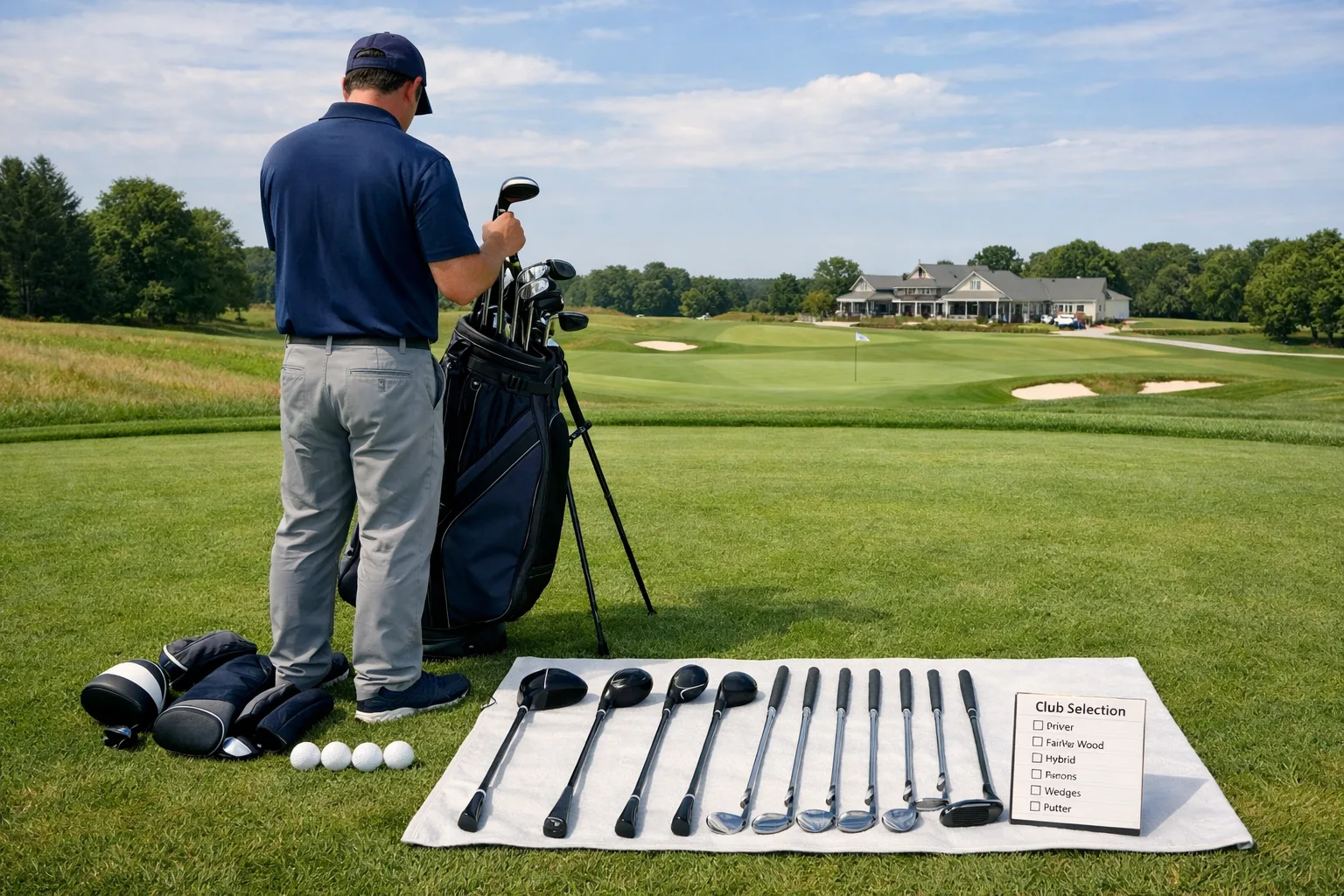
A smart 10-12 club setup isn’t about cutting corners — it’s about picking clubs that each earn their spot by covering a distinct yardage gap. Overlap is the enemy here.
Driver — for tee shots on longer holes where distance matters most.
One fairway wood or hybrid — pick whichever you actually hit consistently, not both.
Irons 6 through 9 — the workhorse range most golfers use on 60% of their approach shots.
Pitching wedge — your default short-approach club inside 100 yards.
Sand wedge — for bunkers and tight lies around the green.
Putter — non-negotiable, obviously.
One extra option — a lob wedge for high-handicap short game issues, or a low iron/hybrid if you play a longer course regularly.
That’s 10-11 clubs covering the same yardage spread a bloated 14-club bag covers, minus the duplicates.
What You Can Safely Cut
Long irons like the 2-, 3-, and sometimes 4-iron are usually the first things I’d tell a mid-handicap golfer to bench. They’re hard to hit clean and a hybrid does the same job easier. A third wedge is another common cut — if you’re not spinning the ball around tricky greens at 100+ yards, a lob wedge is dead weight.
When 14 Clubs Actually Makes Sense
Low-handicap players who shape shots deliberately, or golfers on courses with wild elevation and wind, genuinely benefit from the extra gapping a full 14-club set provides. If you’re shooting in the 70s and know exactly why you’re reaching for a 52-degree wedge over a 56, keep the full set. If you’re still figuring out your yardages, a leaner bag will teach you faster than a crowded one ever will.
Bag Size
Best For
Main Tradeoff
10-11 clubs
Beginners, casual weekend golfers
Slightly less precise yardage gapping
12-13 clubs
Mid-handicap players wanting some specialty clubs
Minor extra decision time per shot
14 clubs
Low-handicap and competitive players
Requires knowing every club’s exact role
If you’re just starting out and want help picking which clubs to keep, golfyet.com has beginner set breakdowns that walk through exactly which irons and wedges are worth the money versus which ones you can skip until your handicap drops.
Frequently Asked Questions
Do beginners really need all 14 clubs to play a proper round?
No. Beginners often play better with 10-12 clubs because fewer options mean faster, more confident decisions. A full 14-club set is a ceiling, not a requirement, and plenty of golfers break 90 without ever carrying a 3-iron.
What happens if I accidentally play with more than 14 clubs?
You get a two-stroke penalty per hole where the extra club was used, capped at four strokes total in stroke play (or a hole deduction in match play). You’re not disqualified — you just declare the extra club unusable and move on.
Does the 14-club limit only apply to professional tournaments?
No, it applies to every round played under USGA or R&A rules, including casual and amateur play. Most weekend rounds aren’t officially scored under strict rules, but the limit still matters in club events, leagues, and any handicap-posting round.
The world of professional golf is governed by a set of intricate rules that ensure fair play and maintain the integrity of the game.Approximately 18 members serve on the PGA Tour's Rules Committee, working tirelessly…
The demand for premium personal transportation vehicles is on the rise, with many seeking comfort and luxury in their daily commutes, whether on or off the golf course.The Yamaha Drive2 PTV is a top contender…
Keegan Bradley won the 2011 PGA Championship as a rookie using a belly putter that would be illegal within four years. That single fact tells you almost everything about his career: a guy who broke…