Keegan Bradley won the 2011 PGA Championship as a rookie using a belly putter that would be illegal within four years. That single fact tells you almost everything about his career: a guy who broke through with a tool the game later banned, then had to rebuild his game around the rule instead of quitting or complaining about it.
If you’re searching his name because of Ryder Cup captaincy talk, a tournament broadcast, or just curiosity about that major win, you’re in the right spot. Golfer Keegan Bradley’s story is really two stories in one — the rookie who shocked everyone at Atlanta Athletic Club, and the veteran who had to reinvent his putting stroke when the anchoring ban took effect.
Key Takeaways
Won the 2011 PGA Championship at Atlanta Athletic Club, his first major start
Used a belly-length anchored putter, banned by the USGA and R&A starting January 1, 2016
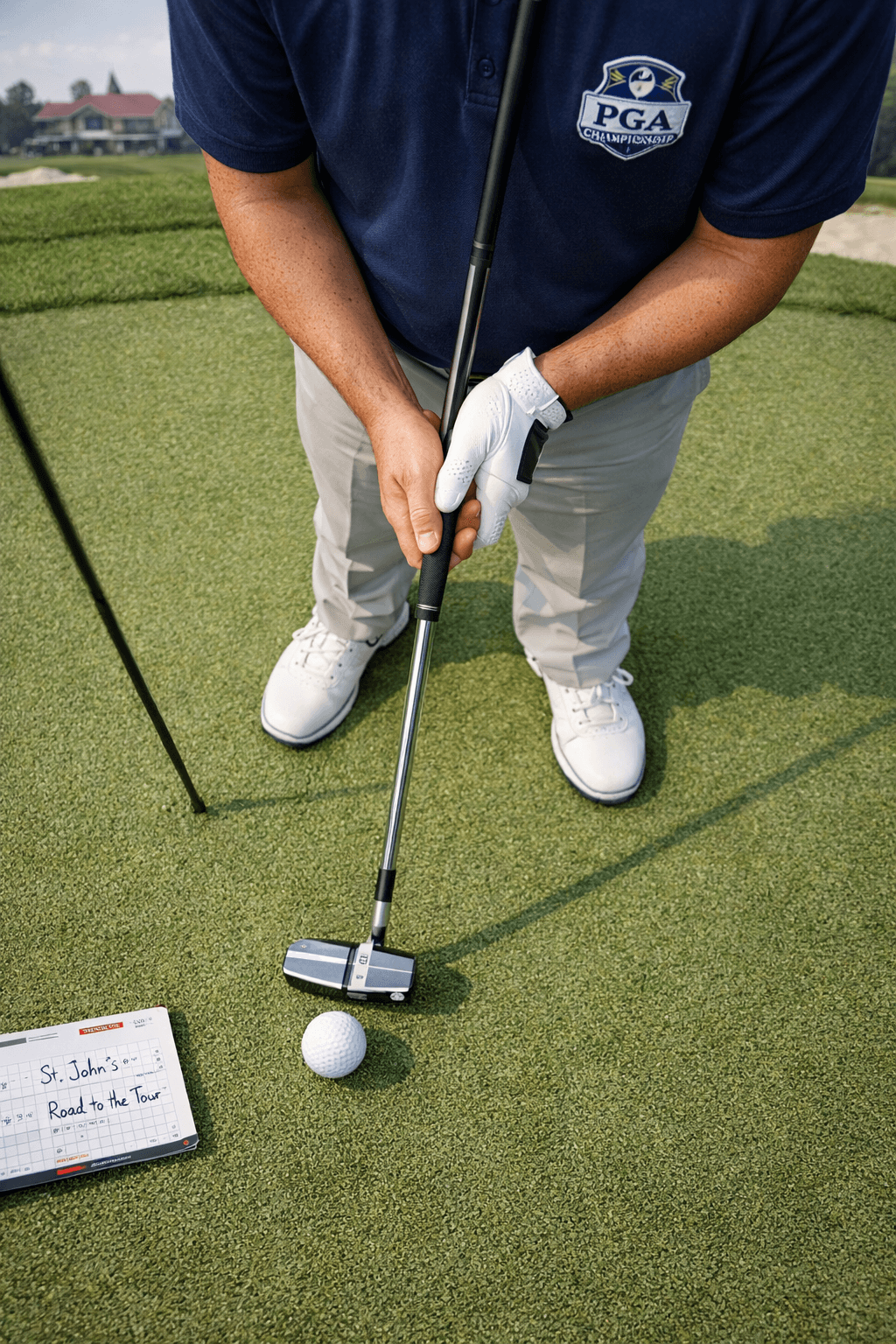
Played college golf at St. John’s University, not a traditional golf powerhouse
Named 2025 US Ryder Cup captain, with a real possibility he plays too
Aunt Pat Bradley is an LPGA Hall of Famer — separate record, often confused with his
Has multiple PGA Tour wins and tens of millions in career earnings
The 2011 PGA Championship Win That Made Him a Name
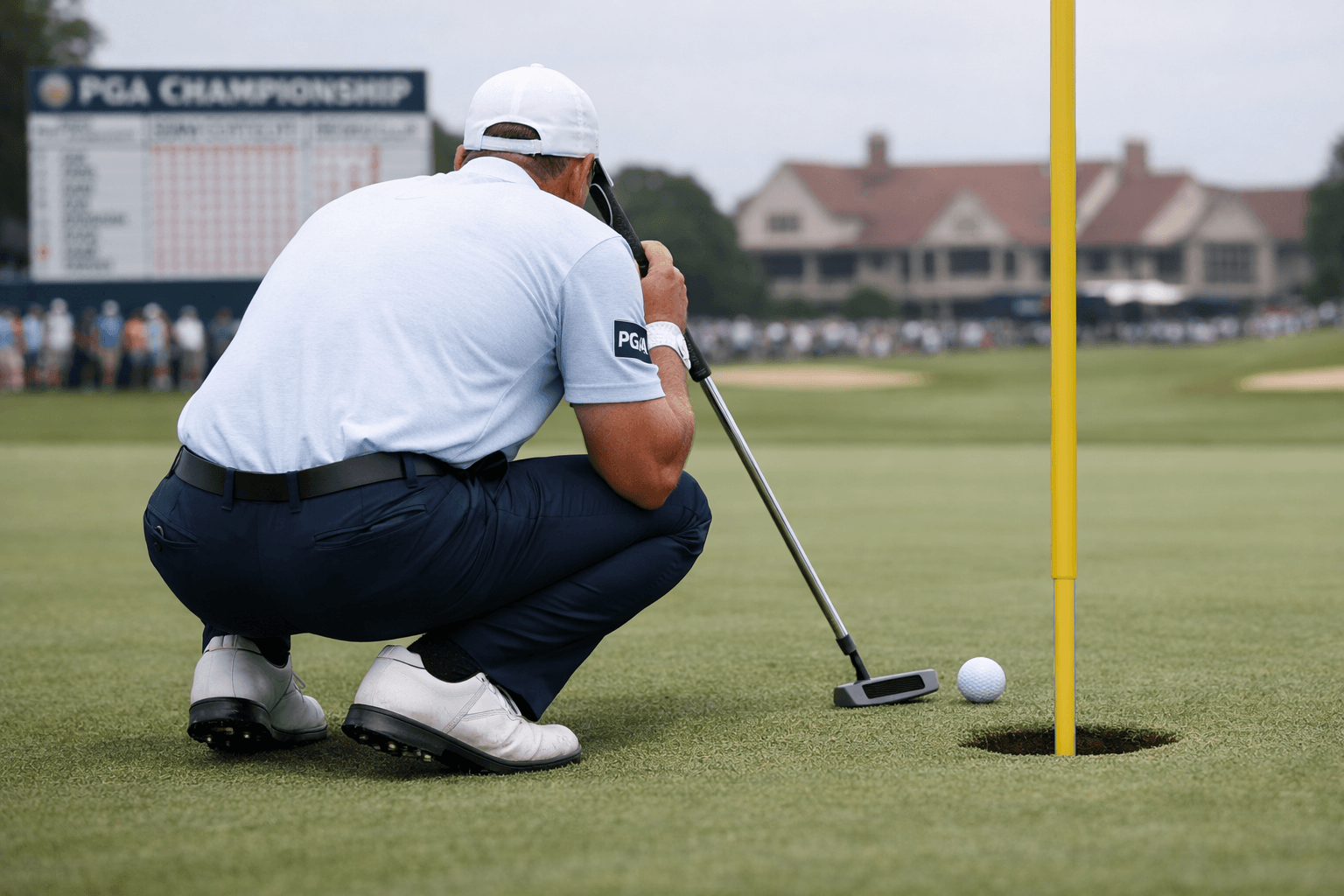
Keegan Bradley became the first player since 1991 to win a major in his first attempt when he beat Jason Dufner in a three-hole playoff at the 2011 PGA Championship. It wasn’t a clean, wire-to-wire win. Bradley made a triple bogey on the 15th hole in the final round, then birdied two of the last three to force the playoff.
That kind of finish tells you something about his temperament. Plenty of golfers fold after a triple bogey with a major on the line. Bradley didn’t, and that mental toughness became part of his reputation early.
The Belly Putter Detail Nobody Should Skip
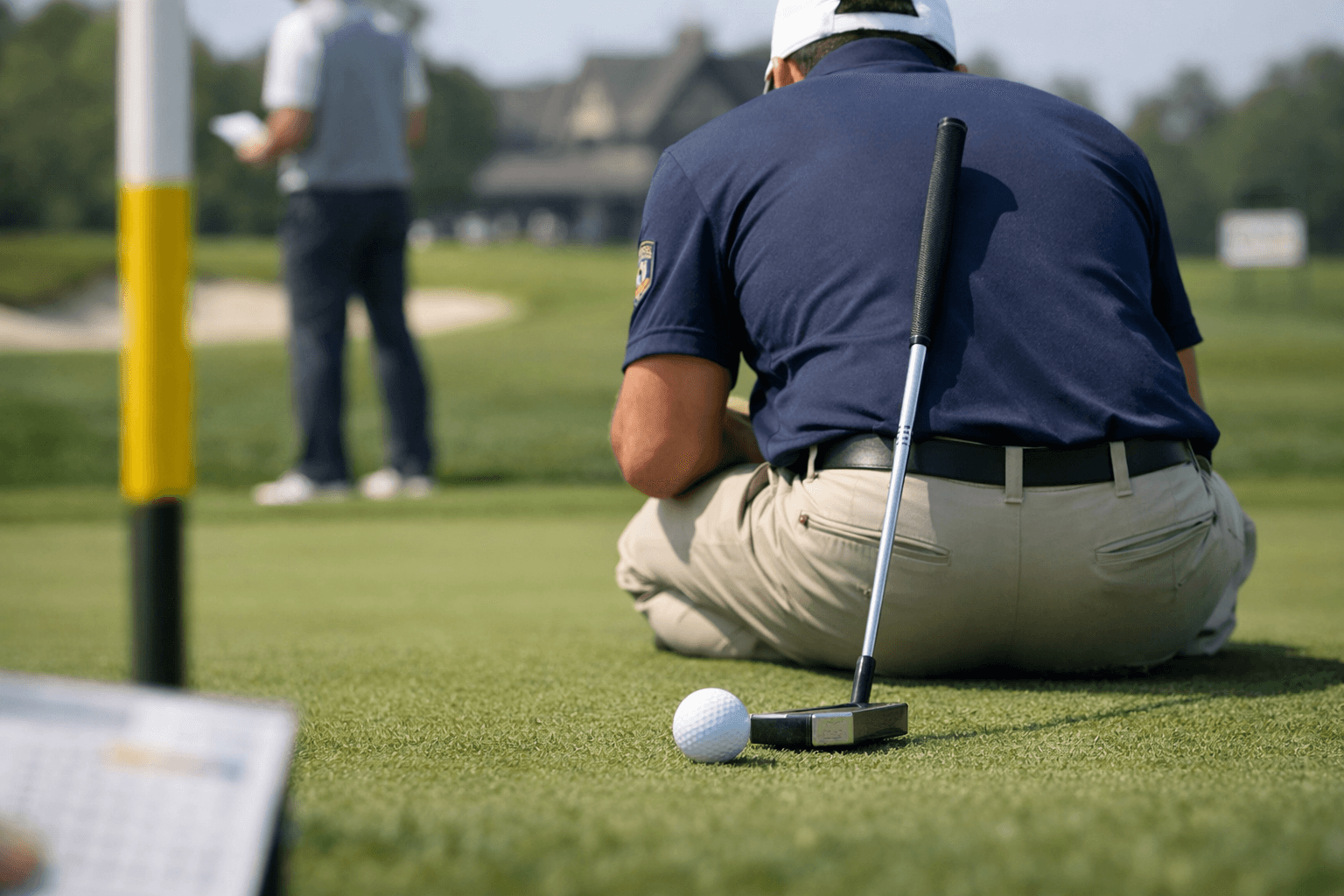
Here’s the part that matters for understanding his whole career arc: Bradley won that major using an anchored belly putter, gripping it against his sternum for a steadier stroke. It wasn’t a gimmick pulled out for one week — it was his full-time setup, and it worked well enough to win a major as a 25-year-old rookie.
At the time, anchored putting was completely legal. Plenty of tour pros used long or belly putters, and nobody thought much of it. That changed fast, and Bradley ended up on the wrong side of history for it.
Why This Win Still Gets Talked About
The win put Bradley on the map instantly, but it also created a permanent asterisk in casual conversation: he’s forever “the guy who won a major with the belly putter.” That’s not entirely fair to the rest of his game, but it’s the hook that sticks. Understanding that context is what makes the rest of his career make sense.
The Anchoring Ban: How a Rule Change Forced Him to Rebuild His Stroke
The anchoring ban is a rule the USGA and R&A adopted in 2013 and enforced starting January 1, 2016, under Rule 14-1b, prohibiting golfers from anchoring the club (or a hand gripping the club) directly against their body during a stroke. This directly targeted long and belly putters, and it forced Bradley to relearn putting basically from scratch.
Bradley was one of the most vocal players against the rule when it was proposed. He argued anchoring wasn’t actually giving players an advantage, and he wasn’t alone — a handful of tour players felt the same way. The rule passed anyway, and players had a few years of runway to adjust before it took effect.
The anchoring ban (Rule 14-1b) bans intentionally holding the club or a gripping hand against the body during a stroke, effective January 1, 2016.
That’s the plain definition worth remembering if you’re a weekend player confused about why long putters disappeared from pro bags. It’s also a good reminder that rule changes in golf aren’t abstract — they change what’s actually in someone’s hands on Sunday.
What Bradley Actually Had to Change
Switching away from an anchored stroke isn’t a small tweak. It meant relearning tempo, wrist action, and setup, since a free-swinging putter behaves completely differently than one braced against the body. Bradley experimented with different putter lengths and grip styles for years afterward, and his putting stats fluctuated noticeably as he searched for something that felt as reliable as the belly putter once did.
This is the real lesson for everyday golfers: equipment rules aren’t just fine print. When the tool changes, the technique has to change with it, and that adjustment period can last years, not weeks. Bradley’s putting never fully returned to his 2011 form overnight — it took patience and a lot of practice green reps to get comfortable again.
The Broader Ripple Effect on Tour
Bradley wasn’t alone in this scramble. Guys like Adam Scott and Webb Simpson, both major winners who anchored, had to make the same switch. It reshaped how instructors teach the stroke and pushed more players toward arm-lock putting styles and claw grips as workarounds that stayed within the rules while still calming the hands. If you want a deeper explainer on how putter rules actually work today, golfyet.com has a breakdown that’s worth a read before you go shopping for a new putter yourself.
College Golf at St. John’s: An Unusual Path to the Tour
Bradley played college golf at St. John’s University in New York, not exactly a school known for producing PGA Tour winners. That matters because most tour pros come through big-name college programs like Oklahoma State or Alabama, and Bradley’s path was noticeably different.
St. John’s isn’t a golf factory. It’s a solid Big East program, but it doesn’t churn out major champions on a regular basis. Bradley had to develop largely through hard work and family connections rather than a five-star recruiting pipeline.
His family background helped fill that gap. His father, Mark Bradley, was a club pro, and golf was simply the family business growing up in Vermont. That kind of upbringing, spending hours at the course as a kid rather than getting formal high-level instruction from day one, shaped a self-made feel to his game that’s still visible in how he talks about his swing today.
The takeaway for weekend golfers here is a useful one: elite golf doesn’t require an elite pedigree. Bradley’s an example of someone who built a PGA Tour career and a major championship without the traditional golf-factory resume, which is a nice data point if you’re wondering whether starting golf later or outside a big program actually matters that much.
Family Ties: Separating His Record From Aunt Pat Bradley’s
Pat Bradley is Keegan Bradley’s aunt, and she’s a genuinely different level of accomplished golfer with her own separate legacy that shouldn’t get mixed up with his. She’s an LPGA Hall of Fame member with six major championships to her name, won across the 1980s and into the 1990s, a career that stands entirely on its own.
It’s an easy mix-up because the last name and the sport are the same, but the résumés aren’t close in scope. Pat Bradley won 31 LPGA Tour events over her career and is one of the sport’s genuine legends. Keegan’s major count sits at one, the 2011 PGA Championship, with several regular PGA Tour wins alongside it.
Think of it this way: Pat Bradley is the family’s golf royalty, and Keegan grew up around that success. It clearly rubbed off — golf was always going to be part of his life given the family tree, but his own career had to be earned separately, on the men’s tour, decades later, against a different set of competitors.
If there’s a myth worth killing here, it’s this: Keegan isn’t “carrying on” Pat’s LPGA record or extending it in any statistical sense. They’re two separate careers in two separate tours, connected by blood and a shared love of the game, not by combined stats.
PGA Tour Wins, Earnings, and Where He Sits in Today’s Game
Keegan Bradley has six PGA Tour wins as of the mid-2020s, anchored by that 2011 PGA Championship, plus wins including the 2012 WGC-Bridgestone Invitational and other tour titles picked up across his career. Career earnings on tour run well into the tens of millions of dollars, which puts him comfortably among the more financially successful American pros of his generation even without a stacked major total.
His current world ranking bounces around depending on form, typically sitting somewhere in the top 50 to top 100 range in recent seasons, with occasional runs into better territory when his putting clicks. That’s a solid, respectable spot for a player in his late 30s, though it’s a step down from his peak years right after the 2011 breakthrough when he was a fixture inside the top 20.
Recent Form and Why It Matters for Captaincy Chatter
Bradley’s game has had real peaks and valleys tied directly to that putting transition after the anchoring ban. Years where his stroke feels natural, he contends. Years where it doesn’t, he misses cuts he’d normally make. That volatility is part of why the Ryder Cup captaincy conversation got so interesting — a captain who’s still playing well enough to contend keeps a genuinely unusual option on the table.
A Quick Look at the Career Numbers
Category
Detail
PGA Tour wins
6 (through mid-2020s)
Major championships
1 (2011 PGA Championship)
College
St. John’s University
Career earnings
Tens of millions of dollars
Current world ranking range
Roughly top 50-100, fluctuating
Those numbers won’t put him in the conversation with the Rory McIlroys or Justin Thomases of the world for all-time great debates, but they represent a genuinely durable, respectable tour career. Not every golfer needs a stacked trophy case to matter to the sport, and Bradley’s story proves that a single defining moment plus steady consistency is enough to build a real legacy.
Swing Mechanics and Pre-Shot Routine Worth Copying
Bradley’s full swing is built around an aggressive, almost violent-looking move through impact, with a lot of lower-body drive and a noticeably fast tempo compared to smoother swingers like Adam Scott. It’s not a swing textbooks would call classically pretty, but it’s repeatable, and repeatable beats pretty every time on tour.
His pre-shot routine is famously deliberate and, depending who you ask, either intense or borderline excessive. He’s known for a lot of practice swings and visible focus rituals before pulling the trigger, something broadcasters have poked fun at over the years but that clearly works for him.
What Weekend Golfers Can Actually Borrow
You don’t need Bradley’s exact swing speed or his full routine, but the underlying idea translates well: commit to a routine and repeat it every single time, even on the range. Consistency in your pre-shot process, not the specific moves in it, is what actually lowers scores for average players.
The Putting Setup He Uses Now
Post-anchoring ban, Bradley has used a standard-length putter with a conventional grip, moving through a few different putter models and grip styles over the years as he searched for consistency. He’s talked openly about the trial-and-error nature of finding a stroke that replaced the confidence the belly putter gave him, which is honestly a useful reminder that even tour pros go through prolonged slumps after equipment changes.
The 2025 Ryder Cup Captaincy and the Playing-Captain Question
Keegan Bradley was named captain of the 2025 US Ryder Cup team, and the most interesting wrinkle isn’t the captaincy itself — it’s the real possibility he could pick himself as a playing captain, something that hasn’t happened on the US side since Arnold Palmer in 1963. That’s not a minor footnote; it’s genuinely rare in modern Ryder Cup history.
Most captains in recent decades have been past-their-prime tour veterans whose playing days were clearly done. Bradley’s situation is different because he’s still competitive enough that skipping his own name off the roster isn’t automatic. That tension, captain first or player first, has made his tenure a lot more interesting to golf media than a typical captaincy news cycle.
Why a Playing Captain Is Such a Big Deal
Being a playing captain means juggling match strategy, pairing decisions, and team leadership while also trying to hit your own shots under pressure. It’s an enormous mental load, and it’s part of why the format basically disappeared for six decades. Bradley reportedly kept the door open rather than ruling it out immediately when the questions started, which kept the story alive through 2024 and into 2025.
The Decision Weighs Real Trade-offs
Naming himself keeps a proven Ryder Cup performer’s clubs in the bag for actual points.
It also means less bandwidth for full-time captain duties like reading matchups and managing twelve personalities.
Passing on himself keeps his attention entirely on strategy and team chemistry.
It also means benching a player who’s shown he can get up for team golf.
Either way, the roster construction around him gets more complicated than a normal captain’s year.
That list captures why this isn’t a simple call. Golf fans love the romantic angle of a playing captain, but the practical demands of the job are why it’s stayed rare for so long.
What It Means for the Broader Format
Whatever Bradley decides, the conversation itself has probably nudged future Ryder Cup committees to think harder about captain selection. Picking an active, competitive player as captain instead of a retired legend changes the entire dynamic of the week, for better or worse, and 2025 is a real test case the sport hasn’t run in generations.
Frequently Asked Questions
Does Keegan Bradley still use a long or belly putter?
No. He hasn’t been able to since the anchoring ban took effect on January 1, 2016. He’s used standard-length putters with a conventional, unanchored grip ever since, switching models occasionally while searching for consistency.
Is Keegan Bradley related to LPGA legend Pat Bradley?
Yes, Pat Bradley is his aunt. She’s a separate LPGA Hall of Fame golfer with six major titles and 31 LPGA wins; their careers and records are entirely distinct despite the shared last name.
Will Keegan Bradley actually play in the 2025 Ryder Cup as captain?
It’s genuinely uncertain. A US playing captain hasn’t happened since Arnold Palmer in 1963, and Bradley kept the option open through 2024 rather than ruling it out, based on his own form heading into the event.
How many majors has Keegan Bradley won?
One: the 2011 PGA Championship at Atlanta Athletic Club, won in a three-hole playoff over Jason Dufner. He has six total PGA Tour wins as of the mid-2020s alongside that major.
Bethpage Black Golf Course sits on Long Island, New York, and it doesn't pretend to be friendly. Before you even pull a club, a sign at the first tee tells you exactly what you're in…
Selecting the right driver golf club can be a game-changer for golfers of all skill levels.The variety of driver golf club types available today can make it challenging to choose the best one for your…
Achieving a hole in one is a rare and exceptional feat in golf, representing the pinnacle of skill and precision for many golfers.According to the United States Golf Association (USGA), an official hole in one…