Phil Mickelson Golfer: Key Career Moments to Remember
29 July, 2026Logan Hart0 Comments1 category
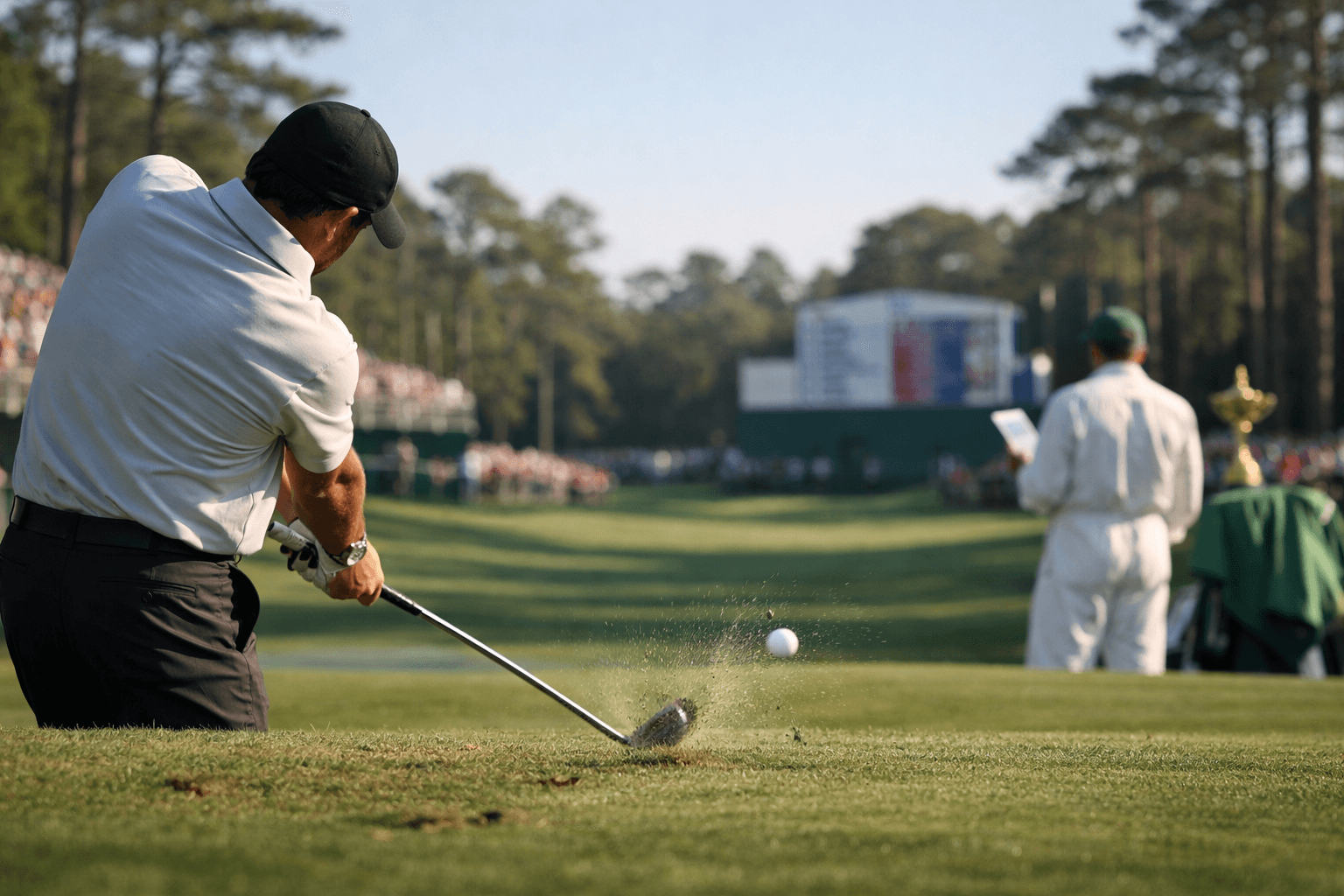
Phil Mickelson stood over a golf ball buried in the pine straw at Augusta National, trees blocking his line to the green, and hit a shot most club golfers would never even attempt. That swing, on Sunday at the 2010 Masters, is the moment a lot of fans still picture first when they hear the name Phil Mickelson golfer. It’s the shorthand for everything he’s about: bold, a little reckless, and somehow it usually works out.
Mickelson’s career spans more than three decades, six major championships, a record-setting win at age 50, and a late-career jump to a rival tour that split golf fans right down the middle. This piece walks through the moments that actually built that reputation, sorts out a few things people get wrong about his record, and explains why he’s still one of the most talked-about golfers alive.
Key Takeaways
Six major titles: three Masters (2004, 2006, 2010), one PGA, one Open Championship
No US Open win despite a record six runner-up finishes
2021 PGA Championship made him the oldest major winner in history at 50
He’s right-handed in daily life but plays golf entirely left-handed
Joined LIV Golf in 2022, a move that cost him sponsors and PGA Tour status
Career earnings plus endorsements put him among golf’s highest all-time earners
Phil Mickelson’s Major Championship Record, Major by Major
Mickelson has six major championships: three Masters green jackets (2004, 2006, 2010), one PGA Championship trophy won twice — in 2005 and again in 2021 — and one Open Championship title from 2013 at Muirfield. That’s the full tally, and it puts him in rare company among modern players.
What makes the list interesting isn’t just the number. It’s the spread. Mickelson won his first major at 33, which was considered late for a player with his talent, then kept adding trophies well into his 50s. Most golfers peak and fade over a decade. Mickelson’s major wins cover 17 years, from 2004 to 2021.
The Three Masters Wins
His first Masters win in 2004 ended years of near-misses and “best player without a major” talk that had followed him since his amateur days. The 2006 win came the next time he wore a green jacket, backing up the first with a more controlled, less white-knuckle performance. Then came 2010, the one with the pine-straw shot, which turned into the signature highlight of his whole career.
PGA Championship and Open Championship
His 2005 PGA Championship win at Baltusrol gave him a second major and quieted some of the doubters. The 2013 Open Championship at Muirfield stands out because it came on a course and in conditions that don’t usually suit his high-risk style — tight, firm, wind-blown links golf. He shot a final-round 66 that day, one of the best closing rounds by a winner in that championship’s modern history.
Six major championships across four different decades of eligibility is not a normal career arc — most players get a five- to seven-year window at the top, and Mickelson stretched his to nearly two decades.
The 2021 PGA Championship: Golf’s Oldest Major Winner
Mickelson won the 2021 PGA Championship at Kiawah Island’s Ocean Course at age 50, making him the oldest player ever to win a men’s major championship. The previous record belonged to Julius Boros, who won the 1968 PGA Championship at 48. Mickelson beat that mark by roughly two years.
This wasn’t a fluke pairing or a weak field, either. Kiawah’s Ocean Course is one of the most demanding tests in professional golf, with wind off the Atlantic that can turn a 400-yard hole into a driver-3-wood ordeal. Mickelson closed with a 73 on Sunday under real pressure, holding off Brooks Koepka and a hard-charging leaderboard.
A lot of golf fans genuinely underestimate how big this win was. It’s easy to file it away as “nice story, older guy wins one,” but set it against the rest of pro golf history and it looks different. Nobody in the modern game, at that age, wins a major against players 20-plus years younger who train specifically to outlast the field physically.
The reaction on-site said a lot too. Fans mobbed the 18th fairway at Kiawah, walking down with him almost like a parade, because everybody watching understood they were seeing something that might never happen again. Golf broadcasters and analysts spent days afterward trying to put the win in context, comparing it to age records across other sports rather than just golf.
It also mattered for what it did to his public image. Mickelson had drifted into “respected veteran, mostly out of contention” territory in the years before 2021. That PGA win reset the conversation completely, right before the LIV Golf saga reset it again in a very different direction a year later.
Six US Open Runner-Up Finishes: The Missing Piece
Mickelson has finished second at the US Open six times without ever winning it, making the US Open the one major that’s kept him out of the career Grand Slam club. This is the correction worth making clearly: he does not have a career Grand Slam. Six runner-up finishes is close, but close doesn’t count in major championship record books.
The near-misses came at different courses and in different ways, which is almost more painful than losing the same way every time. Winged Foot in 2006 is the one most fans bring up first — he needed a par on the 72nd hole to win and made double bogey instead, after a driver off the tee that found hospitality tents rather than fairway.
Where the Runner-Up Finishes Happened
1999 at Pinehurst No. 2, losing by one shot to Payne Stewart
2002 at Bethpage Black, finishing second to Tiger Woods
2004 at Shinnecock Hills, another runner-up finish in a brutal setup
2006 at Winged Foot, the collapse on 18 that still gets replayed
2009 at Bethpage Black again, finishing second to Lucas Glover
2013 at Merion, second place just weeks before his Open Championship win
Why This Record Matters to His Legacy
Six seconds without a win puts him in a strange spot in golf history: statistically dominant at this one tournament, yet permanently short of the ultimate result. Some fans read it as proof of a mental block at US Open setups specifically, since those courses reward precision over the aggressive style that wins Mickelson so many other events. Others just see rotten luck stacked six times in a row. Either way, it’s the missing line on an otherwise complete résumé, and it’s part of why golf fans still argue about where exactly he ranks among the greats.
Left-Handed on the Course, Right-Handed Everywhere Else
Mickelson plays golf left-handed but is right-handed in daily life — he writes, eats, and does almost everything else with his right hand. The story behind it is simple: as a kid, he learned to swing by mirroring his father’s motion instead of standing next to him, which flipped the swing to a lefty pattern that stuck.
This gets misunderstood constantly, and it’s worth clearing up directly. A lot of golf fans assume he’s just a natural lefty who happens to swing that way, the same as any other left-handed athlete. That’s not the case. Mickelson himself has talked about signing autographs and doing other everyday tasks right-handed, which surprises people who’ve only ever watched him on TV.
The practical upside is real, though. Left-handed clubs are harder to find and generally more expensive at retail, since manufacturers produce far fewer of them relative to demand. If you’re a lefty golfer shopping for your own set, expect a smaller selection at most pro shops and possibly a special order for anything beyond entry-level clubs — something worth checking before you commit to a full bag.
His nickname, Phil the Thrill, actually connects to this same go-for-broke identity rather than to the handedness quirk. It stuck because of how he plays, not how he holds a pencil: flop shots over bunkers when a safe chip would do, drivers on par-4s where iron off the tee is the smart play, and a general willingness to attempt shots that could just as easily blow up a round as save it.
The Short Game and Flop Shot That Built His Reputation
Mickelson’s short game, especially his flop shot, is widely considered one of the best in golf history, and it’s the technical skill most responsible for his “Phil the Thrill” reputation. The flop shot uses a wide-open clubface and a steep swing to pop the ball almost straight up and land it softly, which lets him attack pins that most players wouldn’t dare go at.
Technique-wise, the shot depends on club selection and commitment more than raw talent alone. Mickelson typically leans on a high-lofted lob wedge, often in the 60- to 64-degree range, opened up significantly at address. The swing has to be full and confident; a tentative half-swing with an open face is exactly how amateurs skull these shots across the green.
Here’s the part recreational golfers miss: this shot is high-risk even for him. Mickelson has hit plenty of famous flop shots that worked beautifully on TV, but he’s also dumped them into bunkers and left them short in the rough during actual tournament rounds. The shot gets remembered for the highlights and forgotten for the misses, which skews how effective it looks to casual fans.
For weekend golfers thinking about adding this to their own bag of tricks, the honest advice is: practice it a lot before you try it under pressure. A regular chip or pitch shot is more reliable for the vast majority of players, and the flop shot should stay reserved for situations where nothing else gets the ball close. A site like golfyet.com has short-game breakdowns that walk through safer chipping options if the flop shot isn’t paying off on your home course yet.
His overall short-game numbers back up the reputation, too. Across his career, Mickelson ranked near the top of the PGA Tour in scrambling — the statistic that measures how often a player makes par or better after missing the green in regulation — for well over a decade. That kind of sustained short-game performance is what let his sometimes-wild ball-striking survive long enough to produce six majors.
Ryder Cup Career: Appearances, Records, and Rough Patches
Mickelson holds the record for the most Ryder Cup appearances by a US player, having represented the team 12 times between 1995 and 2018. That’s a long stretch of Ryder Cup golf, spanning a huge shift in how competitive and pressure-filled the event became over those years.
His overall record, though, doesn’t match his major championship dominance. Mickelson’s career Ryder Cup record sits below .500, and the US team lost the Cup more often than not during his most active years on the team. That contrast — a player this good individually struggling in team match play — became one of the recurring storylines of Ryder Cups through the 2000s and 2010s.
Team Chemistry and the 2004 Pairing Controversy
One episode that still comes up: the 2004 Ryder Cup pairing of Mickelson with Tiger Woods, an experiment that didn’t work. The two lost their matches together, and analysts at the time pointed to mismatched equipment preferences and different pre-shot routines as part of the friction. It’s a small footnote in a long career, but it says something about how individual brilliance doesn’t automatically translate to team formats.
A Captaincy Turn Late in His Career
By his later Ryder Cup years, Mickelson shifted into more of a mentor role for younger US players, something that eventually fed into conversations about a future captaincy for him. Those conversations mostly stopped once the LIV Golf move happened, since Ryder Cup eligibility through the PGA of America got complicated by his tour status. It’s one of the quieter costs of that decision — a Ryder Cup captaincy that once looked likely now looks unlikely to happen.
The LIV Golf Move and What It Cost Him
Mickelson joined LIV Golf, the Saudi-backed rival tour, in 2022, a decision that triggered the loss of several major sponsorships and his PGA Tour membership. This is the timeline point people mix up most often, so it’s worth stating plainly: the LIV move happened in 2022, a full year after his historic 2021 PGA Championship win. Those two events are separate, and confusing their order misreads the whole story.
Before the move, Mickelson had already stirred controversy by making comments about the Saudi regime’s human rights record while also acknowledging he was using LIV’s offer as leverage against the PGA Tour. Those comments leaked publicly and did real damage to his image, well before he’d even signed on to play a LIV event.
The fallout came fast. Companies including KPMG and other longtime partners ended their sponsorship relationships with him within weeks of the comments becoming public. The PGA Tour responded by suspending members who played LIV events without releases, which effectively ended Mickelson’s regular participation in PGA Tour events.
Financially, the move looked very different from the reputational side. LIV’s reported signing payments to top players, Mickelson included, were enormous by golf standards — figures in the hundreds of millions have been widely reported for his deal specifically, though LIV has never confirmed exact terms publicly. That’s the tension at the center of the whole story: a massive financial win paired with a real hit to his standing in mainstream professional golf.
Here’s a side-by-side of how his career split at that point:
Career Phase
Approximate Years
Tour
Major Sponsorship Status
PGA Tour prime
1992–2021
PGA Tour
Multiple major sponsors (KPMG among them)
Post-2021 PGA win
2021–2022
PGA Tour
Sponsorships largely intact
LIV Golf era
2022–present
LIV Golf
Most major sponsors departed
Whether LIV was worth it for him personally is something only Mickelson can really answer. From the outside, it reads as a trade: less mainstream visibility and goodwill, in exchange for financial terms no amount of major championships was ever going to match.
Career Earnings, Endorsements, and Life Off the Course
Mickelson’s on-course PGA Tour earnings alone exceed $94 million, and that figure doesn’t include his LIV Golf compensation or decades of endorsement income, which pushed his total career earnings well past that number for years before the LIV move even happened. Endorsement deals with brands like Callaway and, previously, KPMG, made him one of the highest-earning golfers off the course as well as on it.
His endorsement portfolio in the 2000s and 2010s was genuinely broad. Beyond golf equipment, Mickelson had deals spanning insurance, financial services, and apparel, the kind of diversified sponsor list usually reserved for a small handful of athletes at the very top of a sport. That’s part of why the sponsor exodus after his 2022 comments hit so visibly — there was simply more to lose than most golfers ever accumulate.
Off the course, his marriage to Amy Mickelson is a fixture of his public story, and she’s been present at nearly every major milestone of his career, including the emotional embrace after the 2021 PGA win at Kiawah. Amy’s own health battle with breast cancer in 2009 became a widely covered story at the time, and Mickelson has spoken publicly about how it reshaped his priorities heading into the following seasons.
Their relationship has functioned almost like a stabilizing thread through a career full of big swings, literal and financial. Golf can be an isolating sport, built around long stretches away from home and individual scrutiny that doesn’t let up. Having a consistent, visible family presence through both the highs (the majors) and the lows (the 2006 Winged Foot collapse, the LIV backlash) is part of why Mickelson’s public narrative reads more like a full life story than just a stat sheet.
It’s also worth noting how that financial success shaped his approach to the game itself. A player without endorsement security might play more conservatively, protecting status and paycheck. Mickelson never really did that — the aggressive playing style stayed constant across a career where he had, by most measures, less financial reason to gamble with every swing than almost anyone else in the field.
Frequently Asked Questions
Did Phil Mickelson ever win the US Open?
No. Mickelson has finished runner-up at the US Open six times — in 1999, 2002, 2004, 2006, 2009, and 2013 — but he’s never won it, which means he doesn’t have the career Grand Slam.
Is Phil Mickelson actually left-handed?
No, he’s right-handed in daily life and only plays golf left-handed, a swing he picked up as a kid by mirroring his right-handed father’s motion instead of copying it directly.
How old was Phil Mickelson when he won his last major?
He was 50 years old when he won the 2021 PGA Championship at Kiawah Island, making him the oldest major champion in golf history, beating the previous record held by Julius Boros by roughly two years.
When did Phil Mickelson join LIV Golf, and how does that relate to his major wins?
He joined LIV Golf in 2022, a full year after his 2021 PGA Championship win. The two events are often confused, but his major championship record was already complete before the LIV move happened.
Every April, one tournament stops the golf world cold. If you're searching for when is the golf masters in 2026, the answer is April 6–12 at Augusta National Golf Club in Augusta, Georgia. That's the…
Golf is a game of precision, patience, and integrity. For female golfers, understanding the USGA women's golf rules is crucial to playing the game correctly and confidently. The rules of golf are designed to create…
Golf courses often implement the 90-Degree Rule to balance the convenience of using golf carts with the need to protect the fairway grass.This rule allows golfers to ride on the fairway while ensuring that carts…