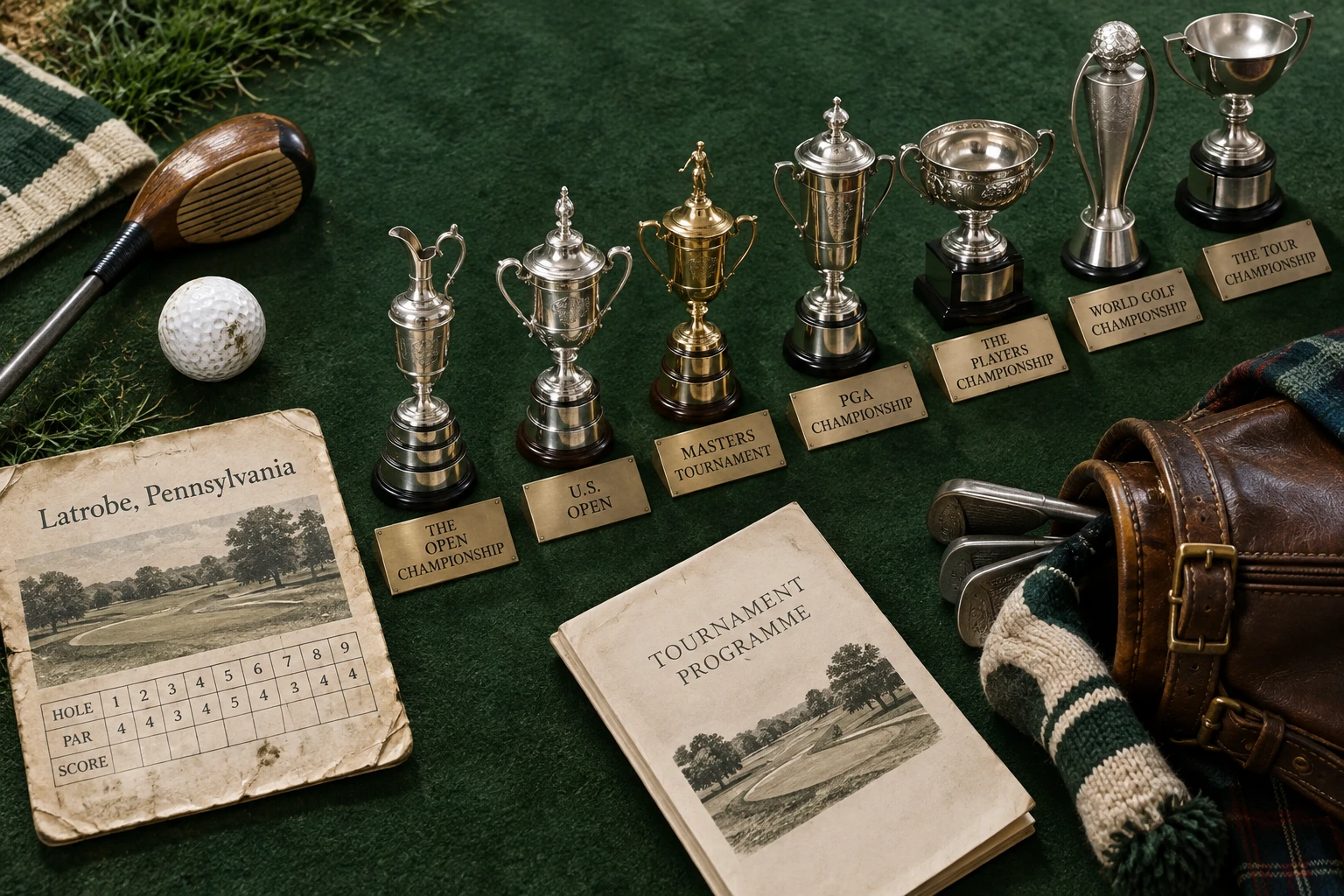
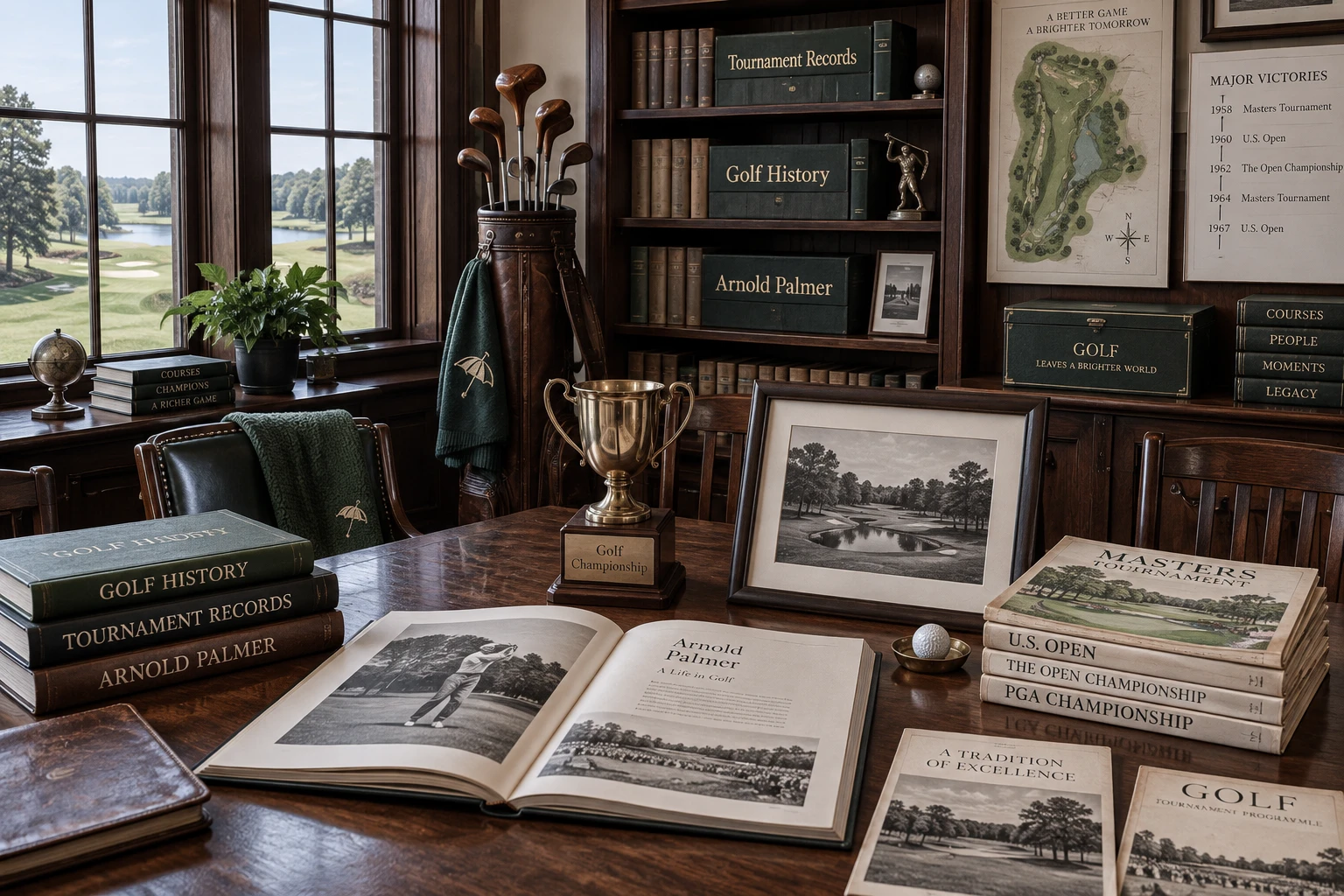
Arnold Palmer (1929–2016) won 62 PGA Tour events and seven majors: four Masters, two Open Championships and one US Open. Nicknamed The King, he turned golf into a television sport, and his influence lives on through his charity work, his course design and the Arnold Palmer Invitational. If you know the name but want accurate numbers and a clear career summary, this guide gives you both, plus a few lessons you can use on your own course.
The Seven Majors at a Glance
Palmer won all seven majors in a run of just over six years, from the 1958 Masters to the 1964 Masters. The table below lists each one.
Year
Major
Notes
1958
Masters
First major win
1960
Masters
Won again two years later
1960
US Open
Same season as his second Masters
1961
The Open Championship
First of two Open wins
1962
Masters
Third green jacket
1962
The Open Championship
Back-to-back Open titles
1964
Masters
Fourth and last Masters
He never won the PGA Championship, so he missed the career grand slam (all four majors). He finished second in it three times, and it remains the gap in his record.
Career Path: From Latrobe to Seven Majors
Palmer was born in Latrobe, Pennsylvania, a steel-mill town. His father, Deacon, was head professional and greenskeeper at Latrobe Country Club, and young Arnold learned the game by following him around the course.
The Peak Years, 1960 to 1963
He turned professional in 1955 and won a PGA Tour event every year from 1955 to 1971. His best spell came between 1960 and 1963, when he won 29 Tour events, including five majors, in four seasons. In 1967 he became the first golfer to pass $1 million in career Tour earnings.
Rivals and the Big Three
Jack Nicklaus and Gary Player joined him as The Big Three of the 1960s. Nicklaus beat him in a famous 1962 US Open play-off at Oakmont, and by the late 1960s both rivals had moved ahead of him. Palmer still won four times in 1971.
His Style
He attacked. He went for the flag, hit the ball hard and accepted the risk. His biggest winning margin was 12 strokes at the 1962 Phoenix Open.
Why 62 Wins, 90+ Wins and Different Totals?
The numbers confuse people because each one measures something different.
62 is his PGA Tour total, from 1955 to 1973. It puts him fifth on the all-time list, behind Sam Snead, Tiger Woods, Jack Nicklaus and Ben Hogan.
90 or more counts all professional wins worldwide, including Senior Tour events, Open-style events abroad and other tournaments. His own management company says 92, while the European Tour records 91.
Counts differ because organisations disagree on which events qualify as official wins.
Quote 62 when you mean the PGA Tour. Use “90-plus” only when you say it includes events outside the Tour.
Legacy: How Palmer Changed Golf
Palmer’s appeal reached far beyond the trophies. As the first superstar of the television age, he made golf something ordinary people watched at home. His modest background and plain speech helped shift golf’s image from a private-club pastime towards a sport open to everyone.
Arnie’s Army and the Open
His fans, known as Arnie’s Army, followed him round the course in large numbers. He also played the Open in the early 1960s when many Americans stayed away, and his wins helped restore its standing among US players. Nicklaus later called him probably the most popular player the game has seen.
Business, Courses and Charity
Sponsors noticed the crowds, and Palmer’s success helped bring companies into golf. He designed courses, and Arnold Palmer Golf Management still operates today. He also helped found two hospitals: one for children and one for women, both in Florida. The iced tea and lemonade drink carries his name, but it is a footnote, not his main legacy.
The Arnold Palmer Invitational
The Arnold Palmer Invitational is played each March at Bay Hill in Orlando. It is a PGA Tour event, not a major. Akshay Bhatia won the 2026 edition on 8 March, after a play-off with Daniel Berger.
Palmer died on 25 September 2016, aged 87, during Ryder Cup week. The tributes at that event showed how widely he was loved.
What You Can Take Onto Your Own Course
You do not need his swing to learn from his approach. Commit to each shot, pick a firm target and swing with intent. A hesitant swing at a safe target often does more damage than a confident swing at a risky one. Just be honest about your own limits: a Palmer-style attack suits a good lay-up when the water is in play.
If you enjoy profiles like this, Golf Yet also covers other golfing legends and the rules behind the modern game.
Frequently Asked Questions
How many majors did Arnold Palmer win?
Seven: four Masters (1958, 1960, 1962, 1964), two Open Championships (1961, 1962) and the 1960 US Open. He never won the PGA Championship.
Why was Arnold Palmer called The King?
The nickname reflected his huge popularity and his dominance in the late 1950s and early 1960s. Fans adored his attacking style, and he brought golf to a mass television audience.
How does the Arnold Palmer Invitational relate to him?
He hosted it at Bay Hill, which he owned, and it carries his name. It is a regular PGA Tour event, not a major, held each March in Orlando.
Golfers of varying skill levels often come together to enjoy the game in a competitive yet friendly format. One popular way to do this is through a two-player team format known as a scramble.In this…
Miniature golf is a fun game enjoyed by people of all ages, offering a unique blend of entertainment and friendly competition. Whether you're looking to improve your short game or simply have a good time,…
During unfavorable weather conditions, golf courses often implement special provisions to ensure fair play despite challenging course conditions. These provisions, commonly referred to as winter rules or "preferred lies," allow golfers to improve their ball's…