REVIEW: The Four Best Golf Gloves You Can Buy On Any Budget and For
9 September, 2026Logan Hart0 Comments1 category
A $28 cabretta leather glove that sits in your bag for six months between rounds will dry out, crack, and lose its grip before it ever earns back its price. That’s the trap most glove reviews walk you straight into. The best golf gloves aren’t about spending the most money — they’re about matching material to how often you actually play and where you play it.
If you tee it up every weekend from April through October in Ohio, you need a different glove than someone chasing rounds twice a month in Phoenix heat or grinding through Seattle drizzle. Get that match right, and one glove can last a full season instead of three weeks.
How Often You Play Should Decide Your Glove, Not Your Budget
Playing frequency changes how a glove wears out. A glove that gets used twice a week fails differently than one that sits in a golf bag pocket for a month at a time, baking in a hot trunk.
Cabretta leather gloves feel incredible on contact — soft, tacky, molded to your hand within a few swings. But leather needs oil from your skin and regular use to stay supple. Skip a few weeks and it stiffens up, then cracks at the seams the next time you grip a driver. If you play once or twice a month, premium leather is a poor match for your habits, not because it’s a bad glove.
Synthetic golf gloves solve that problem. Materials like microfiber and synthetic leather blends resist drying out during storage and hold up fine through inconsistent use. They don’t feel quite as buttery as cabretta on first grip, but the gap has closed a lot in the last several years.
The Weekend Warrior Rule
If you play fewer than eight rounds a month, buy synthetic. You’ll save $15 to $25 per glove and avoid replacing cracked leather every other month. Save the cabretta splurge for when you’re playing consistently enough to actually break it in and keep it conditioned.
The Four Best Golf Gloves, Ranked by Who Should Buy Them
Here’s where the picks get specific. Each of these targets a different kind of golfer, not just a different price point.
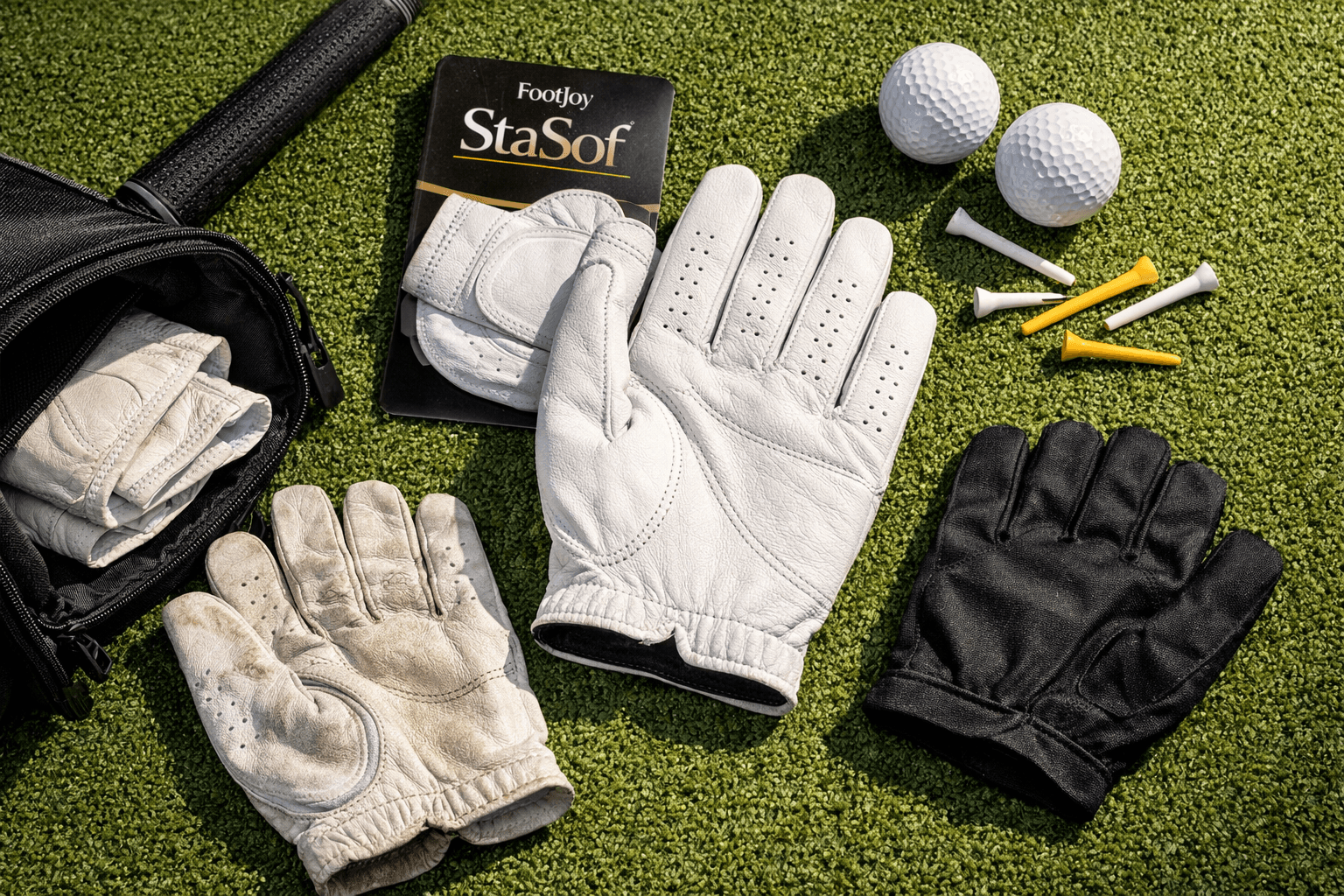
1. FootJoy StaSof — Best for Frequent Players Who Want Feel
The FootJoy StaSof runs around $28 and uses premium cabretta leather that molds to your hand faster than almost anything else on the market. If you play twice a week or more, this glove rewards you with a grip that gets better with every round. The catch: leave it in your bag for a month and it’ll stiffen up on you.
2. Titleist Players — Best All-Around Leather Glove
Titleist’s Players glove sits close in price to the StaSof, typically $24 to $26, and offers a slightly more durable leather blend that tolerates a bit more inconsistency in play schedule. It’s the glove I’d point a regular 2-to-3-times-a-week player toward if they want leather feel without babysitting it constantly.
3. FootJoy WeatherSof — Best Budget and All-Weather Option
The WeatherSof costs around $16 to $18 and uses a synthetic-leather blend built to perform in both wet and dry conditions. This is the pick for casual golfers, beginners, or anyone playing in a climate with unpredictable weather — the Pacific Northwest, the Gulf Coast, or anywhere summer storms roll in fast. It won’t feel as premium as cabretta, but it won’t punish you for skipping three weeks either.
4. FootJoy RainGrip — Best Dedicated Wet-Weather Glove
The RainGrip, priced around $22, is built specifically for rain rounds and actually grips better as it gets wet, unlike leather, which turns slick and useless in a downpour. If you play in a rainy region regularly, keep one of these in your bag as a backup no matter what your everyday glove is.
Glove
Price
Best For
Material
FootJoy StaSof
~$28
Frequent players (2+ rounds/week)
Cabretta leather
Titleist Players
~$24-$26
Regular players wanting leather feel
Leather blend
FootJoy WeatherSof
~$16-$18
Casual/beginner, mixed climates
Synthetic blend
FootJoy RainGrip
~$22
Wet-weather backup
All-weather synthetic
Getting the Fit Right Matters More Than the Brand on the Tag
A glove that’s too loose will never “break in” to fit better — that’s a myth that costs golfers grip and control every season. Loose material bunches at the palm and kills your feedback on the club. A properly fitted glove should feel snug immediately, with no excess fabric at the fingertips.
Sizing runs from Small to XXL, and most brands also offer Cadet sizes for players with shorter, wider fingers relative to their palm size. Try a glove on and make a full fist. If the leather or synthetic doesn’t stretch smoothly across your knuckles, size up.
Which Hand Actually Needs the Glove
Right-handed golfers wear the glove on their left hand; left-handed golfers wear it on their right. That’s your lead hand, the one that stays in contact with the grip through the entire swing and takes the most friction. Most golfers only buy one glove at a time for this reason, which is exactly why fit on that single hand matters so much.
Grip Life and Care: When to Actually Replace a Glove
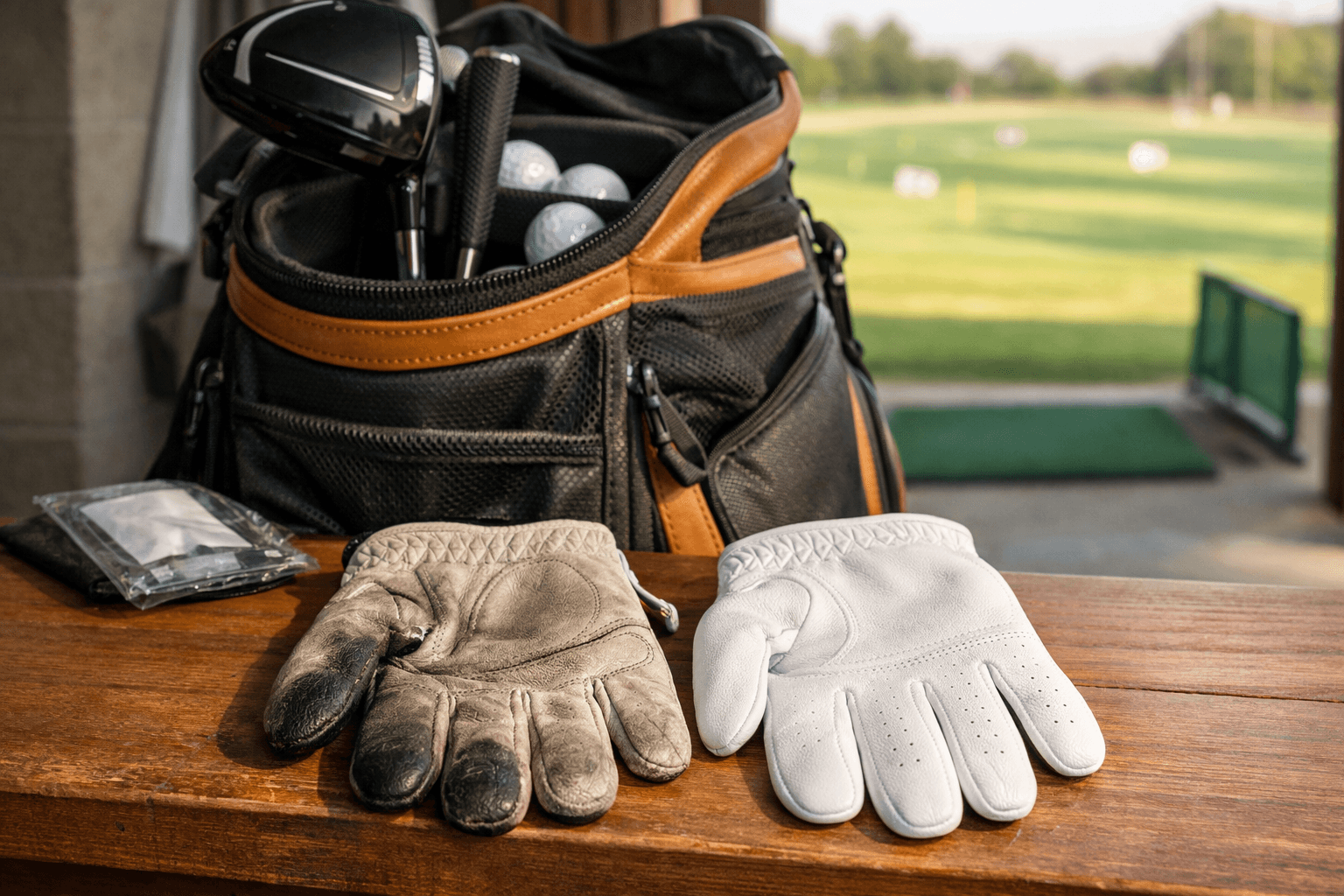
A glove has lost its usefulness once it stops tackiness at contact, not once it develops a hole. That’s the sign most golfers miss. Replace your glove when it feels slick during your grip pressure test, even if it looks fine.
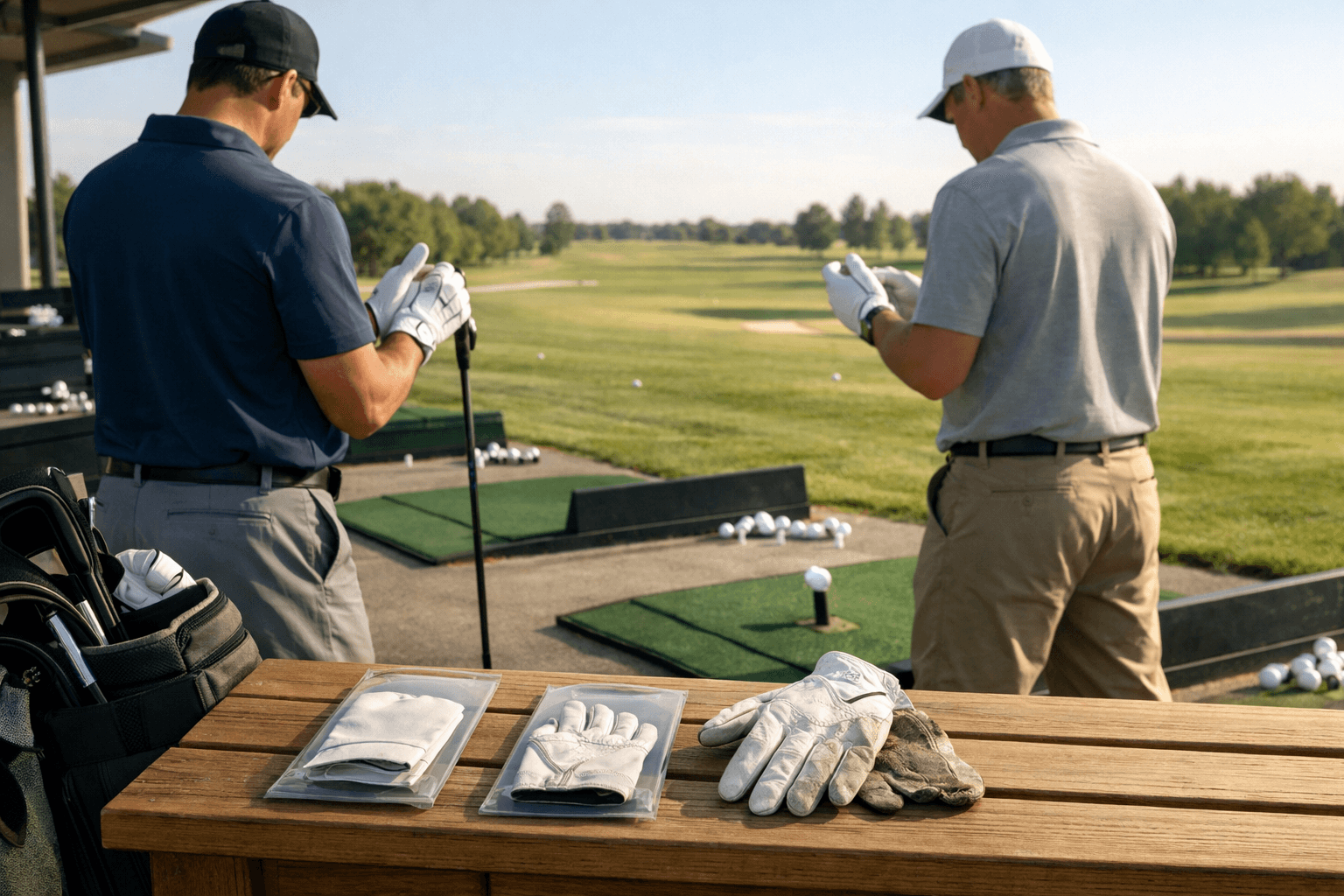
Rotate two gloves if you play more than three rounds a week — letting leather rest a full day between wears helps it recover shape and stay tacky longer. Store gloves flat, out of direct sun, and never leave one balled up in a hot cart or trunk. Heat is the fastest way to kill cabretta leather specifically.
For wet rounds, don’t force your dry-weather leather glove into rain duty. It’ll get slick and stay that way even after it dries out, since water strips the natural oils leather needs. Keep a synthetic or rain-specific glove as a separate piece of gear, the same way you’d carry an extra layer for weather.
Check tackiness with a grip test before every round, not just when it looks worn.
Rotate two gloves if you play three or more rounds weekly.
Store gloves flat, away from heat and direct sunlight.
Swap to a synthetic or rain glove the moment conditions turn wet.
Replace leather gloves every 10 to 15 rounds if played frequently.
Size up if your fist test shows tight bunching across the knuckles.
For more breakdowns like this on other gear categories, Golf Yet runs comparable buying guides that weigh cost against actual playing habits instead of just chasing the priciest option on the shelf.
Frequently Asked Questions
Do expensive golf gloves actually perform better than cheaper ones?
Not automatically. A $28 cabretta glove outperforms a synthetic one in feel for frequent players, but for casual golfers who play under eight times a month, a $16 synthetic glove often grips better long-term since it resists drying out from disuse.
How many golf gloves should I own at once?
Two is the practical minimum: one all-purpose glove for dry rounds and one rain-specific glove like the FootJoy RainGrip for wet conditions. Frequent players benefit from a third glove in rotation to let leather rest between wears.
How do I know my golf glove size is correct?
Make a full fist while wearing the glove. If material bunches at the fingertips or knuckles, go up a size instead of assuming leather will stretch to fit over time.
Understanding the rules of golf, particularly those concerning out of bounds (OB) areas, is crucial for any golfer looking to improve their game and avoid unnecessary penalties.The USGA defines out of bounds by white stakes,…
Understanding the intricacies of Rule 16 is crucial for golfers to navigate the course effectively. This rule covers situations where a player can take free relief due to abnormal course conditions or dangerous animal situations.When…
At 5 foot 7, weighing barely 68kg, Gary Player didn't look like a man who'd out-work golfers twice his size for six decades. Yet the South African built one of the sport's great careers on…