Titleist sells more golf balls than any other brand on the planet, and the Pro V1 is the one every pro shop assistant reaches for first when you ask “what should I be playing?” That’s not hype, it’s just how deep this ball’s reputation runs. But here’s the question worth asking before you hand over your money: will a Pro V1 actually lower your scores, or are you paying £50 a dozen for a ball built for a swing speed you don’t have?
This review breaks down what the Pro V1 does well, where the Pro V1x differs, and, more importantly, who should genuinely think twice before buying either one.
What Makes the Pro V1 Play the Way It Does
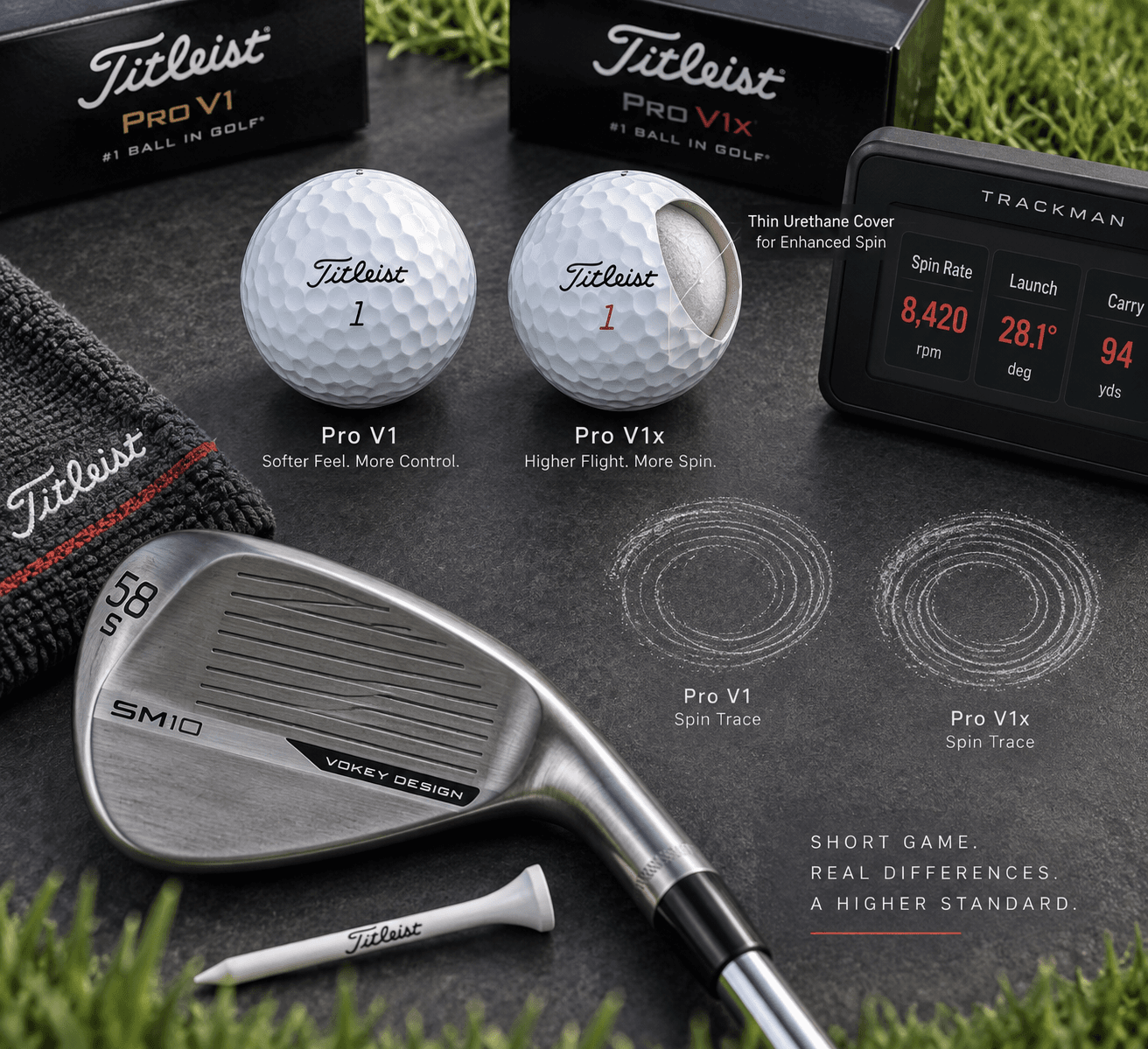
The Pro V1’s reputation comes down to its urethane cover and layered core, not marketing. That combination gives you a soft feel off the putter, high short-game spin, and a flight that holds up in wind better than a cheap two-piece ball.
Core and Compression
The Pro V1 runs a lower compression than the Pro V1x, sitting in a range built for swing speeds roughly between 90 and 105 mph with a driver. That softer core is why mid-handicappers and better players with moderate swing speeds tend to get more distance and a more controllable flight out of it, rather than ballooning shots into the wind.
Cover and Spin Behaviour
The cast urethane cover is where the real performance lives. Around the green, that cover grabs the grooves on a wedge and produces the kind of stopping spin you see tour players use to hold greens on a firm links course. Off the driver, the same ball produces comparatively lower spin, which helps keep tee shots from ballooning.
Where a lot of golfers get confused is assuming softer always means shorter. It doesn’t — the Pro V1’s construction is designed to reduce driver spin while keeping wedge spin high, which is a genuinely different engineering problem than just “make it soft.”
Pro V1 vs Pro V1x: Picking the Right One for Your Swing
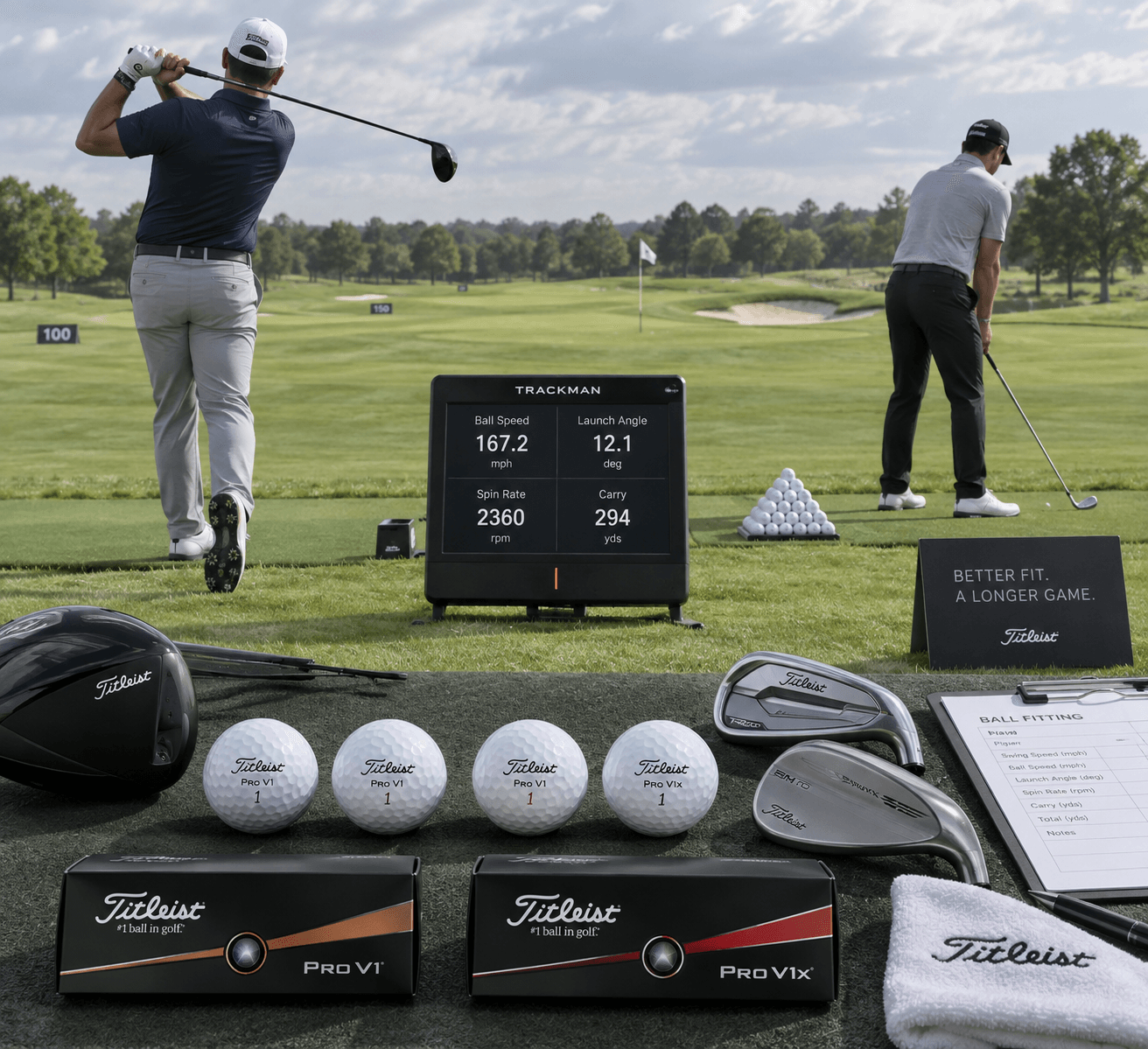
The short answer: the Pro V1 suits moderate swing speeds and players who want a slightly lower, more penetrating ball flight, while the Pro V1x suits faster swings and players who want a higher flight with more spin on full shots. Neither is objectively “better” — they’re tuned for different swing profiles.
Compression and Flight Differences
The Pro V1x has a firmer core and a dual-core construction that produces a higher trajectory and slightly more spin off long irons and driver for faster swing speeds, generally north of 105 mph. If you already hit a high, spinny ball with your current driver, adding a Pro V1x on top can push you into ballooning territory on a windy day at somewhere like St Andrews.
Feel Off the Putter and Irons
The Pro V1 feels marginally softer on the putter face, which a lot of golfers actually prefer on quick greens. The Pro V1x feels firmer, and better ball-strikers often say it gives clearer feedback on strike quality with irons.
Attribute
Pro V1
Pro V1x
Core type
Single-core, softer compression
Dual-core, firmer compression
Best-fit swing speed
~90–105 mph driver
105+ mph driver
Trajectory
Lower, more penetrating
Higher, more carry
Wedge spin
High
Slightly higher
Feel
Softer
Firmer
Typical price (dozen)
Around £50
Around £50
Durability, Weather, and Consistency Across a Dozen
Titleist’s urethane covers scuff more easily than the cheap ionomer covers on budget balls, but that’s the tradeoff for the spin you’re buying. Expect visible cart-path scuffs and wedge marks after 9 to 18 holes of real play, not catastrophic cuts, just cosmetic wear that doesn’t usually change performance much before you’d naturally lose the ball anyway.
Cold weather knocks a few yards off any ball, but the Pro V1’s construction holds its compression better in the 5–10°C range than most mid-tier balls, which tend to go noticeably dead and clicky. On a soggy autumn morning at your local club, that consistency matters more than people think.
Consistency across a full dozen is where Titleist genuinely earns its price tag. Golf ball manufacturing tolerances vary between brands, and Titleist’s quality control on weight, size, and compression across a batch is tighter than most rivals, meaning ball one and ball twelve should perform almost identically.
Who Should Actually Buy a Pro V1 (and Who Shouldn’t)
Here’s the part most reviews skip: a Pro V1 will not fix a slice, and it won’t add ten yards to a 75 mph swing speed. If you’re a high handicapper losing three or four balls a round, you’re paying premium urethane prices to lose premium urethane balls in the rough.
Single-digit to mid-handicappers (roughly 0–15) who can control spin and want more stopping power on approach shots.
Golfers with driver swing speeds above 90 mph, where the compression actually matches your delivery.
Players who lose fewer than a couple of balls per round, so the £50-a-dozen price gets properly used.
Anyone chasing consistent feel off the putter across every round, particularly on faster greens.
Golfers who already play a mid-tier Titleist, like the Tour Soft or Velocity, and want to test whether extra spin actually helps their short game.
If you’re a 20-handicapper who loses four balls in the trees at your local municipal course, a mid-tier ball like the Titleist Tour Soft or a Srixon Q-Star will likely score you the same or better, for half the price. That’s not a knock on your game, it’s just physics: slower swing speeds and inconsistent strikes don’t unlock what urethane covers and dual cores are built to do. Save the Pro V1 for when your handicap and your wallet can both justify it. Golfyet.com has a broader beginner gear guide if you want help matching ball type to your actual skill level before you spend anything.
Frequently Asked Questions
Are Titleist Pro V1 golf balls worth the price for a beginner?
Generally, no. Beginners tend to lose balls faster than they can feel the spin or feel benefits, so a mid-tier ball around £20–25 a dozen usually gives better value while you’re still building consistent contact.
How long does a Pro V1 actually last before it needs replacing?
Expect solid performance for 9 to 18 holes if you’re not hitting fairways and greens; the urethane cover scuffs visibly but rarely affects flight until the cover is genuinely cut or scraped through.
Is the Pro V1x really longer than the standard Pro V1?
Not automatically. It only flies longer for players with faster swing speeds and higher spin, generally above 105 mph with a driver; slower swingers often see no distance gain and sometimes lose control.
Ping has been making irons since 1969, and the brand built its reputation on one idea: fit the club to the golfer, not the other way around. If you're searching for ping golf irons, you're…
The luxury golf cart market has seen significant growth as golf enthusiasts seek to enhance their experience on the course. With the rise of premium golf carts, the game has become more enjoyable and accessible.Named…
Your driver goes 180 yards left of where you aimed, and you've got no clue why. Sound familiar? Most golfers don't need another glossy photo of a tour pro mid-swing. They need to know why…