Every April, over 200,000 people apply for a shot at roughly 30,000 daily tickets to watch golf at Augusta National Golf Club, and most of them get a polite no. Masters Tournament tickets aren’t sold like tickets to a normal sporting event — there’s no box office, no “buy now” button, and no amount of money that jumps you to the front of the line. If you’ve been searching for a straightforward path in, the honest answer is that there isn’t one fast path. There’s a slow one, a lucky one, and a few backup routes that actually work.
This guide breaks down how the ticket system really functions, why patience matters more than budget, and which backup options give you the best realistic shot at seeing Augusta in person.
Key Takeaways
Masters tickets are distributed through an annual lottery at Masters.com, not direct sale.
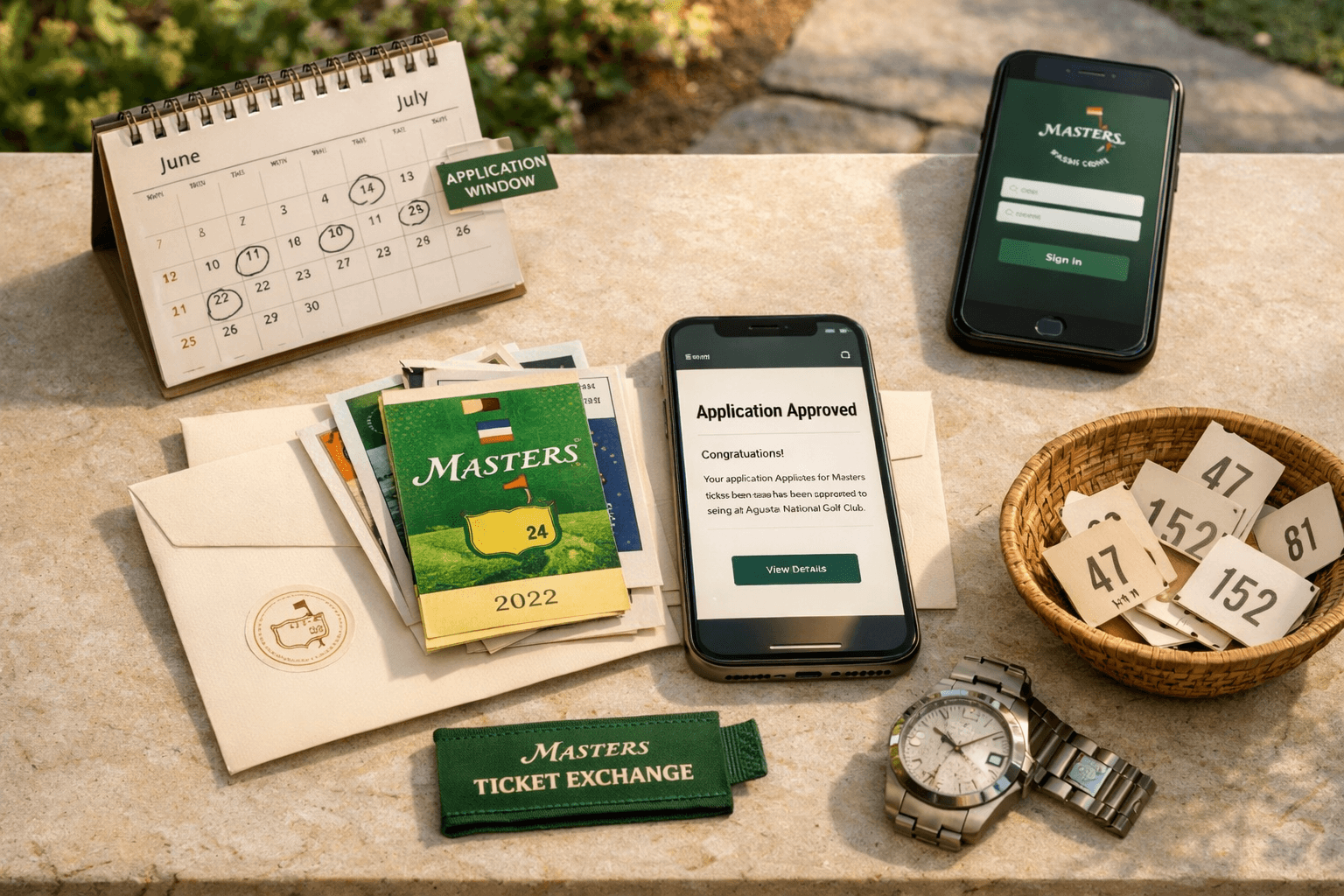
The public ticket lottery application window typically opens in June and closes in July.
Practice round tickets have separate, better-odds lotteries than tournament rounds.
Odds of winning any single year are low — treat this as a multi-year probability game.
The only legitimate resale option is Augusta National’s official Ticket Exchange.
Third-party “guaranteed ticket” sites are almost always scams or overpriced gray-market resellers.
How the Masters Ticket Lottery Actually Works
The Masters lottery is a random drawing run directly by Augusta National through Masters.com, and it’s the only official way to request tournament tickets as a new applicant. You create an account, submit an application during the open window, and wait for an email that tells you whether you were selected. There’s no fee to apply, and there’s no way to pay for better odds.
The club calls this the “ticket application” process rather than a raffle, but functionally it works the same way. Each application covers a specific round or set of rounds — practice rounds, the two single-day tournament rounds (Thursday and Friday), and weekend rounds (Saturday and Sunday) are handled through the process, though the weekend rounds have historically been folded into the broader draws with the tightest odds. You pick which days interest you when you apply, not after you’re selected.
One thing that trips up first-time applicants: selection doesn’t mean you get every day you asked for. You might get picked for a Monday practice round and nothing else. The system draws separately across different ticket categories, so a “win” for one day doesn’t carry over to another.
Creating Your Masters.com Account
You’ll need a Masters.com account before you can apply for anything, and it’s free to set up. The account also handles your official resale access later, so it’s worth creating even if you’re not ready to apply yet. Use an email address you check often — notification emails have historically landed in spam folders for some applicants.
What Information You’ll Need
Applying requires basic identity information and a mailing address, since badges (when won) are tied to the named account holder and can require ID verification at the gate. You cannot transfer a lottery win to a different name before the tournament, so don’t apply on behalf of a friend expecting to hand it off later.
When to Apply: Ticket Application Windows and Key Dates
The main public lottery application window for Masters tickets typically opens in June and runs through mid-July, with winners notified in the fall — usually October or November — ahead of the following April’s tournament. That means you’re applying roughly nine to ten months before you’d actually attend, which surprises a lot of casual fans who assume tickets go on sale a few months out like most events.
Augusta National doesn’t publish an exact identical date every year, so checking Masters.com directly each spring is the only reliable way to catch the window. Missing it by even a day typically means waiting a full year for the next shot.
Practice Round Windows Run Separately
Practice round lotteries (covering the Sunday before tournament week through the Wednesday, which includes the Par 3 Contest) often open and close on a similar general timeline to the tournament round lottery but are treated as a distinct pool. This matters because your odds differ significantly between the two.
Past Entrant and Waitlist Priority
If you’ve attended before through an official ticket, you may be offered a return opportunity in future years through what’s sometimes referred to as past patron priority, though this isn’t guaranteed and isn’t the same as a paid subscription. There’s also a waitlist system for the practice round application specifically, where being on file longer can modestly help your standing over multiple years, though Augusta National doesn’t publish exact weighting for how much.
What Your Odds Really Look Like
Your odds of winning the Masters tournament round lottery in any single year are low enough that you should plan around a multi-year strategy rather than a one-shot bet. Public reporting and fan community tracking over the years have put tournament round selection odds somewhere in the range of a few percent or less, depending on the specific round and year, while practice round odds run noticeably better because the applicant pool is smaller relative to the number of tickets released.
A lottery, by definition, gives every entrant the same odds regardless of how many times they’ve applied before or how much they’re willing to pay — that’s the entire structure of the Masters system, and it’s exactly what makes it feel maddening to serious fans.
This is the part most guides skip past too quickly. Because you’re not accumulating guaranteed progress toward a win, applying five years in a row doesn’t mean you’re “due.” Each year is its own independent draw. That said, applying every single year does compound your cumulative chance of hitting a win at some point, the same way buying more lottery tickets over time raises your overall odds even though each individual draw stays flat.
Here’s a rough comparison of how the different ticket categories tend to stack up, based on general applicant pool sizes and ticket volumes reported by fans and golf media over recent tournaments:
Ticket Category
Relative Applicant Pool
Relative Odds
Typical Notification Timing
Practice rounds (Mon-Wed)
Large but smaller than tournament rounds
Better than tournament rounds
Fall, prior year
Par 3 Contest
Very large
Comparable to or tighter than practice rounds
Fall, prior year
Tournament rounds (Thu-Fri)
Very large
Low, often cited around low single digits
Fall, prior year
Weekend rounds (Sat-Sun)
Very large
Tightest of all categories
Fall, prior year
The takeaway from that table isn’t complicated: if getting inside the gates matters more to you than watching Sunday’s back nine specifically, apply for practice rounds first. You’ll see the course, the players, and the atmosphere without fighting the worst odds in the whole system.
Practice Rounds vs. Tournament Rounds: Which Badge to Chase
A practice round badge gets you onto the grounds during Monday through Wednesday of Masters week, when players are still finalizing prep, while a tournament round badge covers the actual competitive rounds Thursday through Sunday. Both are real Masters experiences, but they feel different, and the price and access gap between them is worth understanding before you decide where to focus your applications.
Practice rounds have a looser, almost open-house feel. Players sign more autographs, walk closer to fans between shots, and the pace is relaxed since nothing’s on the line competitively. You’ll still see nearly every top player in the field warming up, and the Par 3 Contest on Wednesday is its own beloved mini-event with a party atmosphere.
Tournament rounds are the real thing — leaderboard drama, roaring crowds at Amen Corner, and the tension of watching a real chase for the green jacket. If your dream is specifically to watch Sunday’s final pairing walk up eighteen, no practice round substitutes for that.
Badge Pricing at a Glance
Patron badge pricing for tournament rounds has generally sat in the range of around $140-$140 per single-day tournament badge when sold at face value through the club (pricing can shift slightly year to year), while practice round badges have typically run somewhat lower. These face-value prices are dramatically below what tickets fetch on secondary markets, which is part of why demand is so lopsided.
Series Badges: Weekly vs. Daily Access
Some ticket categories are issued as multi-day “series” badges rather than single-day tickets, bundling access across a set stretch of the tournament, while others are strictly single-day. Series badges are rarer and tend to go to long-standing patrons more than new lottery applicants, so as a first-time hopeful, plan around single-day tournament or practice round tickets rather than expecting a full-week badge on your first try.
The Official Resale Route: Augusta National’s Ticket Exchange
If the lottery doesn’t come through, the Ticket Exchange run through Masters.com is the only legitimate way to buy a badge from someone else, and it’s the one resale channel Augusta National actually sanctions. Patrons who can’t use their tickets list them here, and buyers purchase directly through the platform at prices the seller sets, with the club overseeing the transaction.
This is different from a normal ticket resale site in an important way: Augusta National controls the badge’s validity, and only Exchange transactions transfer ownership legitimately. A badge sold outside this system, even from a friend, technically remains tied to the original patron account and can be denied at the gate.
Prices on the Exchange fluctuate with demand and can run well above face value, sometimes into the thousands of dollars for a single tournament day, especially for weekend rounds. Practice round tickets on the Exchange tend to be more reasonable, sometimes only modestly above face value, which makes this a genuinely practical entry point for fans who strike out in the lottery but have some budget flexibility.
Checking the Exchange regularly during the weeks before the tournament is worth doing even if current prices look steep, since inventory shifts as patrons’ plans change closer to the date. It’s not unusual to see prices soften slightly in the final days before a round if a seller wants certainty over profit.
Ticket Scams: How to Spot a Fake Masters Listing
If a site guarantees you Masters tickets for a flat fee outside the official Ticket Exchange, treat it as a scam until proven otherwise — Augusta National has no paid guarantee tier, and no legitimate broker can promise entry. This is one of the most common and costly mistakes casual fans make when they get impatient with the lottery.
Scam listings tend to show up heaviest on general resale marketplaces, social media marketplace posts, and ticket-broker sites that also sell tickets to concerts and other sports. Some of these sellers are running genuine gray-market resale (reselling a real badge they legitimately won, outside the official channel), which carries real risk since the badge may not transfer cleanly at the gate. Others are outright fraud, selling tickets that don’t exist at all.
A few warning signs show up consistently across scam reports golf fans and media have flagged over the years:
The seller asks for payment via wire transfer, gift cards, or cryptocurrency instead of a traceable payment method.
The listing promises “guaranteed” tickets before the official lottery notification dates have even passed.
The price is dramatically below what the official Exchange is currently showing for the same day.
The seller has no verifiable transaction history or reviews on a legitimate platform.
You’re asked to buy a “voucher” or “credential service” rather than an actual numbered badge.
Communication happens only through direct message with no company name or business address attached.
The site’s URL isn’t Masters.com and doesn’t clearly link back to Augusta National’s official resale system.
If you catch even one of these, walk away. There is no situation where a stranger on a resale site can offer better, faster, or more guaranteed access than Augusta National’s own Exchange, because the club is the only party that can actually validate a badge’s authenticity.
Backup Plans for the Years You Don’t Win
Most people reading this will not win the tournament round lottery this year, next year, or possibly for several years running — that’s simply the math of the system. Planning a realistic backup path matters more than obsessing over the lottery alone, and there are a handful of legitimate ways to still experience Masters week.
Applying for the practice round lottery every year alongside the tournament round lottery is the single best low-cost move you can make, since the odds are meaningfully better and the experience still delivers most of what fans actually want: seeing the course, the players, and the setting up close. Treat the tournament round lottery as the long-shot upside and the practice round as your realistic base case.
Local Hospitality and Package Deals
Augusta-area hospitality companies sell packages that bundle lodging, transportation, and sometimes badges sourced through legitimate channels, aimed at out-of-town fans who want a full week planned out. These packages vary enormously in price and legitimacy, so vet any company carefully, check for a real business address and reviews outside their own website, and confirm exactly how they’re sourcing the badge itself before paying anything.
Watching From Outside the Ropes (Literally)
Some fans without badges still travel to Augusta during Masters week just for the atmosphere around Washington Road, the merchandise shop lines, and the general buzz of the town, without ever getting onto the grounds. It’s not the same as attending, obviously, but for some fans it scratches the itch while they keep applying in future years.
Building a Multi-Year Application Habit
Treat the Masters lottery the way you’d treat a long-term investment rather than a single bet. Apply every single year for both the tournament and practice round draws, keep your Masters.com account information current, and don’t skip a year out of frustration — skipping doesn’t improve future odds, and staying in the pool costs nothing but a few minutes of your time. If you’re mapping out a broader Masters week trip once you do win, sites like Golf Yet run practical planning guides that cover logistics beyond just the ticket itself, which is worth a look once you’ve got a badge locked in.
Frequently Asked Questions
How much do Masters Tournament tickets cost at face value?
Single-day tournament badges have generally run in the range of around $140 when purchased at face value through the lottery, with practice round badges typically priced somewhat lower. Resale prices through the official Exchange run considerably higher, especially for weekend rounds.
Can I just buy Masters tickets online without entering the lottery?
No — Augusta National doesn’t sell tournament tickets directly to the general public outside the Masters.com lottery and the official Ticket Exchange. Any site offering direct “buy now” tournament tickets outside those two channels isn’t an authorized source.
Do past Masters attendees get priority in future lotteries?
Past patrons sometimes get return opportunities through a priority system, and the practice round lottery includes a waitlist where longer standing can modestly help. Neither guarantees a win, and Augusta National doesn’t publish exact odds for either group.
Is it worth applying for practice round tickets if I really want a tournament round?
Yes, apply for both every year. Practice round odds run better than tournament round odds, and you still see the course, the field, and the Par 3 Contest, which makes it a strong consolation path while you keep chasing the bigger prize.
Six men have won the Masters Tournament more than once, and understanding who they are tells you almost everything about what Augusta National rewards. If you're searching for master golf winners, you're in the right…
The PGA TOUR is set to introduce distance-measuring devices for select events in 2025, aiming to enhance the pace of play during competitions.Distance-measuring devices, commonly known as rangefinders, enable golfers and their caddies to quickly…
You shot 82 last Saturday, your best round of the year, and your Handicap Index barely moved. That's not a glitch in the GHIN app. That's the soft cap quietly doing its job, and it's…