Golf Club Distance Chart: Average Yardages by Skill Level
17 September, 2026Logan Hart0 Comments1 category
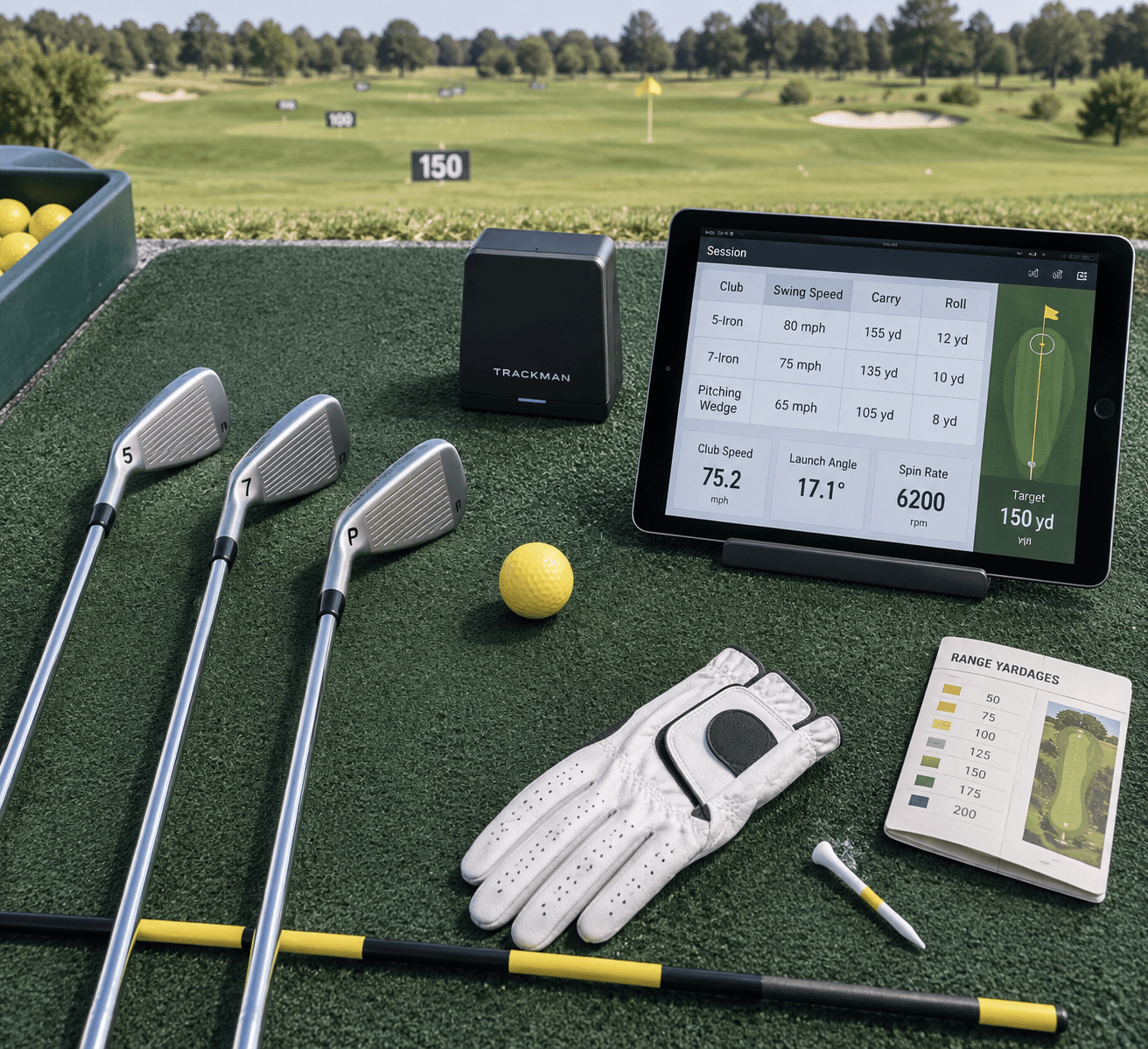
Here’s the number that trips up most weekend golfers: a 90 mph swing speed and a 75 mph swing speed can both belong to “15-handicap golfers,” yet one guy hits his 7-iron 150 yards and the other tops out at 115. Same skill level, 35-yard gap. That’s the dirty secret behind every iron distances golf chart you’ve ever seen online.
Those charts aren’t wrong, exactly. They’re just incomplete. Swing speed drives distance far more than handicap does, and if you’re measuring yourself against a generic number without knowing your own speed, you’re comparing apples to a completely different orchard.
Average Iron Distances by Skill Level
Here’s a working reference table built from typical launch monitor data and widely cited swing speed norms. Treat it as a starting point, not a scorecard grade.
Skill Level
Driver Swing Speed
7-Iron Carry
5-Iron Carry
PW Carry
Tour/Elite
110-120 mph
172-180 yards
195-205 yards
135-140 yards
Low Handicap (0-9)
95-105 mph
155-165 yards
175-185 yards
120-130 yards
Mid Handicap (10-18)
85-95 mph
140-150 yards
155-165 yards
105-115 yards
High Handicap (19+)
75-85 mph
115-130 yards
130-145 yards
85-100 yards
Senior (60+, moderate speed)
70-85 mph
110-130 yards
120-140 yards
80-95 yards
Women (average recreational)
65-80 mph
100-120 yards
110-130 yards
70-85 yards
Why the Ranges Overlap So Much
Notice the mid-handicap and senior rows practically touch. That’s not a typo. Age and handicap tell you almost nothing about clubhead speed on their own. A 58-year-old with a smooth, fast tempo can easily out-drive a 24-year-old 20-handicapper who muscles the ball with a slower, disconnected swing.
Reading the Table the Right Way
Find your row by swing speed, not by ego. If you don’t know your number, a local indoor simulator session or a club fitting usually clocks it in about ten minutes. That single data point matters more than any handicap card.
7-Iron Distance: The Benchmark Club Everyone Argues About
The 7-iron sits in the middle of the set, which is exactly why golfers use it as their bragging-rights club. A realistic average for a mid-handicap player runs 140 to 150 yards of carry, while low-handicap players with faster speeds push 155 to 165.
Here’s the catch: most golfers report their 7-iron number as total distance (carry plus roll), not carry alone. That inflates the number by anywhere from 5 to 15 yards depending on turf firmness and launch angle. If your buddy says he hits it 165 and a launch monitor later shows 152 yards of carry, he wasn’t lying — he just measured a different thing.
Don’t let a friend’s total-distance brag talk you into swinging harder than your tempo allows. Carry distance is the only number worth trusting when you’re comparing clubs or fitting a set, because roll depends on ground conditions that change every single round.
Long Irons vs. Short Irons: The Accuracy Myth
Long irons are not more forgiving than short irons, no matter what your gut tells you after topping a 3-iron off the tee. It’s actually the opposite: less loft means more sidespin gets converted into curve, and a shallower angle of attack punishes off-center strikes harder.
Why the Gaps Get Tighter at the Top of the Bag
Standard loft gaps run 3 to 4 degrees between irons, which typically produces 10 to 12 yards of separation from club to club in a well-built set. But long irons (3-iron, 4-iron) often produce smaller real-world gaps because mis-hits cost you more carry distance than they do with a short iron.
The Hybrid Fix
This is exactly why so many mid-to-high handicap players have ditched their 3-iron and 4-iron for hybrids. A hybrid with the same loft as a 3-iron typically launches higher and lands softer, closing the gap between “distance on paper” and “distance you actually get on the course.” If you’re hitting your irons well below the chart above, check whether your long irons are the culprit before blaming your swing speed.
What Actually Moves the Needle on Your Numbers
If you want more realistic self-assessment than a generic chart offers, track these factors in order of impact:
Swing speed — the single biggest driver of carry distance across every club in the bag.
Strike quality — a center-face hit can add 8 to 10 yards over a strike from the toe or heel.
Launch angle and spin — too much spin balloons the ball and kills distance, especially with short irons.
Shaft flex and length — an off-the-rack shaft that’s too stiff or too soft for your speed leaks yards.
Altitude and temperature — a round at 5,000 feet in July plays noticeably longer than a cold morning at sea level.
Turf and course conditions — firm fairways add roll that inflates your total distance, not your carry.
Comparing yourself to PGA Tour average iron distances is the fastest way to feel bad about your golf game for no good reason. Tour players average 172 to 180 yards with a 7-iron because they’re swinging 110+ mph with elite strike quality on every rep. That’s not the benchmark for a weekend player carrying a 12 handicap. Compare yourself to your own swing speed tier, not to broadcast television.
A proper club fitting, whether through a local shop or resources like the fitting guides on golfyet.com, will tell you more about your real numbers than any chart ever will. Launch monitor sessions typically run $50 to $150 and take less than an hour, and they end the guessing game for good.
Frequently Asked Questions
What is a good 7-iron distance for a beginner?
A beginner with a slower swing speed (70-85 mph) typically carries a 7-iron 115 to 135 yards. Don’t chase a bigger number by swinging harder — better strike quality adds more yardage than extra effort ever will.
Is carry distance or total distance more important to track?
Carry distance matters more because it’s consistent across conditions, while total distance changes with turf firmness and slope. Use carry when comparing clubs; use total only to plan actual shots on the course that day.
Why do two golfers with the same handicap hit the ball such different distances?
Handicap measures scoring consistency, not raw power, so a 15-handicap with a smooth 95 mph swing will out-carry a 15-handicap swinging 78 mph by 20-plus yards on iron shots, even though both shoot similar scores.
Most golfers top the ball, thin it, or slice it into the next fairway, and blame their swing. The real problem usually starts before the club even moves: a bad grip, poor alignment, or trying…
Every April, over 200,000 people apply for a shot at roughly 30,000 daily tickets to watch golf at Augusta National Golf Club, and most of them get a polite no. Masters Tournament tickets aren't sold…
Every April, one tournament stops the golf world cold. If you're searching for when is the golf masters in 2026, the answer is April 6–12 at Augusta National Golf Club in Augusta, Georgia. That's the…