Best Wedges for High Handicappers & Beginners 2026
18 September, 2026Logan Hart0 Comments1 category
Tour pros carry wedges with 4 to 6 degrees of bounce and razor-thin soles because they strike the ball with a descending, precise blow every single time. Copy that setup as a 20-handicapper and you’ll catch the leading edge in the turf on half your chips. The best wedges for high handicappers do the opposite job: wide soles, generous bounce, and a cavity-back design that forgives a slightly fat or thin strike.
If you’re still chunking chips with last year’s cheap wedge, the fix probably isn’t your swing. It’s the tool.
Why Tour-Level Wedges Sabotage High Handicap Golfers
Low-bounce wedges (4-8 degrees) are built for players who hit down steeply and take a shallow, precise divot. Most high handicappers do the opposite: they hit inconsistently, sometimes catching the ground early, sometimes thin. That mismatch is exactly why so many mid-to-high handicap golfers blame their hands for a problem that’s actually built into the club.
The Bounce Mismatch Explained
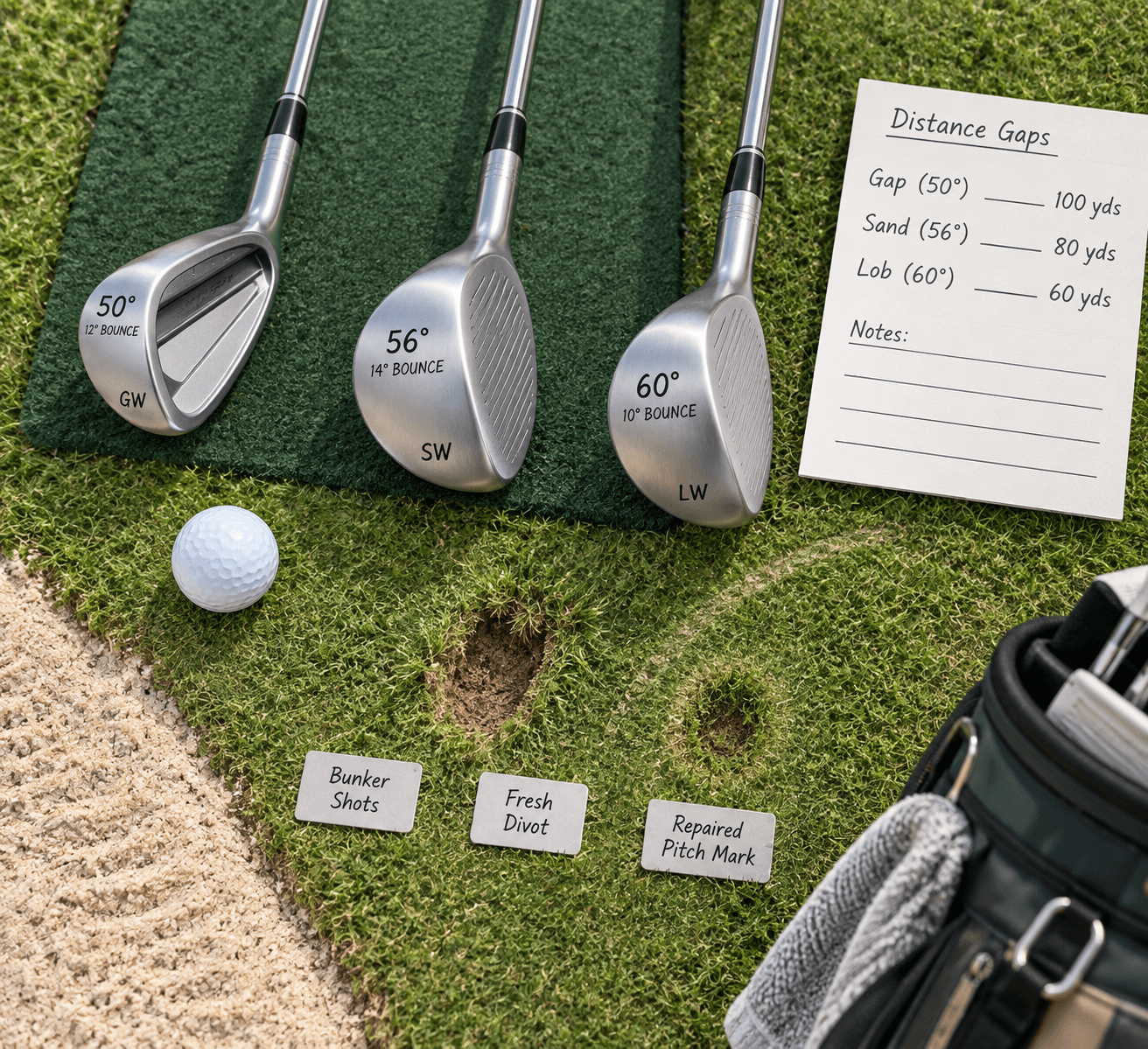
Bounce is the angle between the leading edge and the trailing edge of the sole. High bounce (10 degrees or more) lets the club skid through turf instead of digging in. Low bounce lets the leading edge dig, which is great if your strike is consistent and terrible if it isn’t.
The Chunk-and-Thin Cycle
Chunk a shot with a low-bounce wedge, and the leading edge stabs into the turf before the ball. Thin it, and there’s no cushion to save you. High bounce (10-14 degrees) gives you a margin on both sides of that error, which is the entire point for anyone still building consistent contact.
Buying a £180 tour wedge before you’ve sorted your strike pattern is one of the most common wastes of money in golf. Save that upgrade for when your handicap is closer to single figures.
Gap, Sand, or Lob: What Your Bag Actually Needs
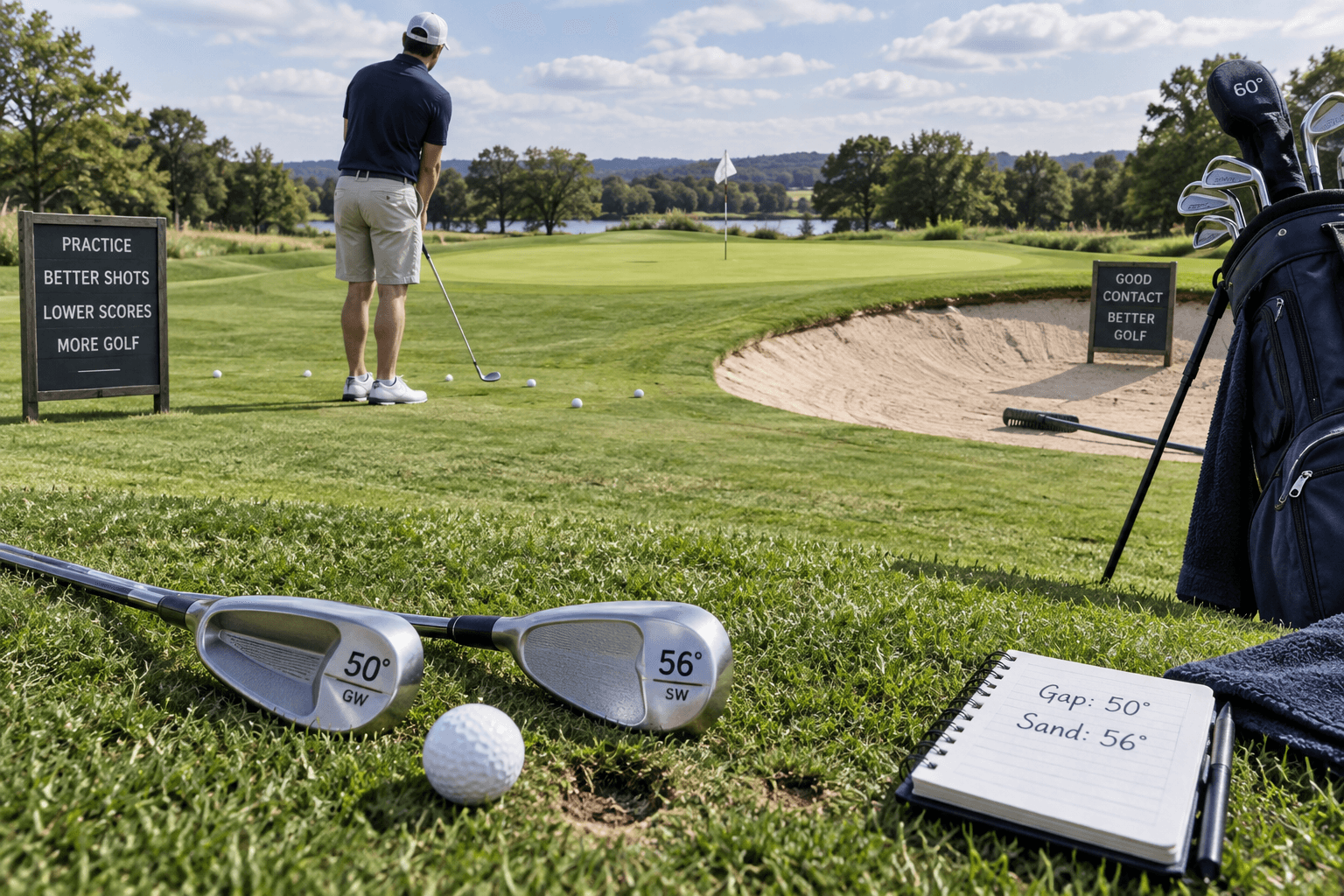
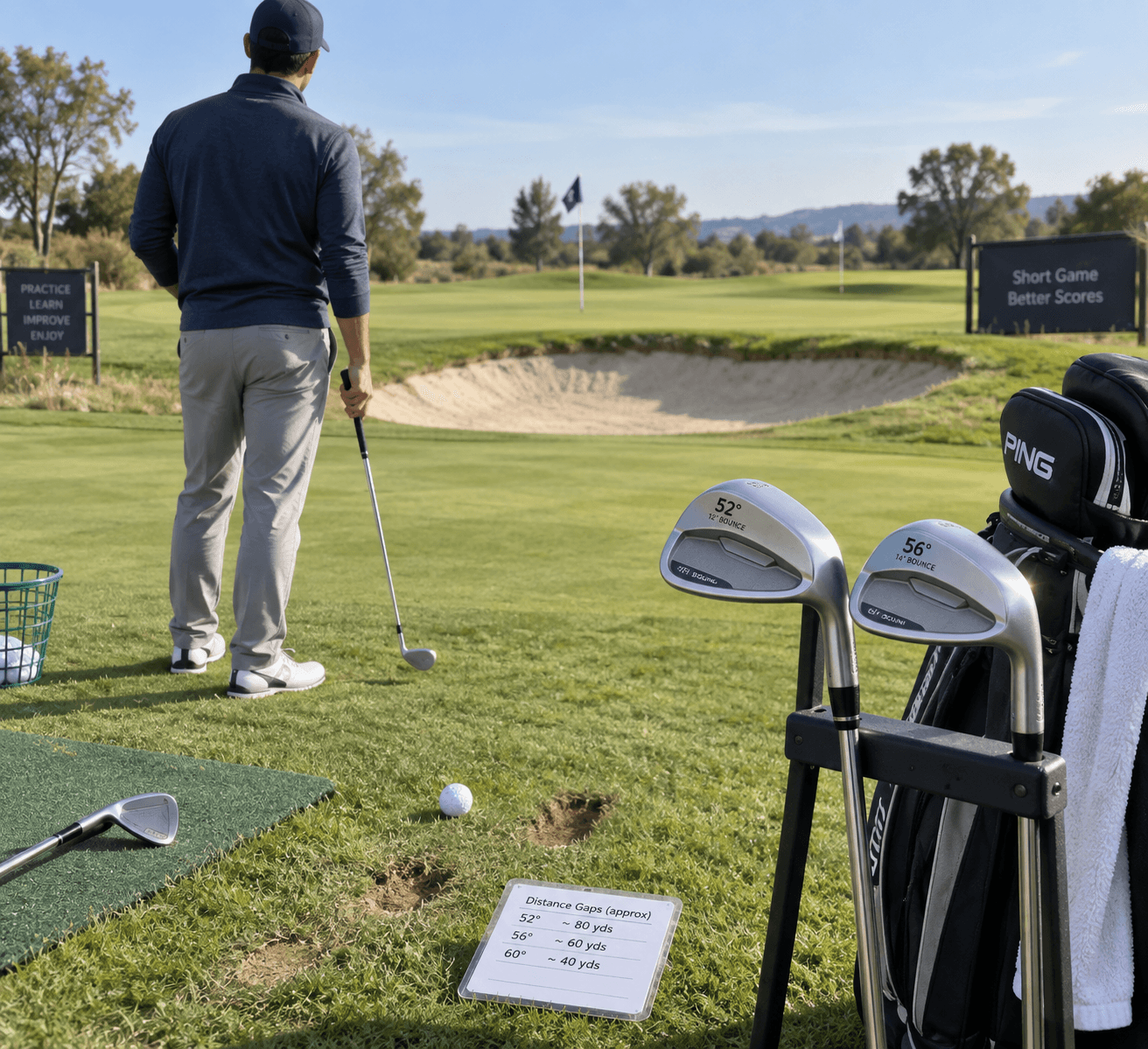
You need a gap wedge, a sand wedge, and probably a lob wedge, but only if the lofts are spaced properly. Most beginners buy two wedges with overlapping lofts (say, 52 and 54 degrees) and leave a gaping hole elsewhere in their yardages.
Loft Gapping That Actually Works
A sensible progression runs pitching wedge (44-46°), gap wedge (50-52°), sand wedge (54-56°), and lob wedge (58-60°) if you carry one. That’s roughly 4-6 degrees between each club, which translates to about 10-15 metres of distance separation for most amateur swing speeds.
Do You Need a Lob Wedge at All?
Not yet, honestly. A 60-degree wedge is unforgiving off tight lies and takes real technique to control around the green. Most high handicappers get more consistent results carrying a 56-degree sand wedge as their highest-lofted club and leaving flop shots to the pros on telly.
Sole Grind and Width: The Spec That Matters More Than the Logo
Sole grind shapes how the club interacts with turf, and it matters more than which brand is stamped on the back. A wide sole with a full, rounded grind (often labelled “S” or “F” grind by brands like Cleveland and Callaway) resists digging and suits sweepers and steep hitters alike.
Narrow, heavily relieved grinds (Cleveland’s low-bounce “V” or Callaway’s “S” grind at low lofts) are shaped for players who work the face open and closed through impact. That’s a shot-shaping skill most club golfers haven’t built yet, and forcing it too early just adds another variable to a strike that’s still inconsistent.
Course conditions matter too. If you play firm, tight fairways through a typical dry British summer, a slightly narrower sole helps. If your course holds moisture most of the year, like a lot of parkland courses across the UK, a wide, high-bounce sole is the safer, more forgiving call.
Best Wedges for High Handicappers in 2026: What to Actually Buy
Cavity-back, wide-sole wedges from Cleveland, Callaway, Cobra, and Ping dominate this category for good reason: they hide mishits, add forgiveness on off-centre strikes, and cost far less than tour blades. Expect to pay £90-£140 per wedge, or around £250-£350 for a properly gapped three-wedge set.
Model | Type | Bounce (approx.) | Price (approx.)
—|—|—|—
Cleveland CBX | Cavity-back, wide sole | 10-12° | £110-£130
Here’s a practical shopping sequence to follow if you’re building a wedge set from scratch:
Get fitted or at least check your current pitching wedge loft before buying anything else.
Choose a gap wedge 4-6 degrees weaker than your pitching wedge.
Add a sand wedge around 54-56 degrees with 10-14 degrees of bounce.
Skip the lob wedge until your handicap drops toward the mid-teens.
Prioritise cavity-back models over blades, regardless of brand.
Test turf interaction at a range with real grass, not mats, before you commit.
Cavity-back wedges do trade away some spin control and shot-shaping ability compared with a tour blade. That’s a fair trade at this stage: you’re not losing shots to spin, you’re losing them to chunks and thins, and this design fixes the bigger problem first. For more on tightening up your short game once your wedges are sorted, golfyet.com has practical breakdowns on chipping technique that pair well with the gear side of things.
Frequently Asked Questions
What bounce is best for a high handicapper?
Aim for 10-14 degrees of bounce on your sand wedge and gap wedge. That range forgives both slightly fat and slightly thin strikes, which covers the most common miss patterns for mid-to-high handicap golfers.
Should beginners carry three wedges or four?
Three is plenty for most beginners: pitching, gap, and sand wedge, spaced roughly 4-6 degrees apart. A fourth lob wedge adds value only once you can control distance and trajectory with the other three.
Are expensive tour wedges worth it for a 20+ handicap?
No. Tour wedges use low bounce and thin soles designed for precise, descending strikes, which punishes inconsistent contact. A £100-£130 cavity-back wedge with more bounce will save more strokes for less money.
The demand for street-legal golf carts is on the rise, with many consumers seeking versatile and eco-friendly transportation solutions. Starting at $12,400, the Bintelli Beyond 4PR is positioned as a high-end option in this growing…
Golfers of all skill levels encounter the lost ball rule frequently on the course. According to the Rules of Golf, a ball is deemed lost if not found within three minutes after search begins. This…
Improving your golf swing requires a thorough understanding of the underlying mechanics. A proper swing combines technical precision, physical coordination, and mental focus to achieve consistent ball striking and directional control.Breaking down the golf swing…