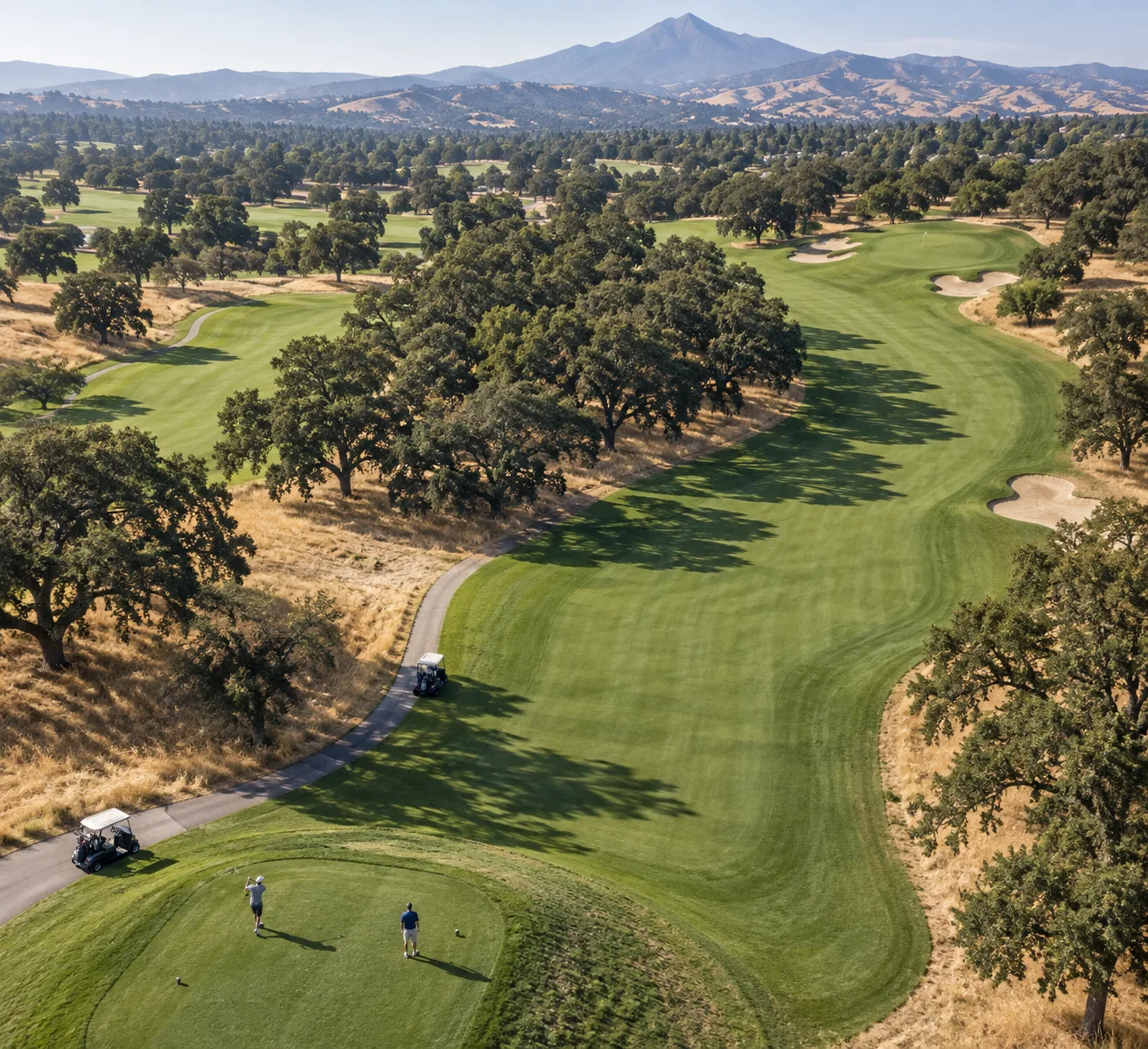
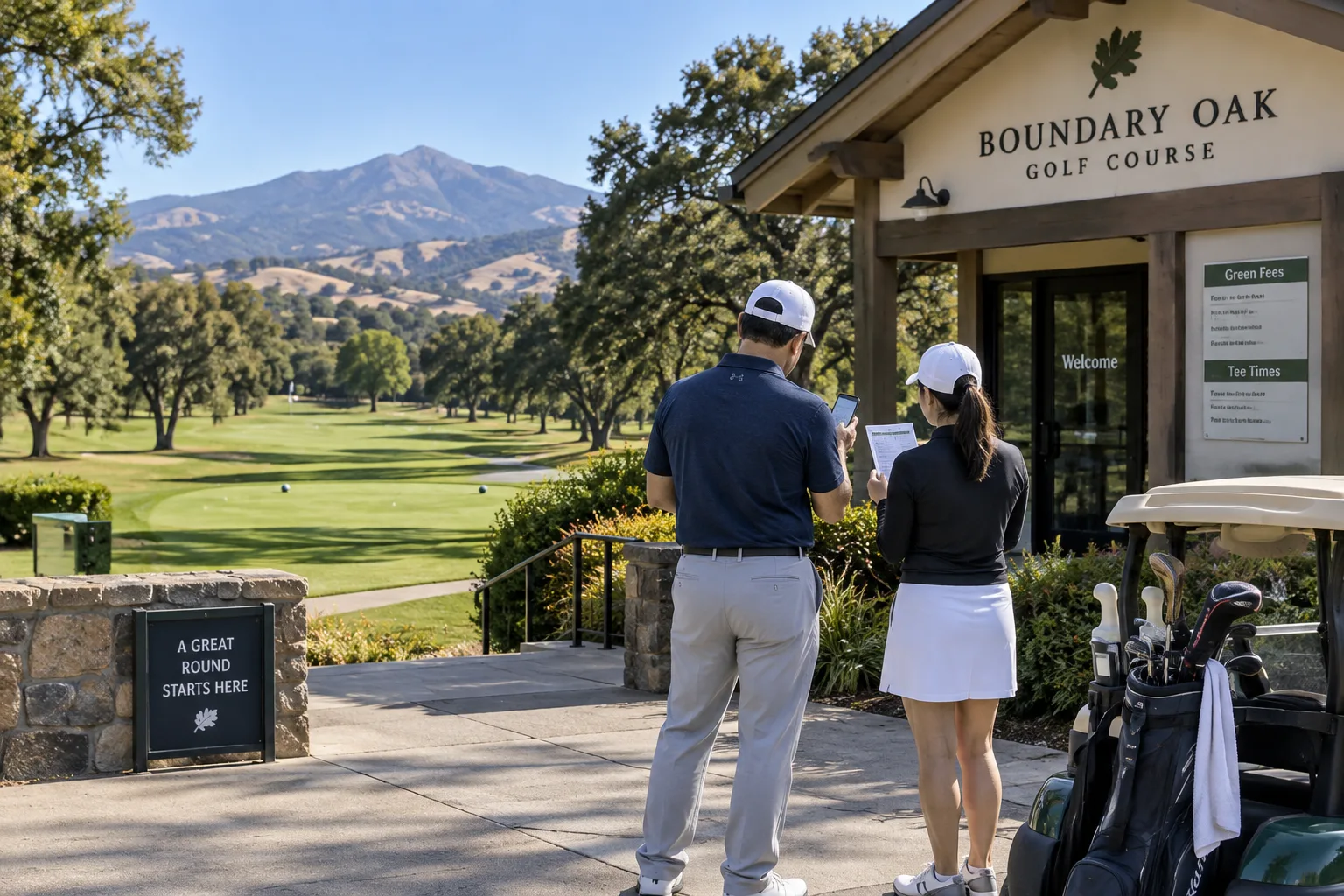
Slice a drive on the 5th at Boundary Oak Golf Course and you won’t find it. The oaks swallow it whole, and that ball is gone for good. This is what surprises a lot of first-timers: boundary oak golf course is a public municipal track, not some private members-only club tucked away in the Diablo foothills, and it plays a lot tougher than its friendly, tree-lined photos suggest.
If you’re weighing up whether to book a round in Walnut Creek, this breaks down the actual layout, the holes that bite amateurs hardest, and what you need to know before you show up with your clubs.
Where It Sits and What You’re Playing
Boundary Oak Golf Course sits off Oak Road in Walnut Creek, tucked against the base of Mount Diablo in the East Bay. It’s owned and operated by the City of Walnut Creek, which is the detail most first-time visitors get wrong.
People assume the manicured fairways and mature oak canopy mean private club, but this is a council-run public course open to anyone who books a tee time. That matters for pricing and access, and it means you don’t need a member to get you on.
The course plays to a Par 72 across 18 holes, with total yardage stretching to roughly 6,631 yards from the back tees. The slope rating from the championship tees sits around 132, which puts it firmly in “don’t underestimate this” territory for a municipal layout. Front-tee yardage drops closer to 5,300 yards, making it far more forgiving for beginners or high handicappers who want to enjoy the scenery without losing a dozen balls.
The terrain rolls with the foothills rather than sitting flat, and that’s the first thing that catches out golfers who’ve only played flatter Bay Area municipal courses like Diablo Creek or Franklin Canyon.
The Holes That Actually Punish Bad Golf
Scenic doesn’t mean soft. The holes at Boundary Oak that cause the most damage aren’t the longest ones on the card, they’re the ones where an amateur mistake compounds fast.
The Oak-Lined Doglegs
Several holes on the front nine dogleg through corridors of mature oak, and the 5th is the one that gets talked about in the clubhouse bar afterwards. Cut the corner too aggressively and your ball either clips a branch and drops dead, or it’s gone into unplayable rough. The safer play is a controlled iron or hybrid off the tee to the fat part of the fairway, sacrificing 20-30 yards for a clean approach. Going for the hero shot here rarely pays off, even for low-handicap players.
Elevation Shifts That Wreck Club Selection
The back nine climbs and drops in ways that fool your yardage. A shot that looks like a standard 150-yard 8-iron might actually need a 7-iron because you’re hitting into an elevated green, or it might need a 9 because you’re dropping into a bowl. Golfers who don’t adjust for elevation consistently come up short or fly the green completely. Trust the yardage markers on the sprinkler heads, but also trust your eyes when a green sits visibly above or below the tee.
The Water and Bunker Combination on the Closing Holes
The finishing stretch brings water into play alongside strategically placed bunkers, and it’s where cards fall apart after a decent front nine. A conservative lay-up beats a heroic carry nine times out of ten here.
Practice Facilities, Clubhouse, and What to Book
You can warm up properly before you tee off, which matters more here than at a flat, forgiving course. Boundary Oak has a full driving range, putting green, and a chipping area, so there’s no excuse for turning up cold and shanking your opening tee shot into the oaks.
The clubhouse has a pro shop stocked with essentials (gloves, balls, basic apparel) and a food and drink setup for pre- or post-round refuelling. It’s a working municipal facility rather than a lavish members’ lounge, and that’s exactly what most weekend golfers actually want: no stuffiness, no dress-code lectures, just a place to grab a coffee and check the scorecard.
Golf carts are available to rent, and given the elevation changes on the back nine, I’d recommend one unless you’re genuinely fit for hill walking with a bag. Walking is allowed, but the terrain will test your legs by hole 14.
Green Fees, Tee Times, and Booking Smart
Green fees at Boundary Oak vary by day and season, generally running higher on weekends and holidays than weekday rounds, with twilight rates offering the cheapest way to play. Carts are booked separately from the green fee itself.
Booking ahead isn’t optional if you want a weekend morning slot. This course is popular with the whole Walnut Creek and wider Contra Costa golfing crowd, and Saturday and Sunday tee times fill up fast, often a week or more in advance during spring and summer.
Decide whether you want an early weekday round for lighter traffic and lower fees.
Book online or by phone at least 5-7 days ahead for weekend slots.
Choose twilight if budget matters more than daylight.
Reserve a cart in advance if you know the elevation will be an issue for you.
Arrive 30-45 minutes early to hit the range and putting green first.
Check the club dress code, which is casual but does expect collared shirts.
Confirm your group size, since some tee sheet slots cap at four players.
Tee Time Type
Typical Price Range (£)
Best For
Weekday morning
£30-£45
Locals, retirees, quieter rounds
Weekend morning
£50-£70
Groups wanting prime conditions
Twilight (weekday)
£20-£30
Budget players, shorter daylight rounds
Twilight (weekend)
£25-£35
Casual weekend golf on a budget
For golfers who want a proper pre-round prep routine broken down hole by hole, sites like golfyet.com carry course-difficulty guides worth reading before you book, especially if elevation changes aren’t something you’ve played much before.
Boundary Oak also runs membership packages and hosts outings and society events throughout the year, which is worth asking about at the pro shop if you’re local to Walnut Creek and planning to play regularly rather than as a one-off visit.
Frequently Asked Questions
Is Boundary Oak Golf Course private or public?
It’s public, owned and run by the City of Walnut Creek. Anyone can book a tee time online or by phone, no membership required, though the course does also offer membership packages for regular players.
How difficult is Boundary Oak for a mid-handicap golfer?
Expect a real challenge despite the scenic layout. A slope rating around 132 from the back tees, combined with oak-lined doglegs and sharp elevation changes on the back nine, makes this tougher than a typical flat municipal course.
Do I need a cart, or can I walk the course?
Walking is allowed, but a cart is worth booking given the hill climbs on the back nine. If you’re reasonably fit and enjoy the exercise, walking is fine, just budget extra time and energy for the elevation shifts.
Picking up a first set of clubs is one of the few purchases in golf that actually changes whether you stick with the sport. The top golf sets for beginners listed here were evaluated on…
Patrick Cantlay has never lifted a major championship trophy, yet he's banked a $15 million FedEx Cup bonus and spent stretches ranked inside the world's top five. That gap between "no major" and "elite ranking"…
The sport of golf is governed by a set of regulations that ensure fair play and consistency across all levels, from amateur enthusiasts to professional competitors. These regulations, known as the Golf R&A Rules, are…