Ask ten club golfers whether they’d rather hit a fade or a draw, and nine will say draw, chasing the extra 10-15 yards they think it buys them. That instinct is costing them strokes. The real question in the fade vs draw in golf debate isn’t which shot is better on paper, it’s which one you can repeat under pressure on the 15th hole with your card on the line.
Most weekend golfers have never actually hit either shot on purpose. They’ve hit a slice, called it a fade, and built a whole game plan around fixing something that was never broken in the first place. Sorting out the real difference is where this gets useful.
What Fade vs Draw in Golf Actually Means
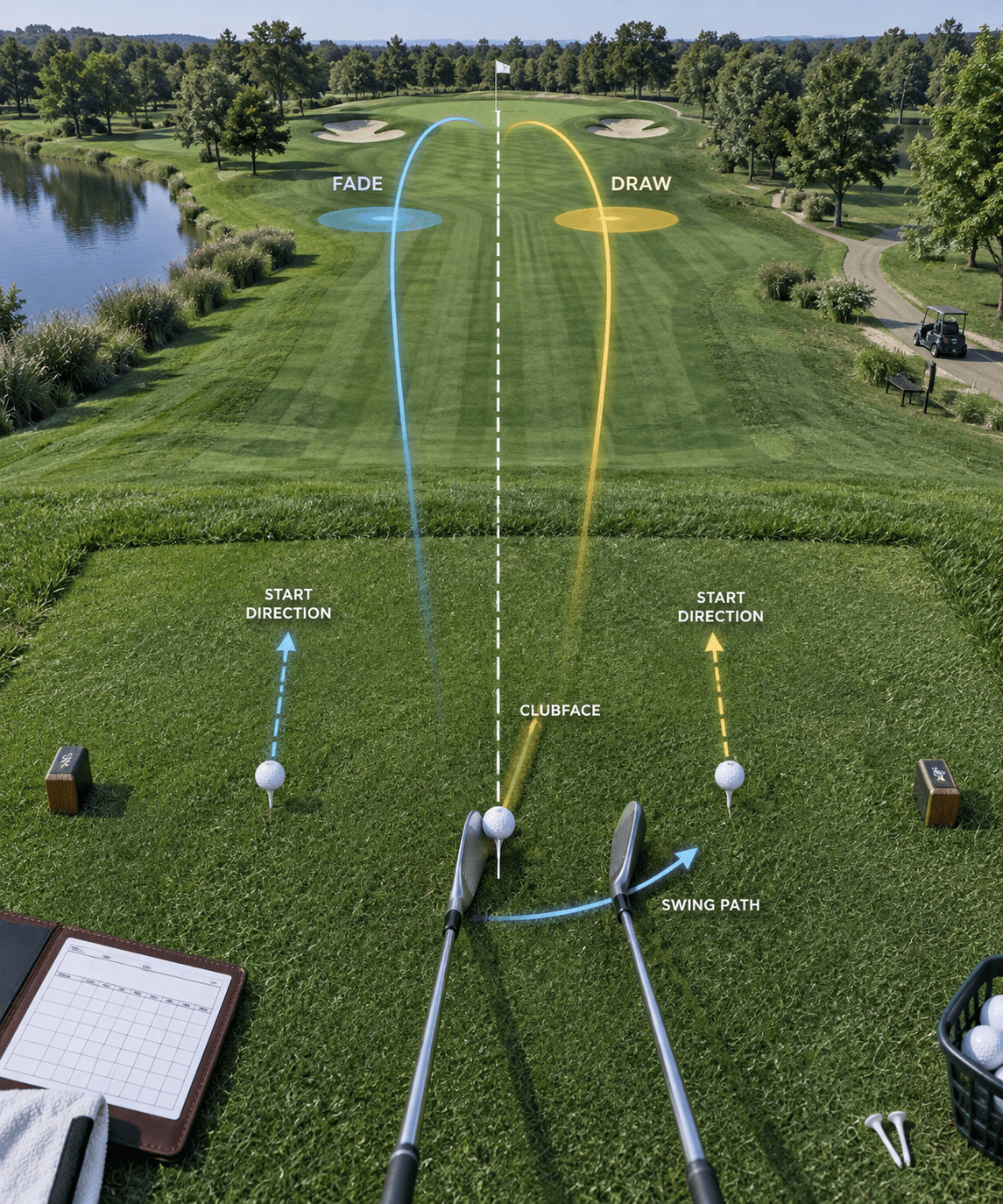
A fade curves gently from left to right for a right-handed golfer and lands softly; a draw curves right to left and tends to release further on landing. Both are controlled, intentional shots, not accidents. That distinction matters more than most golfers realize.
Fade: Definition and Feel
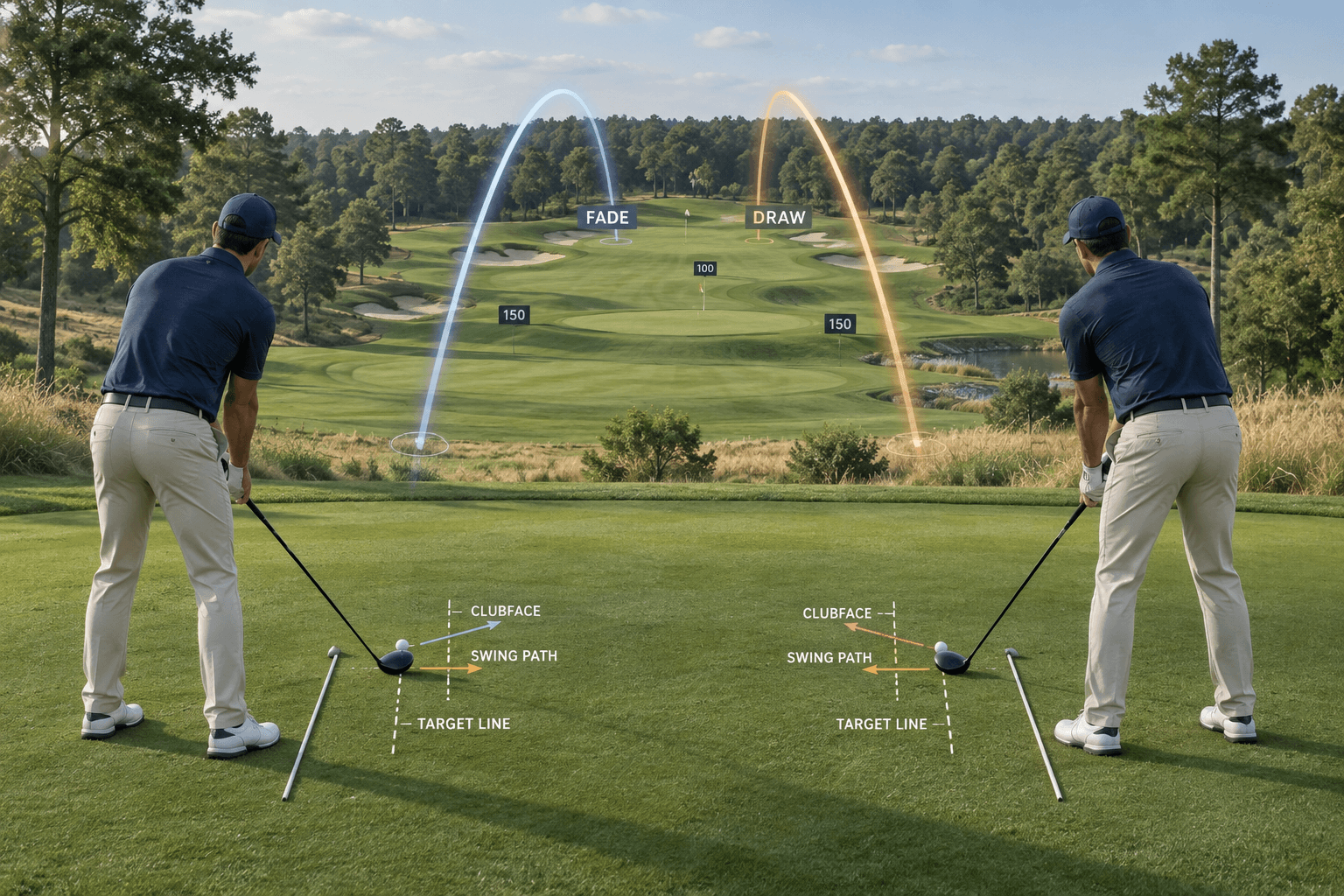
A fade starts slightly left of your target and drifts back toward it, finishing just right of where it started. The ball flies a touch higher, lands softer, and holds the green better than a draw. Tour players like Justin Rose have built entire careers around a reliable fade because it’s the shape that misses in the safer direction for most course designs.
Draw: Definition and Feel
A draw starts right of target and curls left, usually rolling out further once it lands because of the lower, more topspin-heavy flight. Dustin Johnson leans on a draw for the extra roll off the tee. It’s not automatically longer through the air, but it can add distance on firm fairways where the ball keeps running.
Where Slice and Hook Fit In
A slice is just a fade that’s gone too far, curving 20-30 yards off line instead of 5-10. A hook is the same story for a draw, an exaggerated, often uncontrolled version. The difference isn’t the direction the ball moves, it’s whether you meant for it to happen and whether you can repeat it on demand.
The Physics: Clubface Angle vs Swing Path
Shot shape comes down to two things working together: where your clubface points at impact, and the direction your club is swinging through the ball. This is the modern ball flight law, and it’s replaced the older, oversimplified idea that grip alone decides everything.
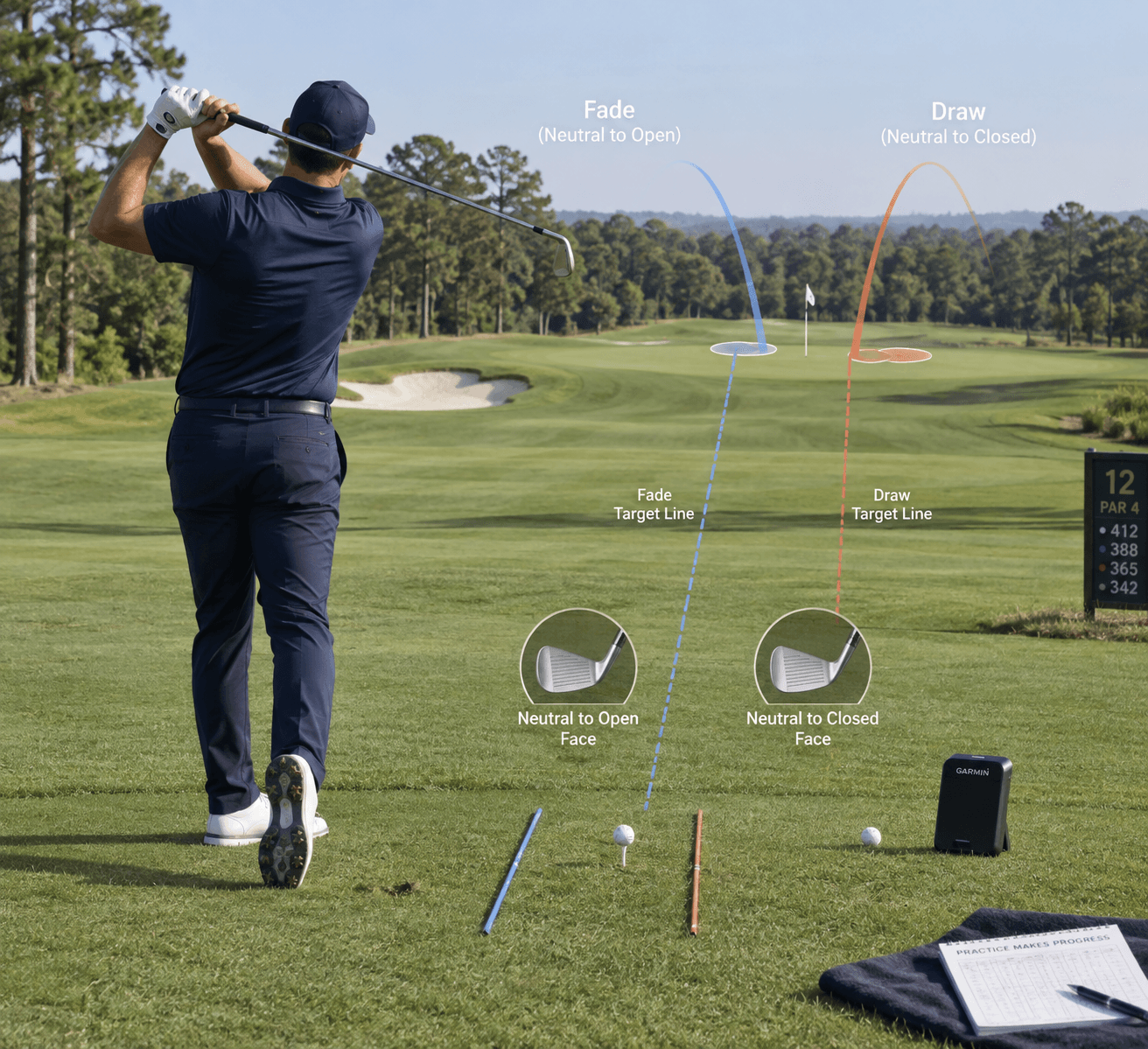
For a fade, your clubface needs to be open relative to your swing path at impact, even if both are pointing left of the target. For a draw, the face stays closed relative to the path. The gap between face and path is what creates curve; the face angle at impact is what mostly decides your starting direction.
This is why a lot of golfers who fiddle with grip alone get frustrated. You can rotate your hands into a strong grip all day, but if your swing path doesn’t change, you’ll just hit pulls and pushes with the same shape you started with. Swing path is the piece most club golfers ignore, and it’s usually the one that actually needs work.
Grip and Setup Changes That Actually Shape the Ball
Small setup shifts nudge the ball flight without demanding a full swing overhaul. None of these work in isolation, though, they need to pair with the path change described above.
Rotate your grip slightly toward a stronger position (hands turned more under the shaft) to encourage a draw-friendly closed face.
Weaken your grip slightly (hands turned more on top of the shaft) to support a fade.
Aim your stance and shoulders along the path you want the ball to start on, not the final target.
Adjust ball position slightly back in your stance for a fade, slightly forward for a draw.
Keep your clubface aim as your control on starting direction, and let path do the curving.
Practise each change on the range in isolation before combining them on the course.
Track ball flight with alignment sticks so you can see path and face separately, not guess.
Why Forcing a Draw Often Wrecks Your Scorecard
This is the part most golf advice skips. Chasing a draw for extra distance is the single most common way weekend golfers turn a bogey into a double. If you can’t hit a draw consistently, it’s not the shot for you, no matter how far Dustin Johnson hits his.
A repeatable fade, even a short one, is a scoring weapon because it takes one entire side of the golf course out of play. Miss right, you’re still findable. A draw that goes wrong turns into a hook that finds the trees, the water, or a neighbour’s garden on tighter parkland courses across the UK.
Course management should decide your shot shape, not ego. A tight, tree-lined course like something you’d find at many inland English clubs rewards a fade off the tee because it’s the safer miss. A wide-open, links-style course where roll-out adds real yardage is where a draw earns its keep.
Before you try to add either shape on purpose, get your contact solid first. Trying to curve the ball before you can hit it out of the middle of the face consistently just adds a second problem on top of the first. Sites like Golf Yet break down drills for building that consistency before you start shaping shots, and that order matters more than which shape you eventually pick.
Fade vs Draw: Quick Comparison
Factor
Fade
Draw
Curve direction (right-handed golfer)
Left to right
Right to left
Typical trajectory
Higher, softer landing
Lower, more roll-out
Distance impact
Slightly shorter carry
Can add 10-15 yards of roll
Best course fit
Tight, tree-lined layouts
Wide, links-style courses
Related mishit
Slice (exaggerated)
Hook (exaggerated)
Practicing Shot Shapes Without Wrecking Your Swing
Pick one shape and practise it in isolation for a full range session, at least 40-50 balls, before trying to switch between both in the same round. Mixing fade and draw practice too early just confuses your swing path and undoes progress on both.
Use a simple gate drill: two alignment sticks stuck in the ground just outside your ball’s start line and finish line. If you’re working on a fade, set the gate so the ball has to start left of target and curve back through it. This gives you instant feedback instead of guessing where the ball ended up.
Wind is the other variable that catches golfers out once they’ve got a shape working. A fade held into a left-to-right crosswind will curve more than usual; a draw into a right-to-left wind gets straightened out and can even hold its line longer. On a blustery day at a coastal course, that difference is worth knowing before you commit to a shot on the tee.
Frequently Asked Questions
Is a draw always better than a fade for distance?
No. A draw tends to roll out further on firm ground, but a fade with solid contact carries almost the same distance through the air. On wet UK fairways in autumn and winter, the roll-out advantage of a draw shrinks a lot, sometimes to nothing.
How do I know if I’m hitting a fade or actually slicing?
A fade curves 5-10 yards and still finishes near your target; a slice curves 20-30 yards or more and often finishes well off the green or in trouble. If you can’t predict the curve shot to shot, it’s a slice, not a fade.
Should beginners try to learn shot shaping at all?
Not yet. Focus on centred, consistent contact first, ideally for a few months of regular practice. Shot shaping only pays off once you can already hit the ball where you’re aiming most of the time.
The Ladies Professional Golf Association (LPGA) recently introduced a set of strict regulations regarding female golfing attire, sparking controversy and confusion among players.As of last week, female golfers are required to adhere to a specific…
The scramble format is a popular team-based golf format, often used in charity events, corporate outings, and casual play among friends.This format requires a comprehensive understanding of its governing rules and strategies to excel.Although not…
Patrick Cantlay has never lifted a major championship trophy, yet he's banked a $15 million FedEx Cup bonus and spent stretches ranked inside the world's top five. That gap between "no major" and "elite ranking"…