A brand-new driver with a 460cc head and 12 degrees of loft will save your ego more than any lesson in your first six months of golf. That’s the truth nobody tells new golfers at the pro shop. The best clubs for beginner players aren’t the shiny tour blades your buddy swings — they’re the wide-soled, high-forgiveness clubs built to survive mishits, because you will mishit a lot.
This guide skips the “top 10 expensive sets” routine you’ve seen everywhere else. Instead, you’re getting seven real club categories worth buying in 2026, what to look for in each, and the honest question most lists ignore: should you buy a full boxed set, piece one together, or just rent clubs until you know if this game is for you?
The 7 Clubs Every Beginner Bag Actually Needs
You don’t need all 14 clubs allowed by the rules on day one. Start with 7 to 10 versatile clubs and you’ll play faster, carry less, and spend less money learning what actually works for your swing.
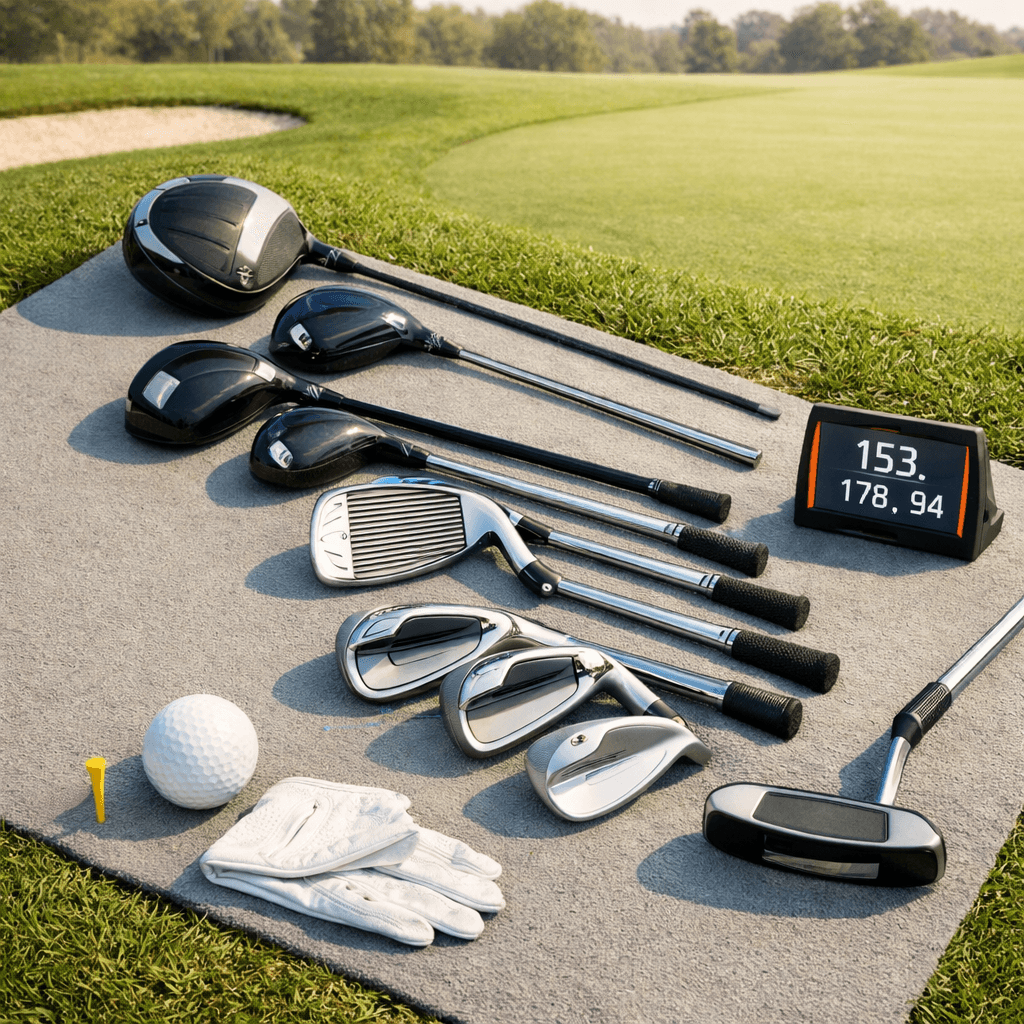
Driver (10.5-12 degrees of loft) — higher loft launches the ball easier and cuts down on slices for slower swing speeds.
3-wood or 5-wood — a fairway club that’s more forgiving than a long iron and easier to get airborne from the deck.
4-hybrid and 5-hybrid — replace your 3-iron and 4-iron entirely; nobody should suffer through long irons as a beginner.
7-iron and 9-iron — mid-range irons for approach shots, with a big cavity-back design for forgiveness.
Pitching wedge — your go-to for shots inside 100 yards.
Sand wedge — handles bunkers and short chips around the green.
Putter — arguably the most-used club in your bag, so don’t cheap out here.
That’s seven clubs that cover almost every situation you’ll face in a round. Add a gap wedge and a couple extra irons later once you know your distances. Buying a full set of 14 before you’ve hit 500 balls is how expensive clubs end up gathering dust in the garage.
Forgiveness and Sweet Spot Size: The Real Difference-Maker
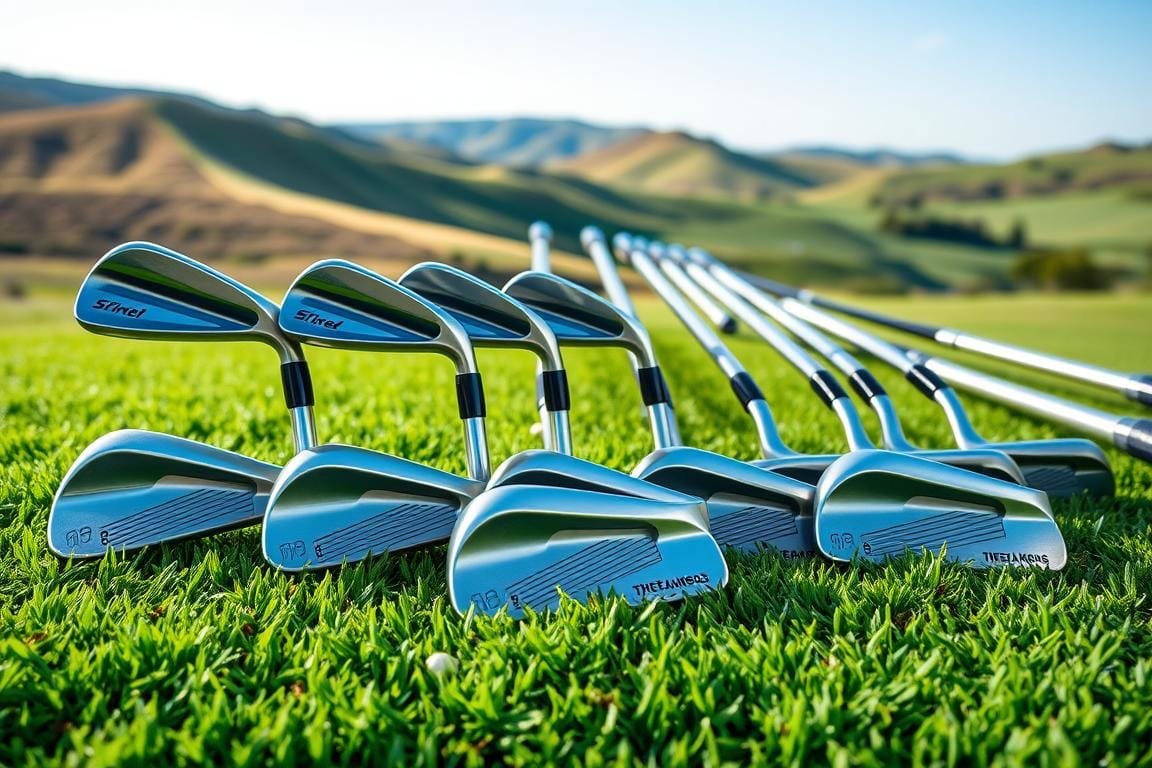
Forgiveness means how much a club protects your distance and direction when you don’t hit the ball dead center — and for beginners, it matters more than brand name or price tag. A larger sweet spot and perimeter weighting turn a shank into a playable shot instead of a disaster.
Cavity-Back vs. Blade Irons
Cavity-back irons hollow out the back of the clubhead and push weight to the perimeter. That design forgives off-center strikes, which is exactly what beginners produce most of the time. Blade irons look sleek and are what you see touring pros carry, but they punish anything off the center of the face with a weak, dead shot and a nasty vibration in your hands.
Skip blades until your ball-striking is consistent — that might be two seasons away, and that’s fine.
Driver Loft for Beginners
Most new golfers get talked into a low-loft driver because it “looks better.” Bad move. A 9-degree driver demands faster swing speed and better contact to launch the ball high enough. Stick with 10.5 to 12 degrees; you’ll see straighter, longer drives almost immediately.
Complete Set vs. Piecing It Together: Which Actually Saves You Money
Buy a complete boxed set if you’re totally new and unsure how often you’ll play; buy individual clubs if you already know your swing tendencies or you’re upgrading one piece at a time. Both routes work — the mistake is assuming one is always right.
A quality beginner boxed set (think Callaway Strata, Wilson Profile, or Cobra Fly-Z) runs $300 to $600 and includes a driver, fairway wood, hybrid, irons, wedge, putter, and a bag. That’s real value for someone testing the water. The downside: you get generic shaft flex and lie angles, not anything matched to you specifically.
Buying Path
Typical Cost
Best For
Main Drawback
Boxed beginner set
$300-$600
First-time buyers, unsure commitment
Generic fit, no customization
Individual game-improvement clubs
$600-$1,200
Golfers who’ve played 10+ rounds
Higher upfront cost
Used clubs (2nd Swing, PGA Tour Superstore trade-in)
$150-$400
Budget-conscious beginners
Wear on grips/faces
Rental clubs at the course
$20-$45 per round
Testing the sport before buying anything
No consistency swing to swing
If you’ve played fewer than five rounds in your life, rent clubs at a public course for two or three outings first. Spending $500 before you know if you even like golf is how garages fill up with unused drivers.
Shaft Flex: The Spec Beginners Get Wrong Most Often
Shaft flex controls how much a club bends during your swing, and picking one too stiff for your swing speed is one of the most common beginner mistakes. Slower swing speeds — generally under 85 mph with a driver — need a regular or senior flex, not stiff or extra-stiff.
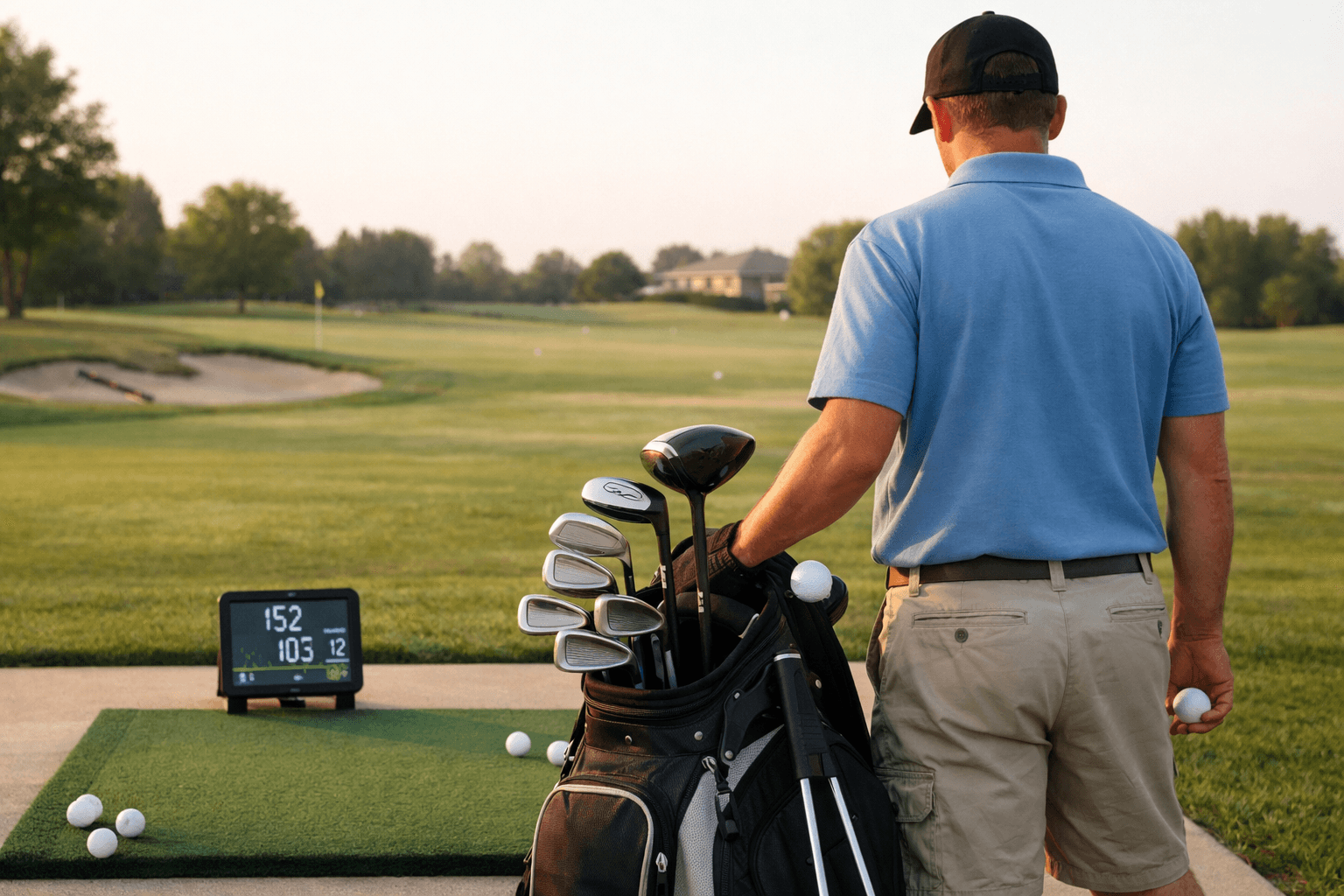
A stiff shaft demands more clubhead speed to load and release properly. Without that speed, your shots fly shorter and lower than they should, and you’ll blame your swing when the real issue is the equipment. Most club fitters can check your swing speed with a simple launch monitor session in under 20 minutes, and some big-box golf retailers offer this for free when you’re buying.
Junior and Women’s Specific Sets
Junior sets and women’s-specific sets aren’t just smaller versions of men’s clubs — they typically use lighter shafts and adjusted lengths that match slower average swing speeds and shorter statures. A junior golfer swinging a standard men’s 6-iron is fighting the equipment before they even fight the ball. Brands like Callaway and US Kids Golf build junior sets by age and height, which matters more than most parents realize when buying a first set.
Club Fitting Basics Worth Doing Before You Spend Big
A basic fitting session tells you your ideal shaft flex, club length, and lie angle, and it usually takes 30 to 45 minutes at a golf retailer or pro shop. You don’t need a full custom fitting for a $400 beginner set, but you should absolutely get one before dropping money on premium clubs.
Skipping fitting basics is how golfers end up with clubs that are two inches too long, causing a hunched stance and inconsistent contact. A quick session at a store with a launch monitor costs nothing in most cases and can save you from buying the wrong loft or flex entirely.
For readers who want a deeper breakdown of specific club models and price comparisons by category, golfyet.com runs seasonal gear guides that update as new sets hit shelves each year. That’s a smarter research step than trusting a single “best of” list, since equipment and pricing shift every season.
Frequently Asked Questions
Do beginners really need a full 14-club set right away?
No. Seven to ten versatile clubs — driver, fairway wood, two hybrids, two irons, two wedges, and a putter — cover almost every shot you’ll face as a new golfer, and cost far less upfront.
Is it better to buy new or used clubs as a beginner?
Used clubs from a reputable retailer save 30-50% and work fine for irons and putters, but check grips and driver face wear closely. New is worth it mainly for wedges and putters, where feel matters most.
What swing speed means I should avoid stiff shafts?
If your driver swing speed is under 85 mph, skip stiff and extra-stiff shafts entirely. Regular or senior flex will add distance and consistency, since a shaft too stiff for your speed kills launch and ball flight.
Golfers often rely on specialized irons to improve their short game performance. Wedges are the highest-lofted golf clubs in a set, designed for short approach shots, strokes played out of sand, chip shots, and pitch…
The United States Golf Association (USGA) and The R&A have announced updates to the Rules of Golf, set to take effect on January 1, 2023.These changes aim to make the game more accessible and easier…
What Are Masters Golf Tournament Tee Times and Why Do They Matter Every April, golf fans around the world turn their attention to Augusta National Golf Club in Georgia, where the Masters Tournament unfolds across…