Golf Bag: Essential Features and Choosing the Right One
4 August, 2026Logan Hart0 Comments1 category
Fourteen clubs, a dozen balls, three gloves, and a rain jacket you swear you’ll never need — that’s what a golf bag has to carry around 18 holes without falling apart. Most players buy a golf bag based on color or brand first and figure out the rest later, which is backward. The bag that actually works for you depends on one thing before anything else: how you move around the course.
Walk with it, push it, or ride with it strapped to a cart — that choice narrows the field fast, before you even think about pockets or dividers.
Match the Bag to How You Actually Play
Pick your bag type before you look at a single feature list. A cart bag on your back for 18 holes will wreck your shoulders, and a featherweight carry bag strapped to a golf cart will slide around and annoy everyone behind you.
Stand Bags for Walkers
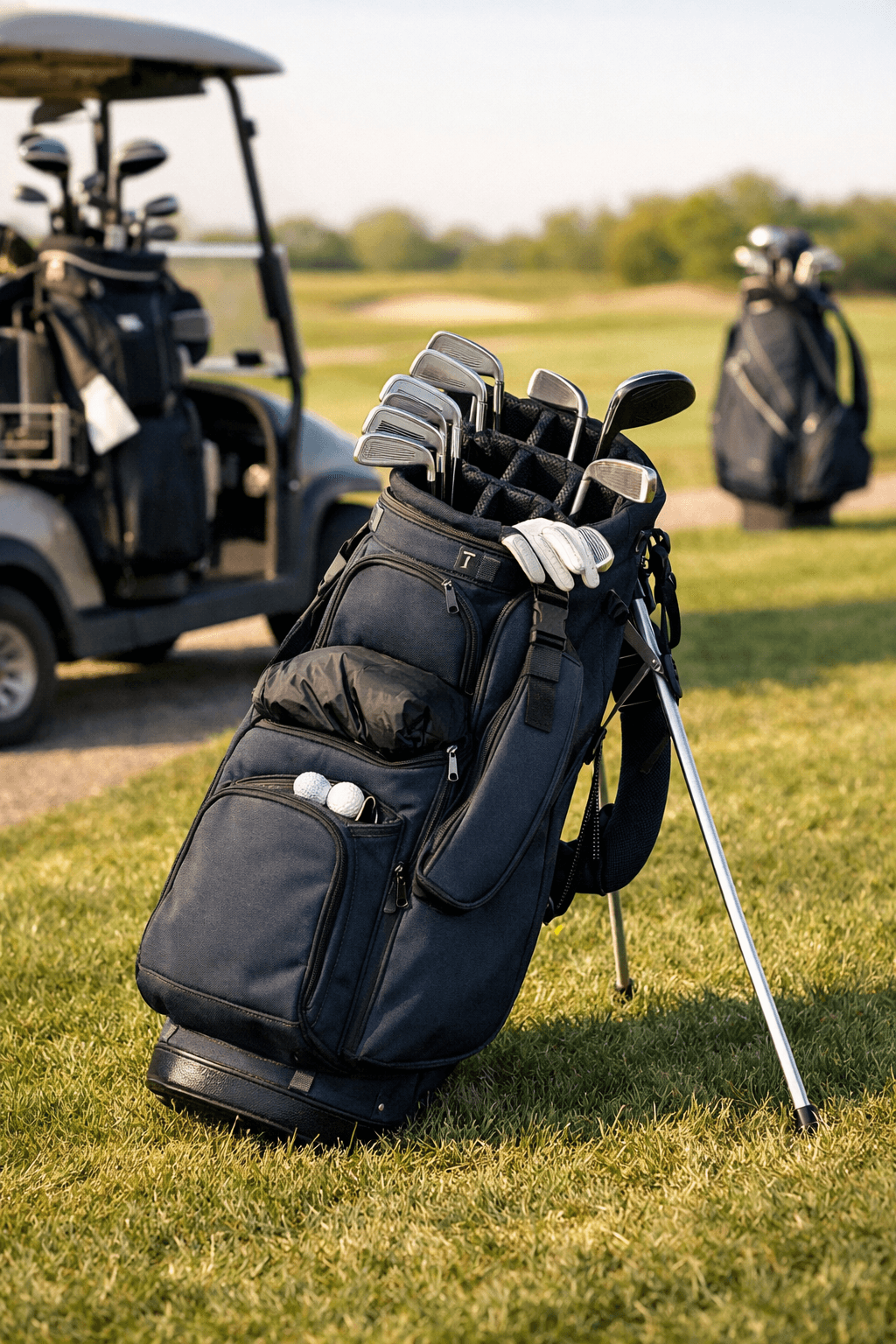
A stand bag has two retractable legs that pop out when you set it down, keeping it upright on the fairway or rough. These typically weigh 4 to 6 pounds empty and are built for walking rounds or pushing a cart. Brands like TaylorMade, Titleist, and Callaway all make versions in the $200-$350 range, and the legs deploy automatically when you tilt the bag off your shoulder.
Cart Bags for Riders
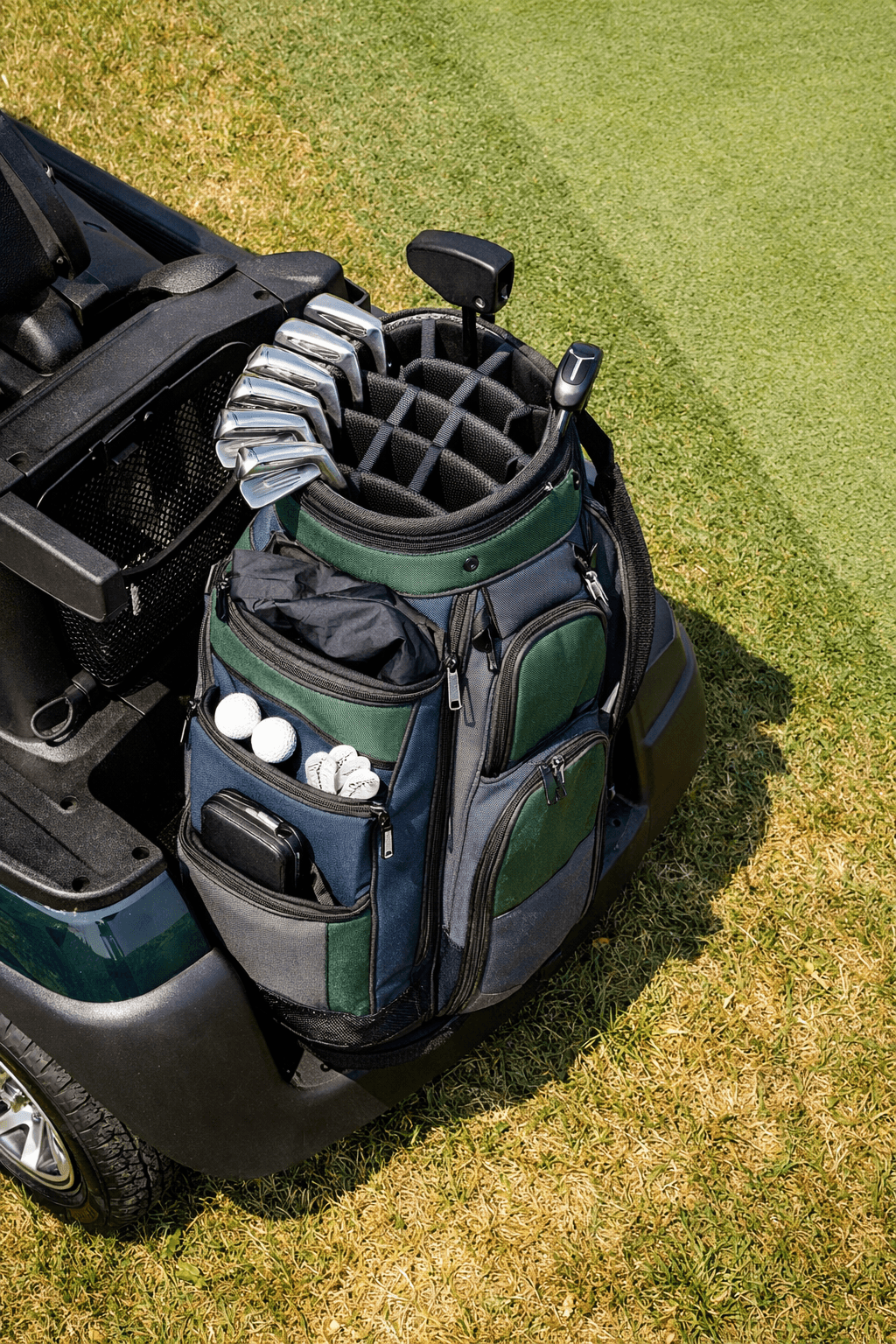
A cart bag skips the legs entirely and adds a wider, flatter base designed to sit stable in a golf cart’s bag well. They run heavier, often 6 to 9 pounds, with more pockets and bigger dividers since weight on your back isn’t the concern. If you ride 90% of the time, a cart bag gives you more storage without any walking penalty.
Carry and Sunday Bags for Minimalists
A carry bag (sometimes called a Sunday bag) is the stripped-down option — no stand, minimal pockets, sometimes under 3 pounds. It’s built for quick nine-hole rounds or practice sessions where you’re not hauling a full 14-club set anyway.
Club Dividers Matter More Than Pocket Count
The number of club dividers — the individual slots inside the bag that separate your clubs — matters more for organization than how many zippered pockets a bag has. A bag with 4 dividers means your irons clank together and tangle on the way out. A 14-way divider gives every club its own slot, top to bottom.
Most beginners fixate on pocket count because it’s the easiest thing to see in a store display. But if your putter and 7-iron keep locking heads mid-swing pull, that’s a divider problem, not a storage problem. I’d rather have 8 well-designed pockets and full 14-way dividers than 12 pockets and a floppy 4-way top.
Full-length dividers (running the entire height of the bag) also protect graphite shafts better than short “top-only” dividers that let clubs clack together lower down. If you’re carrying newer clubs with expensive shafts, this is worth checking before you buy, not after your first scratch.
Strap Comfort Isn’t Optional If You Walk
If you’re walking, strap padding decides whether your round ends comfortably or with a sore shoulder by hole 14. This gets ignored constantly because straps look fine in a store photo but feel completely different after two hours of carrying real weight.
Look for a dual-strap system with wide, cushioned padding — most modern stand bags include this standard, but budget models sometimes cut corners here to hit a lower price point. A single, thin strap on a bag you’re walking with is a mistake you’ll regret by the back nine. Torso length and shoulder width vary person to person, so trying a bag on with actual clubs inside beats guessing from a spec sheet.
Storage, Weather Protection, and Extra Pockets
Pockets earn their place when they solve a real problem, not just when there are more of them. A rangefinder pocket, a valuables pocket with soft lining for your phone, and an insulated cooler pocket for water or a drink cover the essentials most riders and walkers actually use.
Waterproofing Worth Paying For
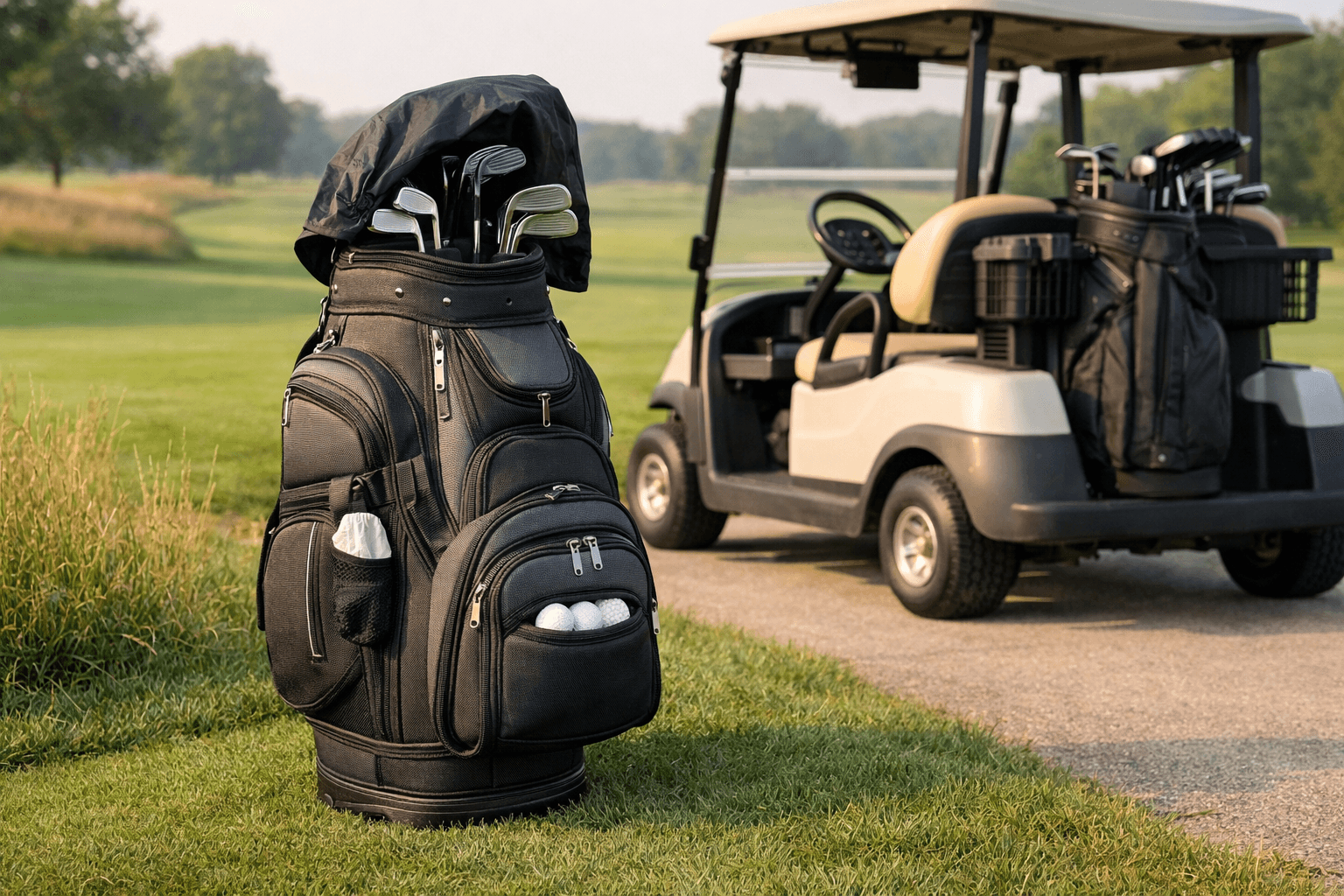
If you play in regions with regular rain, look for bags with water-resistant zippers and a rain hood built into the top — a small flap that covers your grips when weather turns. Fully waterproof bags (fabric-sealed, not just resistant) cost more but matter a lot if you’re in the Pacific Northwest or anywhere with unpredictable afternoon showers.
Capacity for What You Actually Carry
Bag capacity gets measured differently by every brand, but a simple gut check works: can it comfortably fit 14 clubs, a rain jacket, extra balls, and a rangefinder without you fighting the zippers shut? Oversized cart bags handle this easily; slim carry bags will feel cramped if you overpack them.
Here’s how the main types stack up on the things that actually matter for a buying decision:
Bag Type
Typical Weight
Stand Mechanism
Best For
Stand bag
4-6 lbs
Retractable legs
Walking, pushing a cart
Cart bag
6-9 lbs
None (flat base)
Riding a golf cart
Carry/Sunday bag
Under 3 lbs
None
Quick rounds, practice, par-3 courses
Travel/staff bag
10+ lbs
None (travel cover)
Storage, flights, pro-style setup
Before you buy, run through this sequence rather than shopping feature-first:
Decide how you’ll move around the course most rounds — walk, push cart, or ride.
Pick the matching bag type (stand, cart, or carry) based on that answer.
Check the divider count and full-length vs. top-only design.
Try the straps on with clubs loaded, not empty.
Confirm it fits your actual course conditions (rain hood if you play wet climates).
Compare pocket layout only after the above four are settled.
Sites like golfyet.com run beginner gear breakdowns if you want to see specific bag models compared side by side once you’ve settled on a type — useful once you know what you’re actually shopping for.
Frequently Asked Questions
Do I need a stand bag if I always ride in a golf cart?
No — a stand bag’s legs are wasted weight if you never set the bag on the ground. A cart bag gives you more storage and stability in the cart’s bag well without paying for a stand mechanism you won’t use.
How many club dividers should a beginner’s bag have?
Aim for full 14-way dividers if the budget allows, but 6-way with full-length slots is a solid minimum. Anything with only 3 or 4 dividers will let your clubs tangle and clack together during walks or cart rides.
Is a heavier cart bag ever worth using for walking rounds?
Rarely — the extra 3-4 pounds and lack of a stand mechanism make cart bags awkward and tiring on foot. If you walk even half your rounds, a stand bag is the better long-term choice, even with fewer pockets.
Mastering the driver swing is a crucial skill for any golfer, especially beginners. The driver is often considered the most challenging club in a golfer's bag, but with the right techniques, it can significantly improve…
Golf is a game of precision, patience, and integrity. For female golfers, understanding the USGA women's golf rules is crucial to playing the game correctly and confidently. The rules of golf are designed to create…
Six men have won the Masters Tournament more than once, and understanding who they are tells you almost everything about what Augusta National rewards. If you're searching for master golf winners, you're in the right…