A used Scotty Cameron Newport 2 from the early 2000s can sell for more than a brand-new Phantom X off the rack. That’s not a typo — it’s the used-golf-club market doing what collector markets do, and it tells you everything about how a Scotty Cameron golf putter is bought for reasons that have nothing to do with your stroke. If you’re shopping for one right now, the brand’s reputation is real, but the fit matters more than the badge.
This guide walks through the actual decisions: which line suits your eye, what toe hang means for your stroke, and where your money is best spent. No fluff, no assumption that expensive equals better for your game.
Why Scotty Cameron Putters Cost What They Do
Scotty Cameron putters sit at the top of the price ladder because of the milling process, the brand’s tour pedigree, and decades of collector demand. Expect to pay roughly £350 to £500 for a new Select or Special Select model, with Phantom X and limited runs going higher.
Cameron has been Titleist’s putter designer since the early 1990s, and his putters have been in the bag for more major wins than most golfers can count. That history creates a premium. But history doesn’t sink a 6-foot putt for you.
The face milling is the real technical story here. Each putter face is cut on a milling machine to create a specific feel at impact — softer or firmer depending on the model. It’s a genuine manufacturing difference, not just marketing gloss, and players who’ve used cheaper cast putters often notice the change in feedback immediately.
Here’s the part most sales pitches skip: a properly fitted £120 putter from Odyssey or Ping will lower your scores faster than an unfitted Scotty Cameron that doesn’t match your stroke. Fit beats brand, every time, for every handicap level.
Newport, Phantom X, or Super Select — Which Line Actually Fits You?
The three main current lines are Newport (blade), Phantom X (mallet), and Special Select (blade, more classic finishing). Pick based on your stroke shape and eye preference, not on which one you’ve seen most on TV.
Blade vs Mallet: The Real Difference
A blade like the Newport is a compact head with a slight toe hang, built for golfers with an arcing stroke — the putter naturally opens and closes through the swing. A mallet like the Phantom X has more weight behind the face and often sits face-balanced, suiting a straight-back-straight-through stroke.
Neither shape is “better.” Tour pros use both. Justin Thomas has gamed a Newport-style blade for years; plenty of players on both the DP World Tour and PGA Tour roll mallets instead.
Where Super Select Fits In
Super Select and Special Select sit between the classic Newport shapes and newer tech, often with slightly softer milling and updated alignment aids. If you like a traditional blade look but want current-year specs, this is usually the sensible middle ground rather than chasing an older Newport 2 on the resale market.
Line
Head Shape
Best Stroke Type
Typical New Price
Newport / Newport 2
Blade
Slight to strong arc
£350–£400
Special Select
Blade
Slight arc
£380–£420
Phantom X
Mallet
Straight-back-straight-through
£400–£480
Getting Fitted: Length, Lie Angle, and Toe Hang
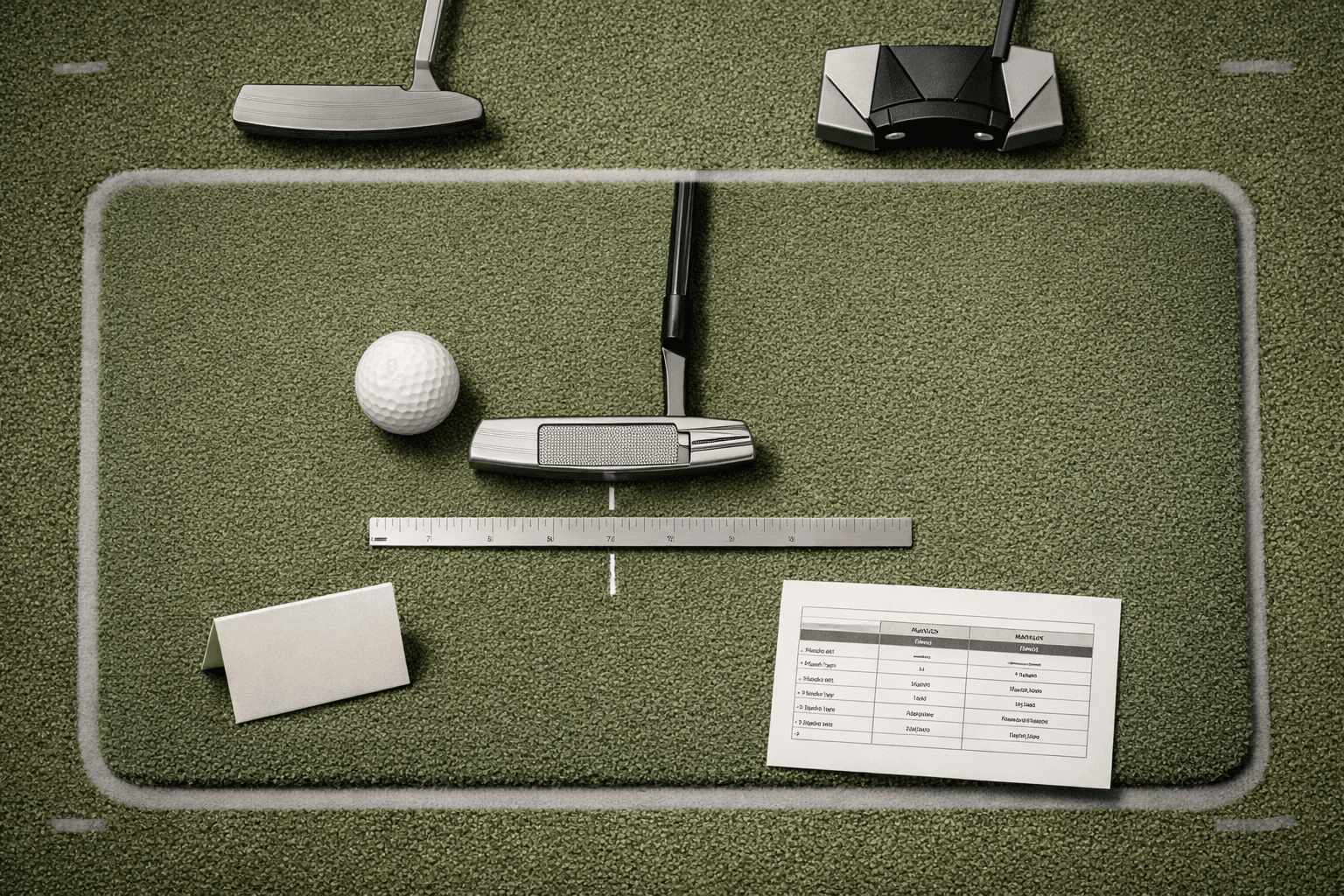
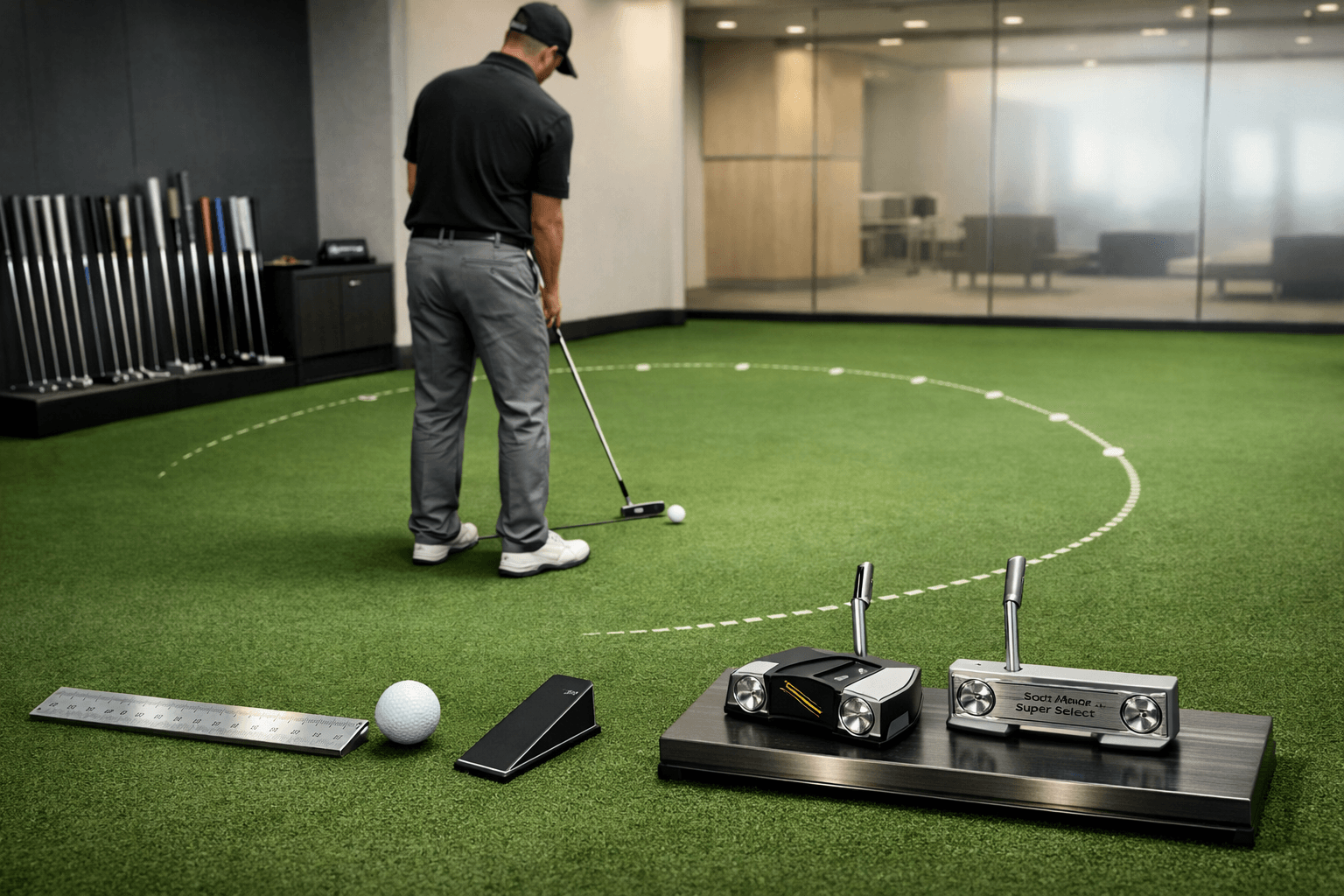
A proper putter fitting checks three things: length, lie angle, and toe hang, matched against your actual stroke path — not your height guess or the standard 34-inch shaft everyone defaults to. Skip this and even a genuine Scotty Cameron will fight your setup.
Toe Hang Matches Your Stroke Arc
Toe hang describes how much the putter head droops when balanced on your finger. High toe hang suits an arced stroke; face-balanced suits a straighter path. Buying a Newport for its looks while you actually swing dead straight means you’re fighting the putter every round, not just some rounds.
Length and Lie Angle Aren’t Cosmetic
Standard off-the-shelf length is 34 or 35 inches, but plenty of golfers putt better an inch shorter once their posture and eye position over the ball are checked properly. Lie angle affects whether the putter sits toe-up or toe-down at address, which throws your aim off before you’ve even taken the putter back.
A proper fitting session, whether at a Titleist/Scotty Cameron fitting day or through a local pro shop with a launch monitor, typically costs somewhere between £30 and £75 in the UK if it isn’t bundled free with a purchase. Golf Yet’s basic fitting guide covers the do-it-yourself checks you can run at home before booking anything paid.
Buying New vs Secondhand: Where the Risk Actually Lives
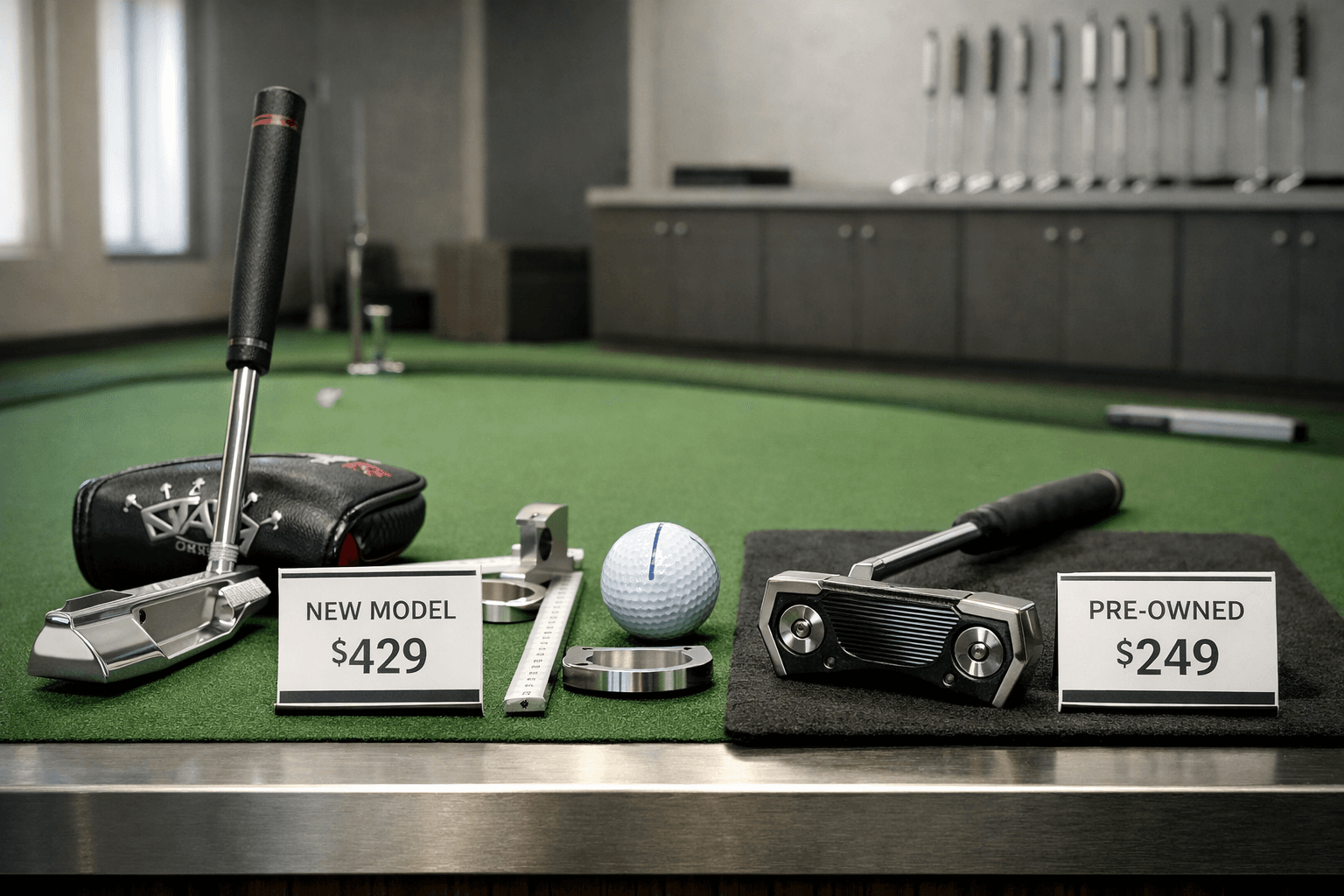
Buying new gets you warranty and certainty. Buying secondhand can save 30-50% but opens the door to counterfeits, and Scotty Cameron putters are among the most faked clubs in golf.
Here’s how to check a used putter before you hand over cash:
Check the serial number on the sole or hosel and verify it against Scotty Cameron’s official gallery listings.
Inspect the milling marks — genuine Cameron faces have consistent, fine-line milling; fakes often look uneven or too shiny.
Weigh the head if possible; counterfeit heads are frequently lighter than factory spec.
Check the paint fill in the lettering — factory work is crisp, fakes often bleed slightly.
Buy from a source with return rights, such as a reputable UK retailer or an established auction platform seller with feedback history.
Ask for close-up photos of the shaft band and headcover stitching before committing to a private sale.
Limited edition and Tour-only models are a separate game entirely — these are genuinely collectible, but rarity doesn’t mean every limited Cameron appreciates in value. Most retain value reasonably well; very few turn into the kind of five-figure resale story you read about online.
Frequently Asked Questions
Is a Scotty Cameron putter worth it for a beginner?
Not usually as a first purchase. Beginners improve faster with a properly fitted mid-range putter around £100-£150, then move to a Scotty Cameron once their stroke is consistent enough to actually benefit from the milling and weighting.
What’s the difference between a Newport and a Newport 2?
The Newport 2 has a slightly longer blade and rounded heel-toe shape compared to the more compact original Newport, giving it marginally more forgiveness on off-center hits without changing the toe hang character much.
How do I know if a secondhand Scotty Cameron is genuine?
Check the serial number against Scotty Cameron’s official records, inspect the milling consistency, and buy only from sellers offering returns. Counterfeit Camerons are common enough that skipping this step is a real financial risk.
Golfers often find themselves in challenging bunker situations, and knowing the right relief options can be a game-changer. Golf Rule 197 provides players with the necessary guidance to navigate these difficult scenarios.This rule has evolved…
The United States Golf Association (USGA) has recently updated the golf putting rules to provide a more reasonable and fair experience for players on the putting green.Golfers spend a significant amount of time on the…
Golfers often rely on specialized irons to improve their short game performance. Wedges are the highest-lofted golf clubs in a set, designed for short approach shots, strokes played out of sand, chip shots, and pitch…