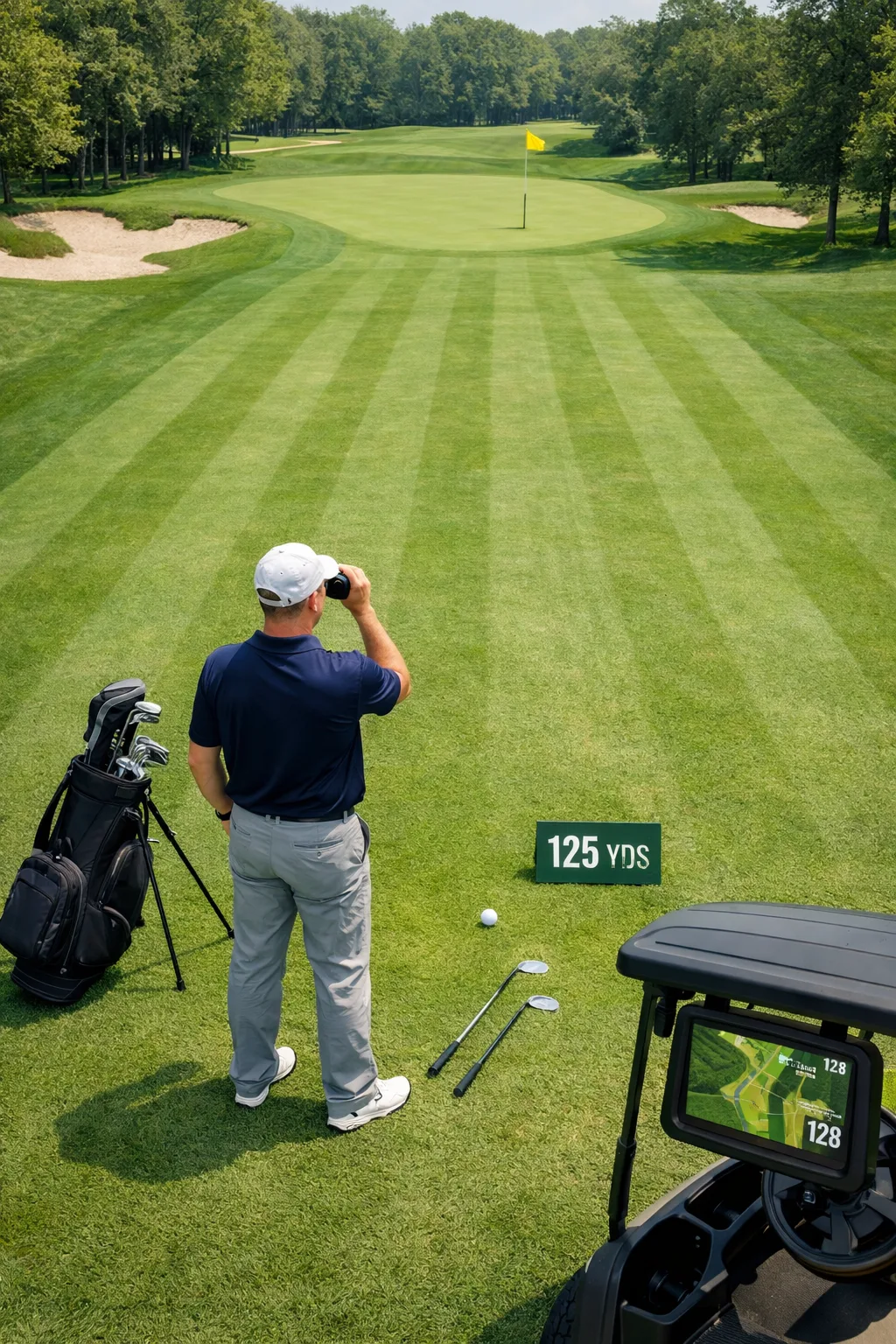
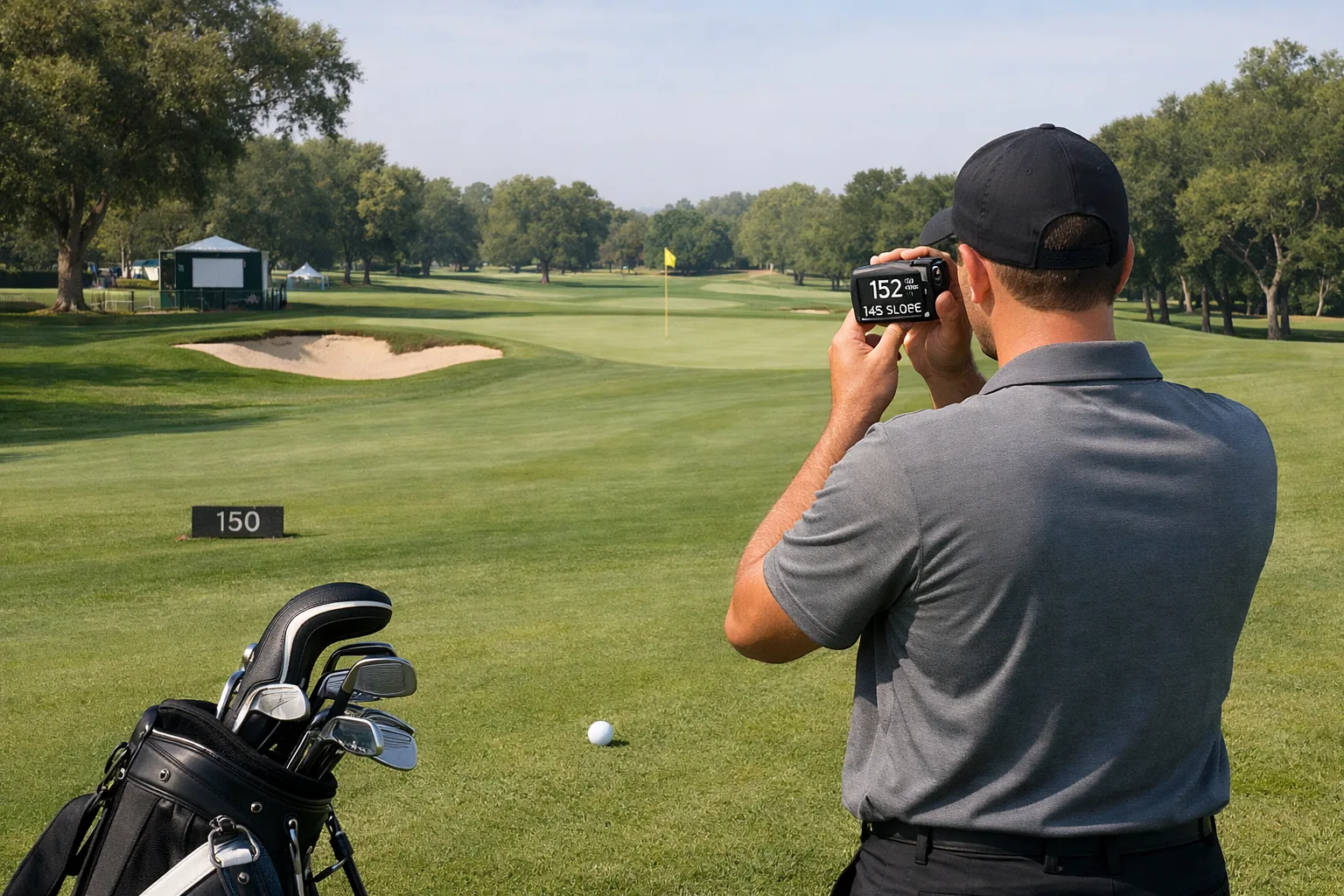
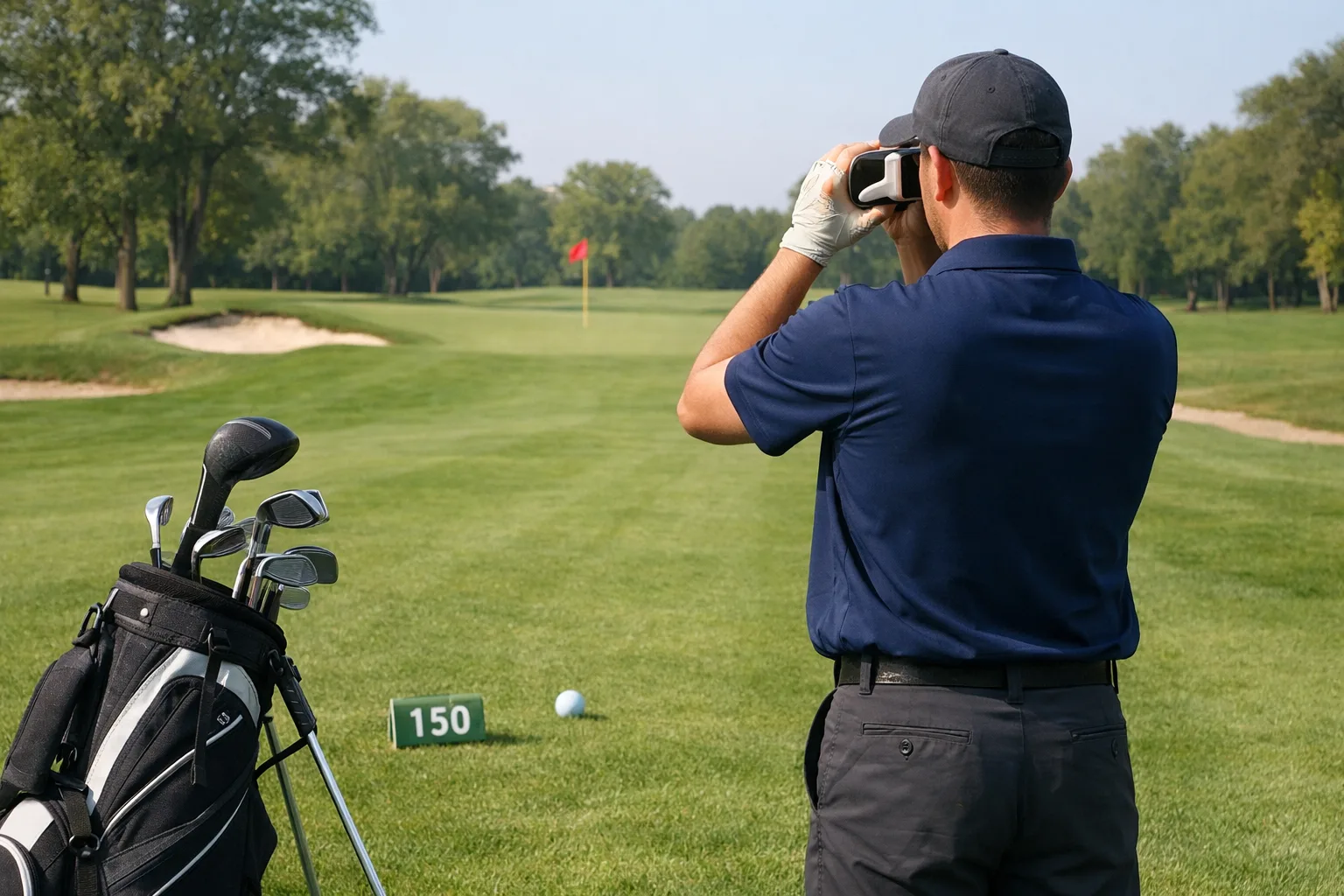
Point a laser rangefinder at a flag 150 yards away, pull the trigger, and get your number in under two seconds. That’s the entire pitch for why so many golfers strap one to their bag. A golf rangefinder takes the guesswork out of club selection, and once you’ve used one on a real approach shot, eyeballing distance off a sprinkler head feels like flying blind.
That said, a rangefinder isn’t automatically the right move for every golfer, and it’s worth knowing when to lean on one and when to leave it in the bag.
What a Golf Rangefinder Actually Does for Your Game
A golf rangefinder measures the exact distance between you and a target, usually the flag, in yards or meters, so you stop guessing and start committing to a club. Instead of splitting the difference between a 7-iron and 8-iron, you know it’s 152 yards and you swing with a plan.
The real benefit shows up in decision speed and confidence. When you know the number, you commit to the swing instead of second-guessing mid-backswing. That confidence translates into cleaner strikes, because hesitation is what turns a good swing into a chunked one.
There’s a flip side worth saying out loud, though. If you’re still building your yardages, a rangefinder can actually slow you down. Beginners who haven’t logged how far their own clubs fly end up staring at a screen that says “163” with no idea what club that means. In that case, the tool creates a new problem instead of solving the old one.
I’d tell any golfer under a year or two of steady play to spend a season learning yardage markers and pacing off distances before leaning on a device. Once you know your own numbers, the rangefinder becomes a multiplier instead of a crutch.
Laser vs. GPS: They Solve Different Problems
Laser and GPS rangefinders both give you distance, but they get there in completely different ways, and picking the wrong one for your game is a common early mistake.
How Laser Rangefinders Work
A laser rangefinder sends a beam to whatever you point it at and calculates the exact distance based on the return signal. Point it at the flag, and you get the flag’s distance, not just the green’s front edge. This makes lasers the more precise tool for pin-specific yardage, especially past 100 yards.
The catch is that lasers require a steady hand and a clear sightline. Trees, fog, or a flag that’s hard to isolate against the background can throw off your read. Magnification matters here too, and this is where a common myth trips people up: higher magnification doesn’t automatically mean better accuracy. A 6x laser with good vibration reduction and a clean lock-on system will often outperform a shaky 10x model in real-world use.
How GPS Rangefinders Work
GPS devices, whether a handheld unit or a rangefinder watch, use preloaded course maps to show distances to the front, center, and back of the green instantly, no aiming required. You don’t have to find the flag at all, which makes GPS faster on a course you don’t know well.
The tradeoff is precision. GPS gives you a green-based estimate, not the flag’s exact position, since pin locations shift daily. If you want the tightest number on a short-sided pin, laser wins. If you want speed and course-wide yardage without hunting for sightlines, GPS wins.
Feature
Laser Rangefinder
GPS Rangefinder
Accuracy to flag
Within 1 yard
Estimate only (green-based)
Speed of use
Requires aiming/lock-on
Instant, no aiming
Works in fog/trees
Struggles
Unaffected
Ongoing cost
One-time purchase
Some require course map subscriptions
Typical price range
$150–$400
$150–$400
Slope Function and Tournament Legality
Slope-adjusted readings, which factor elevation change into your distance, are not automatically legal in tournament play, and using one without disabling the feature can get you disqualified. Most rangefinders with slope let you toggle it off, and that toggle matters more than people think.
The Rules of Golf allow distance-measuring devices under Rule 4.3, but that permission comes with conditions. A local rule or committee decision can ban distance-measuring devices entirely, and even where they’re allowed, slope readings, plus features like club recommendations or wind readings, are usually restricted to casual rounds only.
Before you play in any competition, whether it’s a weekend club event or a USGA-sanctioned tournament, check the notice to players or the local rules sheet. It’ll state explicitly whether rangefinders are permitted and whether slope must be disabled. Showing up with slope switched on, even if you never look at that number, can be treated as carrying a non-conforming device.
Here’s the practical move: buy a rangefinder with a slope on/off switch, not one where slope is baked in permanently. That flexibility means one device covers your Saturday scramble and your club championship without needing two separate units.
Sighting a Flag: A Step-By-Step Walkthrough
Locking onto the correct target sounds simple, but rushing this step is why golfers get bad or inconsistent readings. Slow down for the first few seconds of every read.
Brace your elbows against your ribs or rest the rangefinder against a cart rail to cut down on hand shake.
Look through the eyepiece and find the flag, not the green, not a tree behind it.
Center the flag inside the reticle or crosshair shown on the display.
Press and hold the trigger button until the unit locks on, usually signaled by a vibration or a beep.
Read the yardage displayed, and if the flag was hard to isolate, take a second reading to confirm it matches.
Adjust for slope only if you’re in a casual round where it’s permitted.
Factor in wind and lie separately, since most rangefinders don’t measure either.
Battery life and durability matter more once you’re actually using the device every round. Most laser units run on a single CR2 battery that lasts a full season of weekly rounds, sometimes longer, and GPS units with rechargeable batteries typically need a charge every 10 to 14 rounds. Drop-proofing and water resistance ratings vary a lot between budget models under $150 and mid-range units in the $200 to $300 range, so if you walk soggy courses in the fall, check the IPX rating before buying.
For golfers comparing specific models by price and feature set, a buying guide on a site like golfyet.com can save you from overpaying for magnification or slope tech you won’t legally use in competition anyway.
Frequently Asked Questions
Are golf rangefinders legal to use in all tournaments?
Not automatically. Rule 4.3 permits distance-measuring devices, but committees can restrict or ban them locally, and slope, wind, and club-recommendation features are typically only allowed in casual play. Always check the tournament’s local rules sheet first.
Should a beginner buy a laser or GPS rangefinder first?
If you’re brand new, spend a season learning your club distances by pacing yardage markers before buying either. Once you know your numbers, a GPS unit is the easier starting point since it requires no aiming skill.
How accurate is a laser rangefinder compared to GPS?
A quality laser rangefinder is accurate to within about 1 yard of the actual flag position, while GPS units give a green-based estimate that can be off by several yards depending on where the pin sits that day.
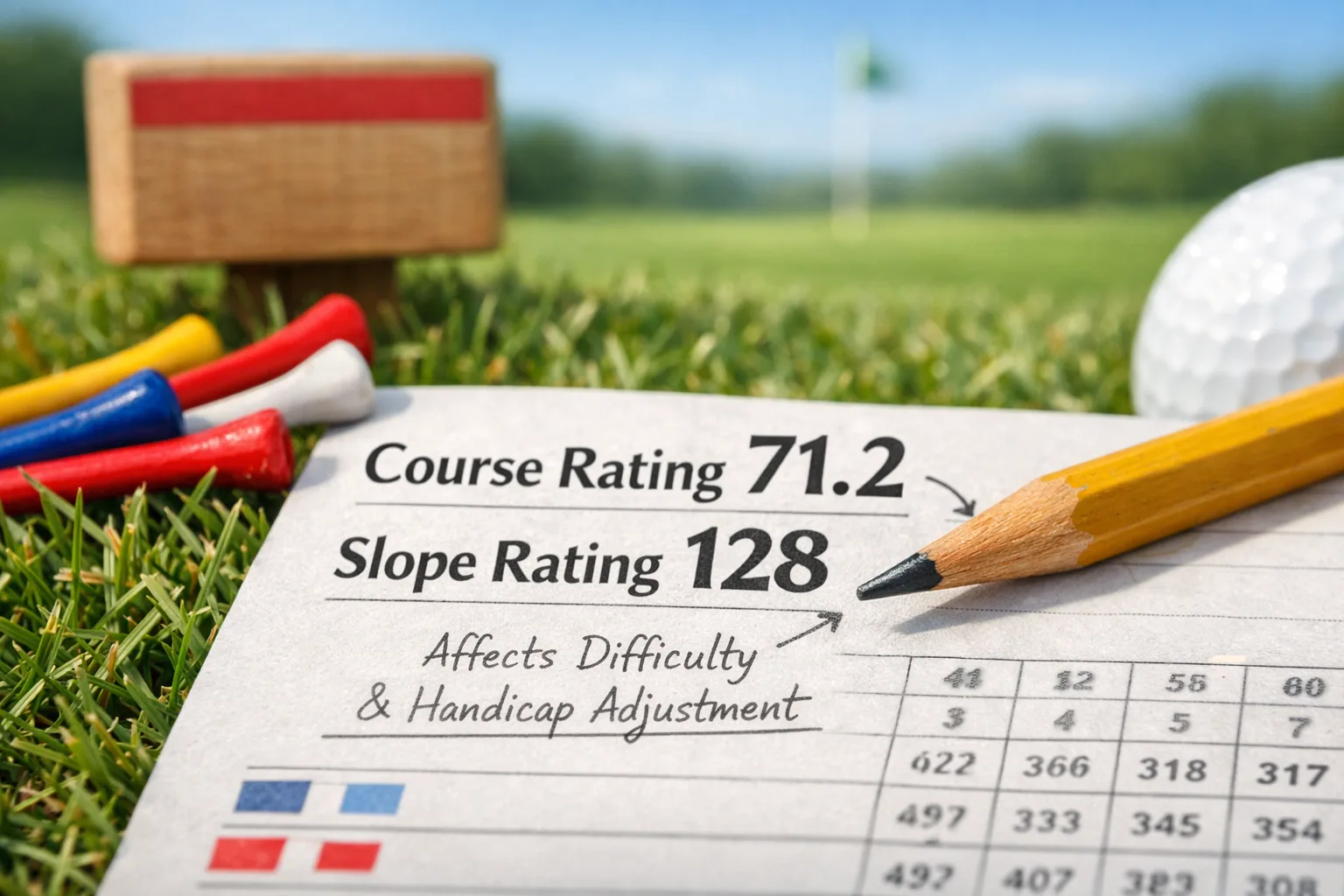
Two numbers sit on every scorecard, right next to the tee box you're about to play, and almost nobody stops to ask what they actually mean. What is golf slope and rating, and why does…
Justin Rose has spent over 25 years as a professional without ever needing to hit it 320 yards to matter. One major championship. One Olympic gold medal. Multiple stints at World No. 1. Golfer Justin…
Picking up a first set of clubs is one of the few purchases in golf that actually changes whether you stick with the sport. The top golf sets for beginners listed here were evaluated on…