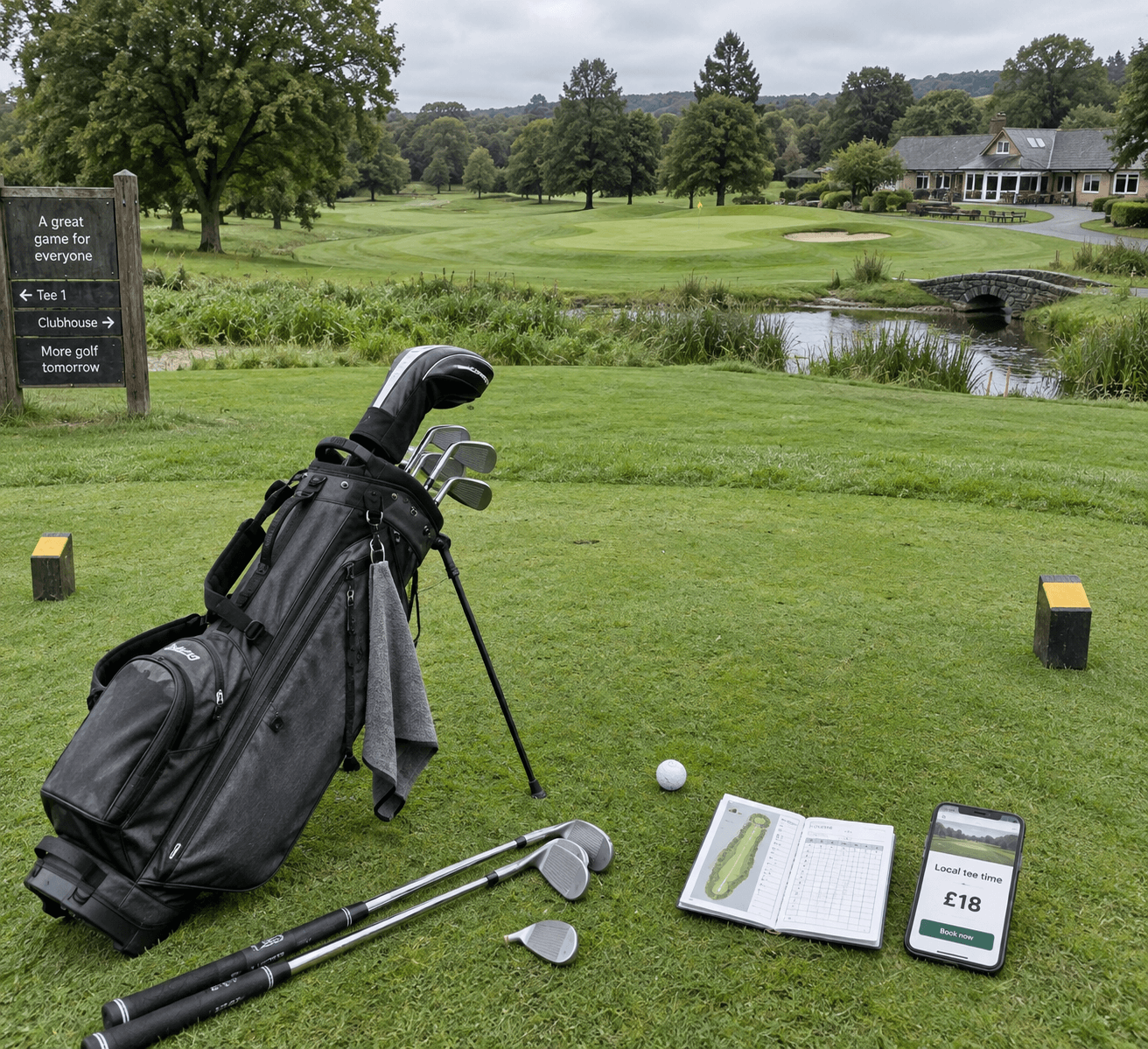
A full set of new clubs can run you £800 or more at a retailer like American Golf, but plenty of golfers in the UK play solid rounds for under £20 a time. That gap isn’t luck. It’s choices. Affordable golf isn’t about one clever hack — it’s about stacking a handful of decisions that each shave pounds off your round, week after week.
Most advice on this topic obsesses over gear discounts and forgets the biggest lever of all: when and where you play matters more than what’s in your bag. Get that right first, then worry about kit.
Timing and Course Choice
1. Twilight tee times — best for cutting per-round cost without cutting quality
Booking after 2pm or 3pm (depending on sunset) can halve your green fee compared with a prime Saturday morning slot. Many clubs drop from £45 to £20-25 once the twilight rate kicks in, and you’re still playing the same 18 holes on the same grass. The course doesn’t get worse at 4pm — it just gets emptier, which means faster rounds too. The only real trade-off is daylight: in UK winter you might only squeeze in 9 holes before dark, so check sunset times before you book.
2. Municipal courses — best for consistently low fees near home
Council-run courses like those under Fairway Group or local authority management often charge £12-18 for a weekday round, less than half what a private members’ club asks. These aren’t rough tracks either — many municipal layouts are well-maintained parkland courses that host club competitions. Dismissing them as “beginner only” means missing one of the most reliable ways to play affordable golf every single week without a membership commitment.
Memberships, Apps and Gear
3. Loyalty apps and off-peak deals — best for stacking savings automatically
Apps such as Golfnow and GolfShake Live let you book discounted off-peak slots and flag last-minute deals from courses trying to fill empty tee sheets. It’s common to see rounds at 30-40% off standard rate posted the morning of play. Set alerts for your local courses and you’ll start spotting patterns — certain clubs always discount Tuesday afternoons, for instance.
4. Punch cards and block bookings — best for regular players who skip annual fees
A 10-round punch card at a pay-and-play course often costs around £150-180, working out at £15-18 per round, well under drop-in rates. This suits anyone playing twice a month who isn’t ready for a full £1,000+ annual membership. The catch: you lose flexibility if you move house or your availability changes, so only buy a block you’re confident you’ll use within the season.
5. Secondhand clubs — best for getting properly fitted gear at a fraction of new price
A used driver or iron set from a site like Golfbidder or a club’s pro shop trade-in bin typically costs 40-60% less than retail, and the performance gap between a two-year-old model and the newest release is small for most swing speeds. You don’t need a matching new set to start — a second-hand seven iron and a putter are enough for your first few rounds. Sites such as golfyet.com list beginner-friendly gear picks if you want a steer on what’s actually worth buying first.
6. Carrying your bag — best for cutting cart fees and building your short game feel
Skipping the buggy saves £10-15 a round at most courses and keeps you closer to your ball for reading lies and distances. It’s also free exercise — an 18-hole walk covers roughly 4-6 miles. The downside is pace on hilly courses or in hot weather, so carry a lightweight stand bag (under 2kg empty) rather than a heavy cart bag if you’re walking regularly.
7. Buying balls smart — best for cutting the quietest cost leak in the game
Lost balls add up faster than most golfers admit — at £2-3 per premium ball, losing four a round is £8-12 gone before you’ve even paid the green fee. Buy “lake balls” or refurbished balls in bulk (often £15-20 for two dozen) for everyday play, and save your premium Pro V1s for when you’re actually scoring well. Fundamentals first: a golfer who’s improved their contact loses far fewer balls than one who’s bought the priciest driver on the rack.
Way to cut costs
Typical saving
Best for
Twilight tee times
Up to 50% off green fee
Flexible schedules
Municipal courses
£12-18 vs £30-45+
Weekly regulars
Loyalty apps
30-40% off last-minute
Spontaneous players
Punch cards
£15-18 per round
Fortnightly golfers
Secondhand clubs
40-60% off retail
New or improving players
Here’s a simple order to tackle these in if you’re starting from scratch:
Check your nearest municipal course’s weekday rate.
Download a booking app and set alerts for your usual courses.
Book a twilight round this week to compare the price and the experience.
Buy one or two secondhand clubs instead of a full matching set.
Switch to a stand bag and walk your next round.
Pick up a dozen refurbished balls before buying any premium ones.
Frequently Asked Questions
Is municipal golf actually good enough to learn on?
Yes — most UK municipal courses are maintained parkland layouts that host club competitions, not rough practice tracks. Expect fairways and greens a notch below a private members’ club, but entirely playable for learning and casual rounds.
Do twilight rounds mean worse golf?
No, the course and conditions are identical to any other time of day. The only real difference is less daylight left to finish, so in autumn or winter check sunset times before booking to avoid rushing the back nine.
How much can I realistically save per month playing affordable golf?
A golfer playing twice weekly on twilight municipal rates instead of prime-time private fees can save £100-150 a month, before factoring in used gear and bulk balls, which add further savings over a season.
Golf is a game that values respect and courtesy on the course. Understanding the basics of etiquette is crucial for a positive experience for all golfers.Proper behavior on the course affects not only the pace…
Roughly £300 will get you eighteen holes on the same fairways where the pros play THE PLAYERS Championship every March. That's the going rate for a weekend round on the Stadium Course at TPC Sawgrass,…
Slam a club into the turf hard enough and people remember your name for it. But the Hatton golfer everyone recognises from that viral moment is also a five-time DP World Tour winner, a PGA…