Golf Rory McIlroy: Analyzing His Playing Techniques
22 July, 2026Logan Hart0 Comments1 category
Rory McIlroy generates clubhead speeds north of 120 mph off the tee, and he does it with a swing that looks almost lazy at the top. That combination — violence at impact, calm everywhere else — is what separates golf Rory McIlroy fans admire from the swing most amateurs try to imitate at the range. It’s worth understanding what’s actually replicable here and what isn’t, because chasing the wrong parts of his game will wreck your golf swing faster than it’ll improve it.
This isn’t just about admiring a great player. McIlroy’s technique has shifted over fifteen-plus years on tour, and knowing which changes mattered — and why — tells you a lot about what actually holds up under pressure at Augusta or on a Sunday afternoon at your home course.
Key Takeaways
McIlroy’s power comes mostly from sequencing and hip-shoulder separation, not raw strength.
His swing speed (often 120+ mph) requires mobility most amateurs haven’t trained for.
Short game and putting, not driving distance, explain his long-term consistency.
His swing has changed multiple times since working with coach Michael Bannon and others.
Weekend golfers can copy his tempo and setup far more easily than his speed.
Course management — picking targets, controlling misses — is a skill anyone can build.
How Rory McIlroy’s Swing Sequence Actually Works
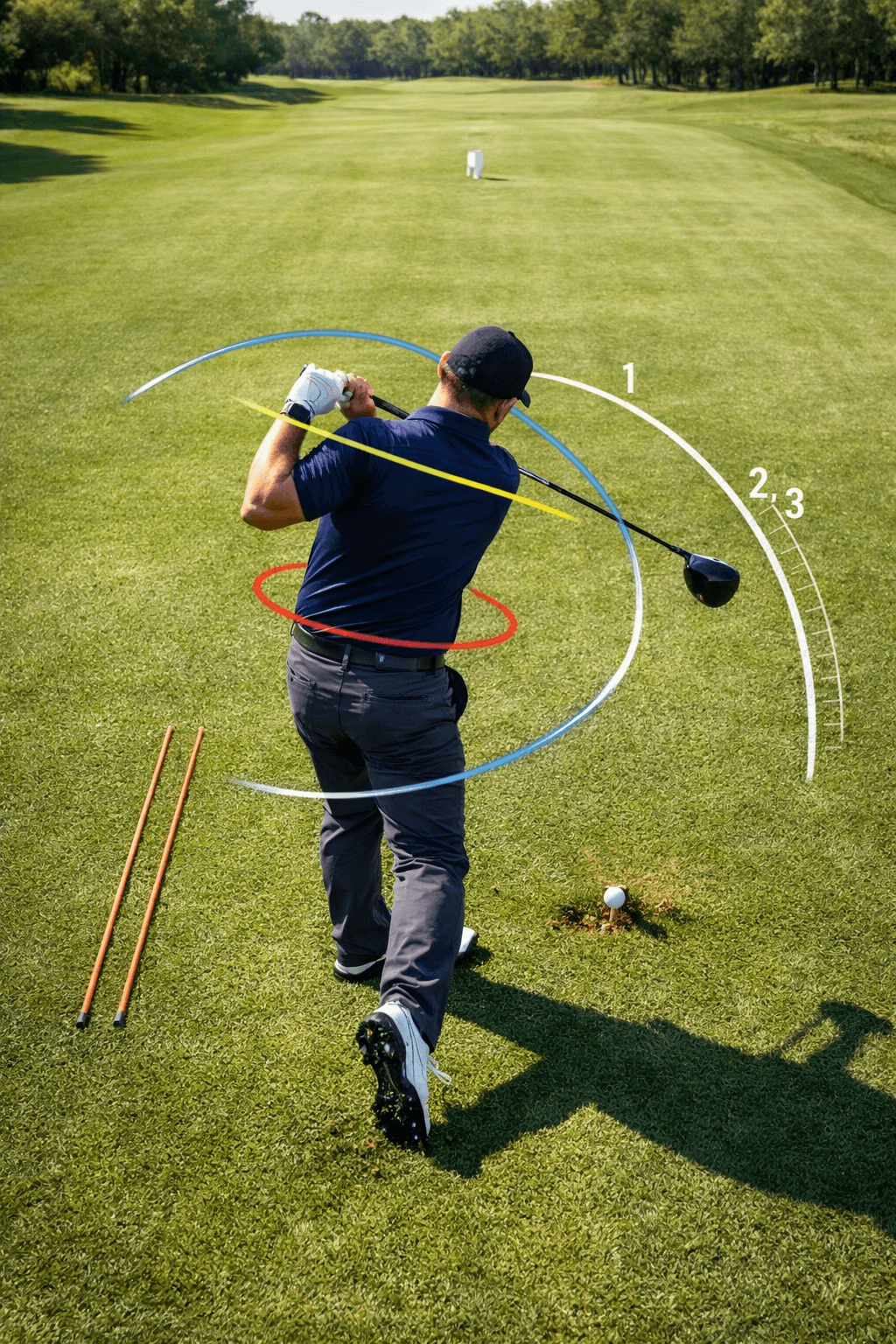
The short answer: McIlroy’s swing works because his lower body starts the downswing before his upper body and arms catch up, creating a stretch-and-release pattern that whips the clubhead through impact. It’s sequencing, not brute force, and that distinction matters more than anything else in this article.
Watch him in slow motion and you’ll notice his hips have already started rotating toward the target while his club is still finishing the backswing. That’s called the kinematic sequence — hips, then torso, then arms, then club, each one firing slightly after the one before it. Amateurs typically fire everything at once, which is why a weekend golfer swinging “as hard as they can” often loses ten yards instead of gaining them.
The Ground Force Element
McIlroy pushes hard into the ground with his lead leg during the downswing, generating vertical force that adds to his rotational speed. Biomechanics researchers who study tour pros have measured ground reaction forces in players like him well above what recreational golfers produce, and it’s a major reason elite players carry drives 300+ yards while club golfers average closer to 200-220.
You can’t fake that force production by trying harder. It comes from years of specific strength work, plus a body that’s been conditioned since his teens to move that way without breaking down.
Tempo as the Real Teachable Skill
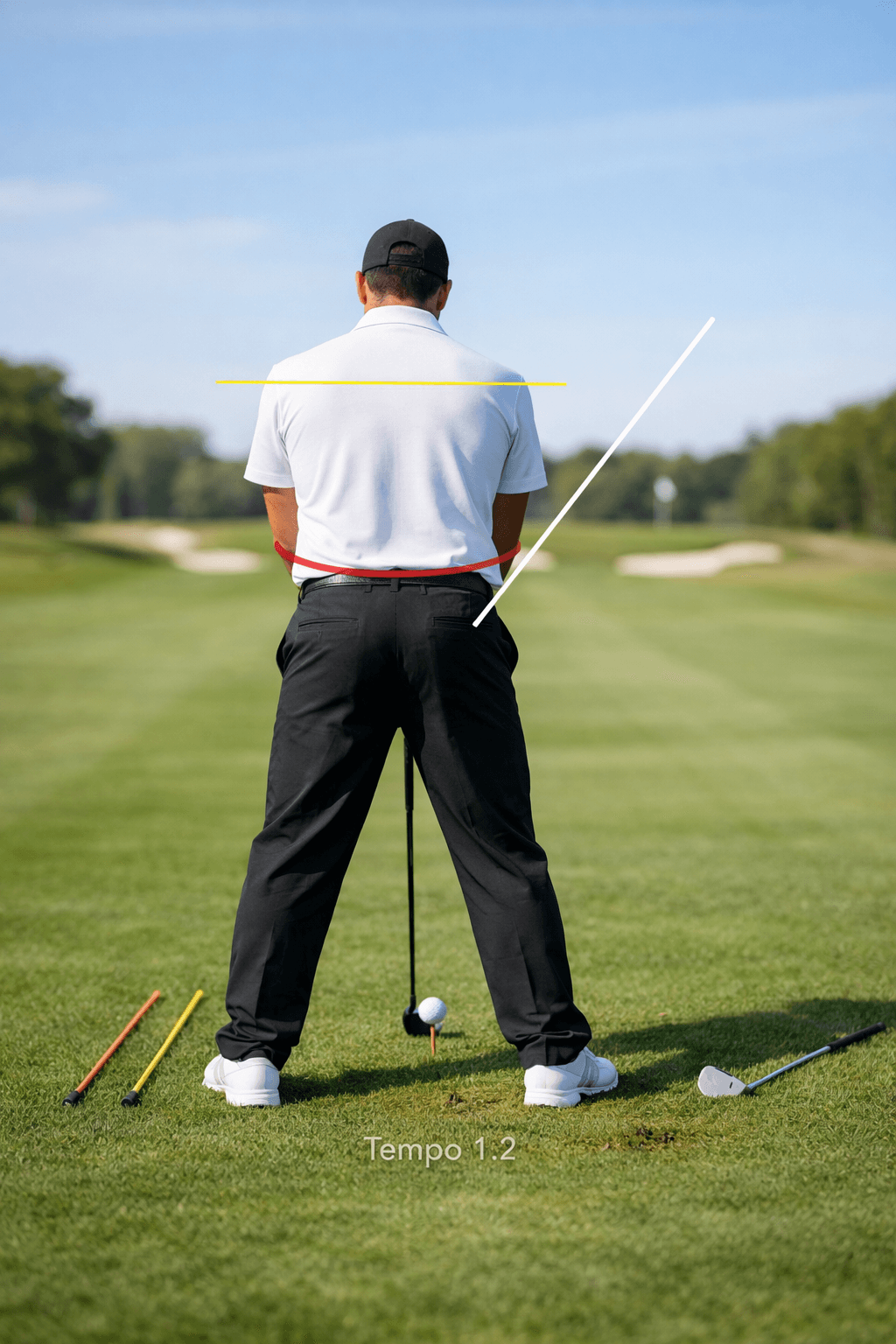
Here’s the part that actually transfers: McIlroy’s swing looks unhurried at the top, even though it’s incredibly fast through the ball. His backswing-to-downswing tempo ratio stays consistent whether he’s hitting a 3-wood off the tee or a wedge from 100 yards.
That rhythm is learnable. Most amateurs rush the transition at the top of the backswing, which throws off sequencing entirely and kills both power and accuracy. Slowing down that first move down — even exaggerating a pause at the top during range sessions — is one of the most useful drills a mid-handicap golfer can steal from watching pros like McIlroy.
Clubhead Speed and Driving Distance: What’s Realistic to Copy
McIlroy’s driver swing speed regularly sits in the 120-125 mph range, which is roughly 30-40 mph faster than an average male amateur golfer swings. That gap is not something you close with a stronger grip or a heavier driver — it’s a physical training gap, and pretending otherwise leads to swing changes that hurt more than help.
Trackman and similar launch monitor data from tour events consistently show McIlroy among the longest hitters on the PGA Tour, often averaging close to 320 yards off the tee for a season. Compare that to a scratch amateur, who might average 260-270, and the physical outlier nature of his speed becomes obvious.
Where the Speed Actually Comes From
It’s tempting to assume a player built like McIlroy — not a bodybuilder, relatively lean — must generate speed some other way, maybe through pure technique. That’s partly true, but it undersells the physical training behind it. He’s been doing structured strength and mobility work with trainers for years specifically to support rotational speed, not to add bulk.
This is the correction worth repeating: his power isn’t about muscle mass, it’s about how efficiently his body transfers force from the ground through the hips into the club. A 150-pound golfer with great sequencing can outdrive a 220-pound golfer with poor rotation, and McIlroy is proof of that at the extreme end.
What a Weekend Golfer Should Actually Chase
Instead of chasing 120 mph swing speed, an amateur gets more realistic gains from improving hip-shoulder separation and worrying less about arm speed. A simple test: if your hips and shoulders turn back together at the same rate, you’re leaving speed on the table no matter how hard you swing your arms.
Work on backswing sequencing before touching swing speed drills.
Add basic mobility work for hips and thoracic spine, twice a week.
Use a lighter, more flexible shaft if your current one feels like you’re forcing tempo.
Track results with a launch monitor or even a phone-based swing app, not just ball flight.
Accept that a 5-10 mph speed gain over a season is a strong, realistic outcome.
The Short Game Nobody Talks About Enough
McIlroy’s driving distance gets the headlines, but his wedge play and putting are what actually keep him near the top of leaderboards year after year. Overlooking this part of his game is one of the most common mistakes casual fans make when they try to explain his consistency.
His wedge technique relies on a shallow, controlled wrist hinge rather than a big, steep chop at the ball. That produces predictable spin and distance control from 50-120 yards, which matters more for scoring than an extra 10 yards off the tee ever will. A lot of amateurs three-putt or chunk chips not because they lack talent, but because they never practice this range at all.
Scoring in golf is decided far more by shots inside 100 yards than by driving distance — a principle strokes-gained analysis from the PGA Tour has repeatedly supported across multiple seasons.
Putting Grip and Stroke Mechanics
McIlroy uses a fairly conventional reverse-overlap putting grip, nothing exotic, and keeps his stroke length short and controlled rather than long and sweeping. His putting has had rough patches over the years — 2019 and parts of 2021 were notably shaky by his own standards — which shows even elite players go through stretches where the short game, not the long game, decides their results.
That inconsistency is actually useful information. If a player who hits it 320 yards can still lose tournaments to three-putts, the lesson for the rest of us is obvious: distance off the tee buys you nothing if you can’t finish holes.
A Drill Worth Stealing
One thing amateurs can copy directly is his pre-putt routine — a consistent number of practice strokes, a set routine time, and a specific spot picked out on the line before pulling the trigger. Consistency in routine reduces decision fatigue on the course, and it’s free. If you want structured drills broken down step-by-step for wedge distance control and putting stroke, golfyet.com has practical breakdowns aimed at exactly that kind of practice, without needing a coach on retainer.
Swing Changes Through the Years: Coaching Influence
McIlroy’s swing hasn’t stayed frozen since he turned pro in 2007 — it’s evolved through multiple coaching relationships, most notably his long-standing work with Michael Bannon, his coach since childhood back in Northern Ireland. Assuming his technique is some untouched natural gift ignores just how much deliberate rebuilding has happened.
Early in his career, McIlroy’s swing was looser and more upright, generating huge speed but occasionally costing him accuracy off the tee — his struggles at driving accuracy stats in the early 2010s were well documented. Over time, adjustments tightened his swing plane and improved consistency without sacrificing much speed.
The Bannon Relationship
Bannon has worked with McIlroy essentially his whole competitive life, and that continuity matters. Rather than constant, jarring changes from coach to coach, McIlroy has mostly made incremental tweaks within one core swing philosophy, which likely explains why his fundamentals have stayed recognizable even as small mechanics shifted.
Compare that to players who bounce between coaches every couple of seasons chasing quick fixes — it often shows up as inconsistency in ball flight and short-lived improvement. Stability in coaching isn’t glamorous, but it’s a pattern worth noting if you’re a golfer working with an instructor of your own.
Notable Adjustment Periods
There have been stretches — around his equipment switch and swing tweaks in the mid-2010s — where visible changes to his setup and posture appeared, aimed at reducing a slight over-the-top move that occasionally crept into his driver swing. These weren’t dramatic overhauls; they were angle adjustments of a few degrees that most viewers wouldn’t catch without side-by-side video comparison.
The takeaway for amateurs: even a swing that looks “perfect” on TV is a work in progress. Nobody, not even a multiple major champion, locks in a swing for life and stops adjusting.
Swing Plane, Posture, and Setup: The Fundamentals Underneath the Power
McIlroy sets up with a fairly neutral grip, a slightly closed stance, and solid posture — spine tilted forward from the hips, not the waist, knees softly flexed. None of this is exotic, and that’s the point: the fundamentals are boring, repeatable, and available to any golfer willing to work on them.
His swing plane is on the flatter side compared to some tour players, meaning the club travels a bit more around his body than straight up and down. That’s partly a product of his build and flexibility, and partly a deliberate coaching choice to control his natural tendency toward speed and looseness at the top.
Posture Comparison Across Pro Styles
Player
Swing Plane
Posture Style
Signature Trait
Rory McIlroy
Flatter/rounded
Athletic, moderate spine tilt
High speed with controlled tempo
Dustin Johnson
Very flat
Bent-over, long limbs
Extreme lag and late release
Jordan Spieth
Steeper
Upright, compact
Precision over raw distance
Justin Thomas
Moderate-flat
Athletic, rotational
High speed, aggressive hip turn
Looking at that table, you can see there’s no single “correct” swing plane among elite players — body type and flexibility dictate a lot of it. What matters more than copying any one plane is matching your setup to your own build, which is something a certified instructor can assess in a single lesson far better than a YouTube comparison video ever could.
What This Means for Your Own Setup
Amateurs obsess over swing plane angles without checking basic posture first, and that’s backward. Get the spine angle and stance width right before worrying about whether your swing looks flat or upright like a tour pro’s.
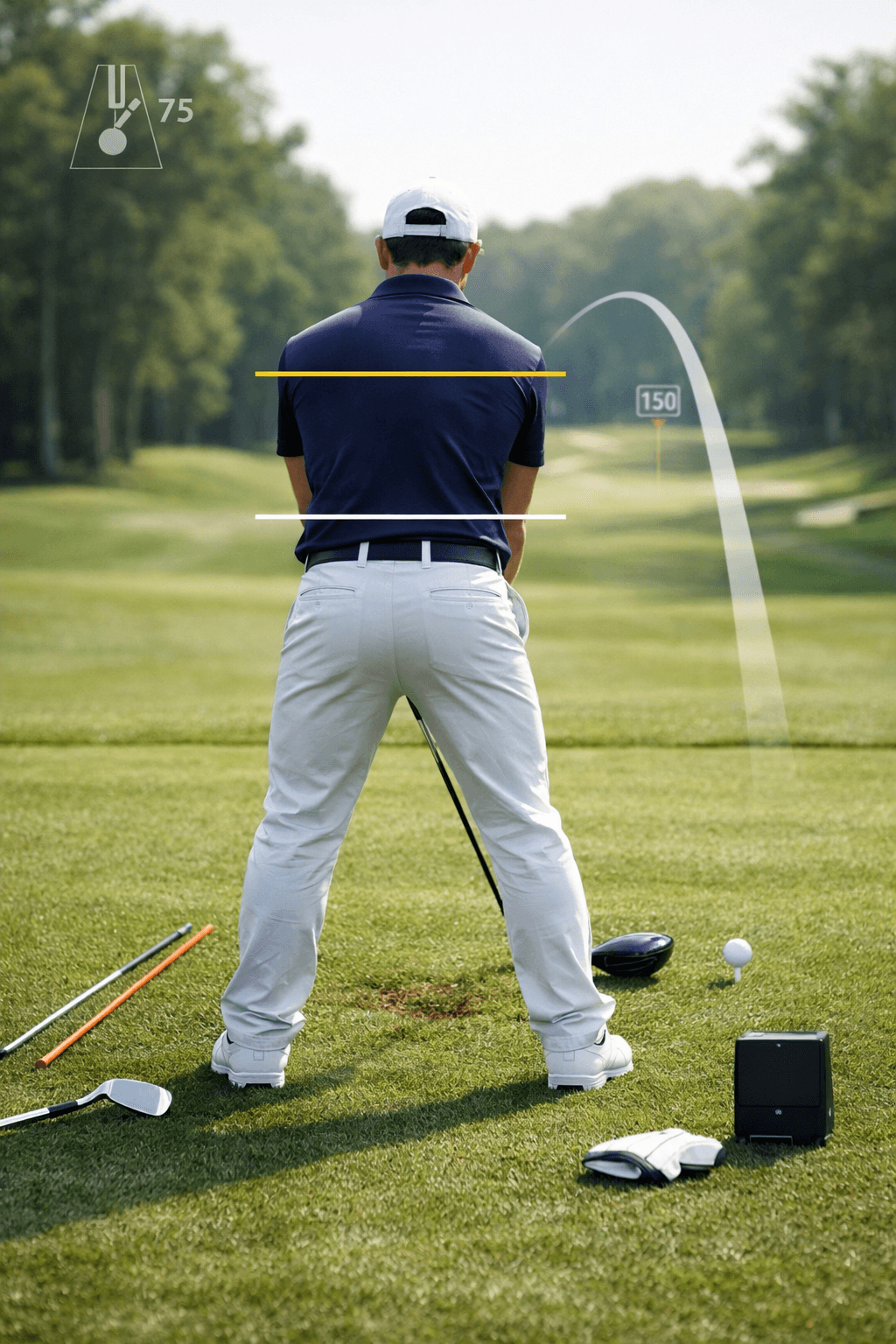
A simple checkpoint: if you can’t hold your setup position, unmoving, for a slow count of five without wobbling, your posture needs work before your swing plane does. That’s a five-minute mirror check, not a $200 lesson, and it fixes more scorecards than people expect.
Course Management: The Skill Every Amateur Can Actually Copy
McIlroy’s course management — how he picks targets, plans around trouble, and decides when to attack versus lay up — is the single most transferable part of his game, and it costs nothing to practice. Unlike swing speed or flexibility, strategic decision-making scales down perfectly to any skill level.
He plays to specific spots on the fairway rather than just “down the middle,” accounting for pin position, wind, and his own shot shape that day. Watching a McIlroy round at a major like the 2022 Open Championship or his 2023 wins, you’ll notice he rarely takes on the riskiest line unless the reward clearly outweighs the danger.
Reading Risk-Reward Like a Pro
The instinct most amateurs need to build is asking “what’s the actual cost of a miss here?” before swinging, not just “can I pull this shot off?” McIlroy misses plenty of shots — every golfer does — but his misses tend to land in spots that still leave a playable next shot.
That’s a mindset shift, not a swing change. A weekend golfer standing over a tucked pin behind a bunker doesn’t need driver-level swing speed to make the smarter call of aiming at the fat part of the green instead.
Practical Course Management Habits
Borrowing from how tour pros like McIlroy approach a round, a few habits translate directly to a Saturday foursome:
Pick a specific landing target, not a general direction, before every tee shot.
Know your “stock miss” (the direction you tend to curve the ball) and aim to account for it.
Favor the fat part of the green over a flag tucked near trouble unless you’re already playing well that day.
Club up on approach shots into wind rather than trying to force extra distance.
None of that requires 300-yard drives. It requires patience, and a willingness to take bogey off the table instead of chasing birdie every hole.
Frequently Asked Questions
How fast does Rory McIlroy swing his driver?
McIlroy’s driver swing speed typically sits around 120-125 mph, which produces ball speeds and carry distances well above tour average. Most recreational golfers swing somewhere between 80-95 mph, so the gap is closer to 30-40 mph, not something closed with technique tweaks alone.
Can an amateur golfer copy Rory McIlroy’s swing?
Partially — tempo, setup, and sequencing principles transfer well, but his clubhead speed and mobility are pro-level physical outliers built over years of specific training. Focus on hip-shoulder separation and rhythm rather than trying to match his raw speed.
Why is Rory McIlroy’s short game underrated by fans?
Because driving distance is more visible and dramatic on broadcast, while wedge play and putting decide scoring in quieter ways. His rounds are shaped as much by scrambling and lag putting as by any 330-yard drive down the middle.
Has Rory McIlroy changed his swing over his career?
Yes, multiple times, mostly through incremental adjustments with longtime coach Michael Bannon rather than dramatic overhauls. Changes to swing plane and setup in the mid-2010s reduced an over-the-top tendency without sacrificing his signature speed.
Six Open Championships, one burn that's wrecked more scorecards than any hazard in Scotland, and most visitors still show up thinking Carnoustie is a single golf course. It isn't. Carnoustie golf clubs actually span three…
Every April, over 200,000 people apply for a shot at roughly 30,000 daily tickets to watch golf at Augusta National Golf Club, and most of them get a polite no. Masters Tournament tickets aren't sold…
Miniature golf, commonly referred to as "mini golf," is a recreational activity enjoyed by people of all ages. It's a fun game that can be played casually or taken seriously as a competitive sport to…