Lee Trevino learned golf hitting balls with a Dr Pepper bottle wrapped in tape, on a dirt-poor course outside Dallas, and grew up to beat Jack Nicklaus in an 18-hole playoff at the 1971 U.S. Open. No lessons. No country club membership. Just a kid who caddied for money and figured out the golf swing by feel, on his own terms.
Golfer Lee Trevino is one of the few Hall of Famers whose swing came from nowhere near a teaching pro’s textbook, and that’s exactly why his story still matters. He won six major championships, dominated the PGA Tour through the 1970s, then kept winning into his fifties on the Senior PGA Tour. His path says something important to anyone who thinks golf is only for people who grew up with a set of clubs handed to them.
Key Takeaways
Lee Trevino won six major championships, including two U.S. Opens, two British Opens, and two PGA Championships.
He beat Jack Nicklaus in a playoff at the 1971 U.S. Open, launching a decade-long rivalry.
Trevino built a self-taught, hands-heavy swing growing up caddying in Texas — no formal lessons.
A 1975 lightning strike at the Western Open caused back injuries that plagued him for years.
He won 29 events on the Senior PGA Tour after turning 50, including six senior majors.
Nicknamed “The Merry Mex,” he changed golf’s public image with humor and a working-class backstory.
Who Is Lee Trevino and Why Does He Matter to Golf History
Lee Trevino is a Hall of Fame golfer from Dallas, Texas, who won six major championships between 1968 and 1984 and remains one of the most influential shot-makers the PGA Tour has ever produced. He’s remembered as much for his personality as his trophies.
Born in 1939 in a rural area outside Dallas, Trevino grew up in a house without electricity or indoor plumbing, raised largely by his mother and grandfather. Golf wasn’t a hobby handed to him — it was a job. He caddied at a nearby course, hustled money games, and eventually worked as an assistant pro before turning fully professional in his mid-twenties, which is late by tour standards even today.
That background matters because it shaped everything about how he played. Trevino didn’t grow up with a swing coach standing behind him at age seven. He grew up hitting shots for cash against grown men who wanted his lunch money, and that kind of pressure teaches you to find a way to get the ball in the hole, technique be damned.
By the time he broke through on tour in the late 1960s, golf commentators didn’t quite know what to make of him. He talked constantly during rounds, cracked jokes with the gallery, and hit a golf ball with a flat, punchy swing that looked nothing like the smooth, upright motions coming out of American junior golf programs.
Trevino’s rise coincided with a moment when the PGA Tour badly needed someone who felt real. The sport had plenty of country-club polish already. What it didn’t have was a guy who grew up broke and made it look fun.
His career total of six majors puts him in rare company, though it’s worth being precise here: it’s fewer than Nicklaus’s 18 or Tiger Woods’s 15, but it’s on par with legends like Nick Faldo and ahead of stars like Arnold Palmer’s seven… actually Palmer has seven, so Trevino sits just below him. The exact number matters because people often round his total up or down in casual conversation, and getting it right respects what he actually did.
Major Championships: The Six Wins That Built His Legacy
Trevino won six major championships: two U.S. Opens (1968, 1971), two British Opens (1971, 1972), and two PGA Championships (1974, 1984). That stretch, especially 1971 when he won the U.S. Open and British Open in the same summer, cemented him as one of the best players alive.
The 1968 U.S. Open Breakthrough
His first major, the 1968 U.S. Open at Oak Hill Country Club, was also his first PGA Tour win of any kind. Trevino shot four rounds under par — the first player in U.S. Open history to do that in a single tournament — and won by four strokes over Jack Nicklaus. It wasn’t a fluke or a lucky week. It announced a player who could go toe-to-toe with the best in the world using a swing nobody taught him.
The Unforgettable 1971 Summer
The 1971 season is the one people point to when they talk about Trevino’s peak. He beat Nicklaus in an 18-hole playoff at Merion to win his second U.S. Open, then won the Canadian Open and the British Open at Royal Birkdale within weeks of each other. Three national opens in roughly a month is the kind of stretch golf writers still bring up as a benchmark for hot streaks.
The Late-Career PGA Championship in 1984
His final major, the 1984 PGA Championship at Shoal Creek, came at age 44, well past when most pros are considered finished contenders. He shot 15 under for the tournament, a scoring performance that held up as one of the best in that major’s history for years afterward. It proved his game had staying power that outlasted his 1970s prime.
Here’s how his six majors break down by tournament and year:
Major Championship
Year(s) Won
Total Wins
U.S. Open
1968, 1971
2
British Open (The Open Championship)
1971, 1972
2
PGA Championship
1974, 1984
2
Masters
Never won
0
That last row matters. Trevino never won the Masters, and by most accounts, he never particularly enjoyed Augusta National’s course design, which rewards a high, drawing ball flight — the opposite of his low, cutting shot shape. It’s a reminder that even legends have courses that just don’t fit their game.
The Self-Taught Swing: Golf’s Best Argument Against Needing Lessons
Trevino built his golf swing entirely without formal instruction, learning by trial, error, and thousands of practice balls hit as a kid and young caddy in Texas. His swing broke almost every rule taught in golf instruction books, and it still won six majors.
Most tour pros come up through structured paths: junior academies, college golf programs, private coaching from a young age. Trevino’s path looked nothing like that. He learned to play on a course near Dallas, often practicing after hours because that’s when he had access to a club and a few balls. He didn’t have a coach correcting his grip or his takeaway. He had a target and a need to make the ball go there.
The result was a swing that looked, by textbook standards, wrong. He set up with an open stance, aimed well left of his target, and swung with a strong grip and a slide-and-block motion through impact that produced a low, piercing fade almost every time. Teaching pros of the era would have torn that swing apart on a lesson tee. It also happened to be one of the most repeatable, pressure-proof motions in golf history.
“I don’t practice. I play.” — a description Trevino often used for how he preferred to sharpen his game, hitting shots on the course rather than grinding on a range.
This matters directly for weekend golfers reading this today. A huge number of beginners assume they need private lessons, an expensive driver, and a country-club membership before they can get “good enough” to enjoy the game. Trevino’s whole career argues against that. He proved that feel, repetition, and creativity under pressure can beat mechanical perfection.
That doesn’t mean lessons are worthless — a good instructor can shortcut years of bad habits, and most golfers benefit from at least a session or two to fix a glaring flaw. But if you’re a beginner intimidated by golf’s polished image, it helps to know one of the greatest ball-strikers ever built his game with a taped-up soda bottle and a public course, not a private academy. Sites like golfyet.com exist partly for that reason, breaking down swing basics in plain language for players who aren’t starting from a country-club background.
The Nicklaus Rivalry That Defined the Early 1970s
The Trevino-Nicklaus rivalry peaked between 1968 and 1972, when the two traded wins in major championships and put on some of the most talked-about head-to-head golf of the era. Their contrast in style and background made it compelling far beyond the scoreboard.
Nicklaus was the prodigy — a powerful, technically dominant player groomed from childhood, already a legend by his mid-twenties. Trevino was the late bloomer with the working-class backstory and the swing nobody could quite explain. Golf fans and media loved framing it as brains-and-power versus grit-and-feel, even if that oversimplified both players’ actual games.
The 1971 U.S. Open Playoff at Merion
The signature moment came at Merion Golf Club, where Trevino beat Nicklaus in an 18-hole playoff to win his second U.S. Open. Before the playoff even started, Trevino famously pulled a rubber snake out of his golf bag and tossed it toward Nicklaus on the first tee, loosening up the tension with a joke before a national championship. Nicklaus laughed. Then Trevino went out and shot 68 to win by three strokes.
A Rivalry Built on Respect, Not Animosity
Unlike some sports rivalries built on real tension, Trevino and Nicklaus genuinely respected each other, and their competition pushed both players to sharper golf through the early 1970s. Nicklaus has spoken over the years about how much Trevino’s ball-striking impressed him — not bad company to keep, coming from the man many still consider the greatest golfer ever.
Their head-to-head record in majors during that stretch wasn’t lopsided. Nicklaus still finished his career with far more major titles overall, but in the specific years when both were at their best, Trevino held his own and then some. That’s part of why golf historians still rank the rivalry among the sport’s most entertaining, even if it gets less airtime today than Nicklaus-versus-Palmer or the Tiger Woods era.
Life After 50: Dominating the Senior PGA Tour
Trevino didn’t fade after his PGA Tour prime — he won 29 events on the Senior PGA Tour (now the PGA Tour Champions) after turning 50, including six senior major championships, making him one of the most successful players in that circuit’s history. His 1990 season alone included seven wins.
That kind of senior-circuit dominance is easy to overlook if you only know Trevino from highlight reels of his 1970s prime. A lot of golf fans remember the majors and the Nicklaus playoff and stop there, missing an entire second act that, statistically, was arguably even more dominant relative to his competition.
His low, controlled ball flight aged well. Power fades as golfers hit their fifties and sixties; the guys who rely purely on distance tend to lose their edge fastest. Trevino’s game was never about outmuscling the field. It was about precision, shot-shaping, and a short game that stayed sharp because it depended on feel rather than raw athleticism.
Here’s a quick rundown of what made his senior run so notable:
He won the U.S. Senior Open twice, in 1990 and 1992.
He captured the PGA Seniors’ Championship three times across his fifties.
His 1990 season produced seven official Senior PGA Tour victories in a single year.
He topped the senior money list multiple times during the early 1990s.
He remained competitive into his early sixties, well past when most senior pros slow down.
This second act reinforces the same lesson his early career taught. Trevino’s game was built on adaptable fundamentals rather than brute force, and that kind of golf ages gracefully instead of falling apart the moment your driver distance drops ten yards.
The Merry Mex, the Lightning Strike, and Golf’s Wider Appeal
Trevino’s nickname, “The Merry Mex,” captured his talkative, joke-cracking personality on the course, and it became a big part of why casual sports fans who’d never watched golf started paying attention to tournaments in the 1970s. He made golf entertaining to people who found the sport stiff and boring.
Golf broadcasts in that era leaned heavily on hushed tones and reverence. Trevino talked to his playing partners, chatted with fans in the gallery, and kept up a running commentary on his own round that made television coverage feel less like a funeral and more like a conversation. That personality-first approach helped golf reach viewers who weren’t already country-club members or die-hard fans.
A Terrifying Moment: The 1975 Lightning Strike
In June 1975, Trevino was struck by lightning during the Western Open near a lake at Butler National Golf Course, along with two other players. He survived, but the strike caused lasting back problems, including damage that eventually required multiple surgeries over the following years. It’s a genuinely scary footnote in his career, and it changed how he played and practiced for the rest of his competitive life, forcing him to manage back pain that never fully went away.
Why His Popularity Mattered Beyond the Scoreboard
Trevino’s rise happened at a moment when golf’s image needed loosening up. He wasn’t from money. He didn’t speak like a country-club member. He cracked jokes on the back nine of major championships and still won them. That combination told television audiences and casual fans that golf wasn’t only for a certain kind of person, and it’s a big reason the sport’s popularity broadened through the 1970s alongside stars like Palmer and Nicklaus, but from a very different angle.
He was inducted into the World Golf Hall of Fame in 1981, a formal recognition of a career that, by that point, already included five of his six majors. The Hall of Fame induction cemented what fans already knew: this was one of the defining golfers of his generation, on the course and off it.
Common Misconceptions About Trevino’s Career
A few details about Trevino’s career get mixed up often enough that they’re worth clearing up directly, especially since casual golf conversation tends to round numbers and blur names together.
Misconception: Trevino had formal training like most tour pros. He didn’t. His swing came from years of self-taught practice and money matches as a caddy and assistant pro, not junior golf academies or private coaching. This is arguably the single most important fact about his career for beginners to know.
Misconception: His major count matches Nicklaus’s or Palmer’s. Trevino won six majors. Nicklaus won 18. Palmer won seven. These numbers get blended together in casual golf trivia, but Trevino’s total, while excellent, sits clearly below both of those other legends.
Misconception: He faded after his PGA Tour prime. He didn’t. His Senior PGA Tour run, with 29 wins and six senior majors after age 50, is one of the best senior-circuit careers in golf history and deserves equal attention to his 1970s peak.
Misconception: His personality was separate from his golf legacy. It wasn’t. The Merry Mex nickname and his on-course humor directly shaped how golf was marketed and watched during the 1970s, broadening the sport’s audience beyond traditional country-club viewers.
Getting these details straight matters if you’re talking golf history with friends or trying to understand where Trevino actually ranks among the sport’s legends. He’s not in the very top tier by major count, but his influence on how golf looked and felt to everyday fans is arguably underrated compared to how often people just cite his trophy case.
Frequently Asked Questions
How many majors did Lee Trevino win?
Lee Trevino won six major championships: two U.S. Opens (1968, 1971), two British Opens (1971, 1972), and two PGA Championships (1974, 1984). He never won the Masters, largely because Augusta National’s course favored a shot shape that didn’t suit his natural low fade.
Did Lee Trevino ever take golf lessons?
No, Trevino largely taught himself golf, learning by hitting balls as a young caddy in Texas rather than through formal coaching. His unconventional, open-stance swing became one of the most effective and repeatable motions in golf history despite breaking standard instruction rules.
What happened when Lee Trevino was struck by lightning?
Trevino was struck by lightning at the 1975 Western Open near Butler National Golf Course, along with two other players. He survived, but the strike caused lasting back damage that required multiple surgeries and affected him for the rest of his career.
How did Lee Trevino perform on the Senior PGA Tour?
Trevino dominated after turning 50, winning 29 Senior PGA Tour events and six senior major championships, including seven wins in the 1990 season alone. It’s considered one of the strongest senior-circuit careers in golf history.
Imagine a night out with friends that combines the excitement of golf with the fun of a pub crawl. Welcome to pub golf, a structured drinking game that's perfect for birthday celebrations, bachelor/bachelorette parties, or…
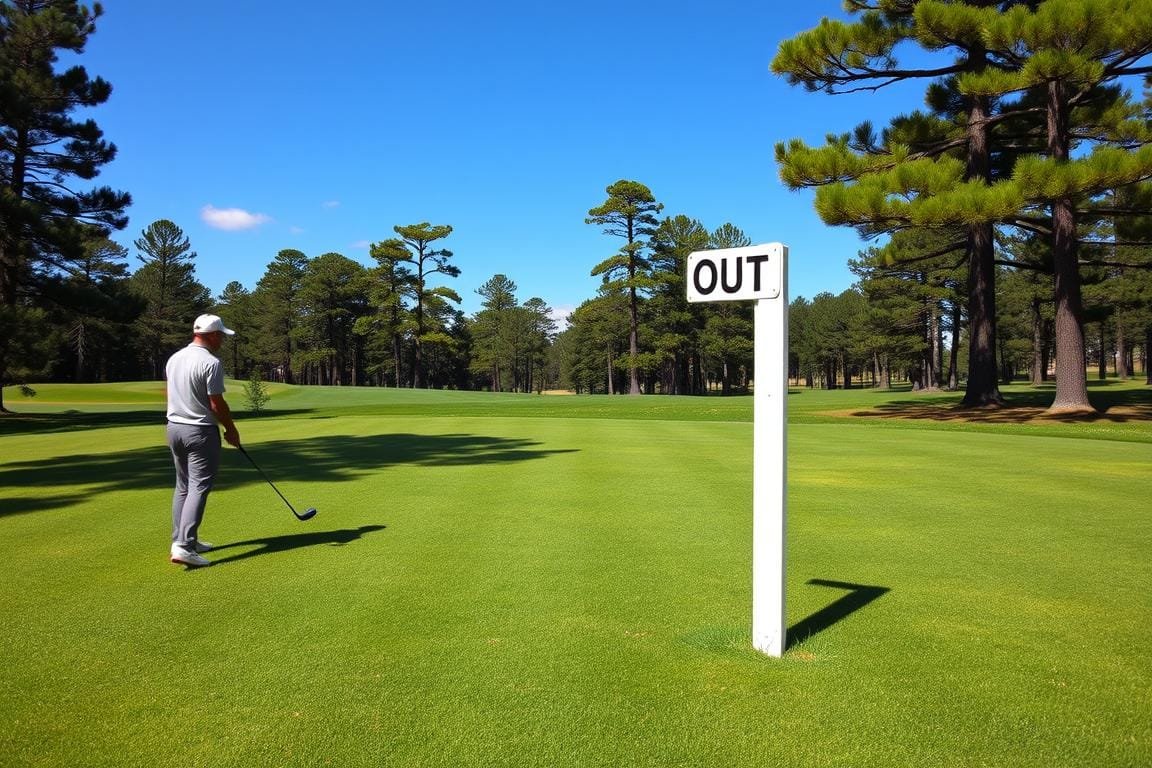
Understanding the rules of golf, particularly those concerning out of bounds (OB) areas, is crucial for any golfer looking to improve their game and avoid unnecessary penalties.The USGA defines out of bounds by white stakes,…
The electric vehicle market is experiencing rapid growth, with the Advanced EV Advent being a notable contender in the golf cart segment.This innovative vehicle boasts a powerful 5.3 HP AC Electric engine, providing a smooth…