Callaway Chrome Soft vs Supersoft: Which Ball Wins?
24 September, 2026Logan Hart0 Comments1 category
Two balls sit on the same shelf at your local pro shop for £39.99 and £26.99, and most golfers grab one purely on reputation. That’s the wrong way round. The callaway chrome soft vs supersoft question isn’t about which ball is “better” — it’s about which one matches how fast you actually swing.
Get that match wrong and you’ll lose distance, spin the ball the wrong way, or pay extra for performance you can’t use. Get it right and you’ll see it on the scorecard within a few rounds.
Compression and Construction: The Real Difference Between These Two Balls
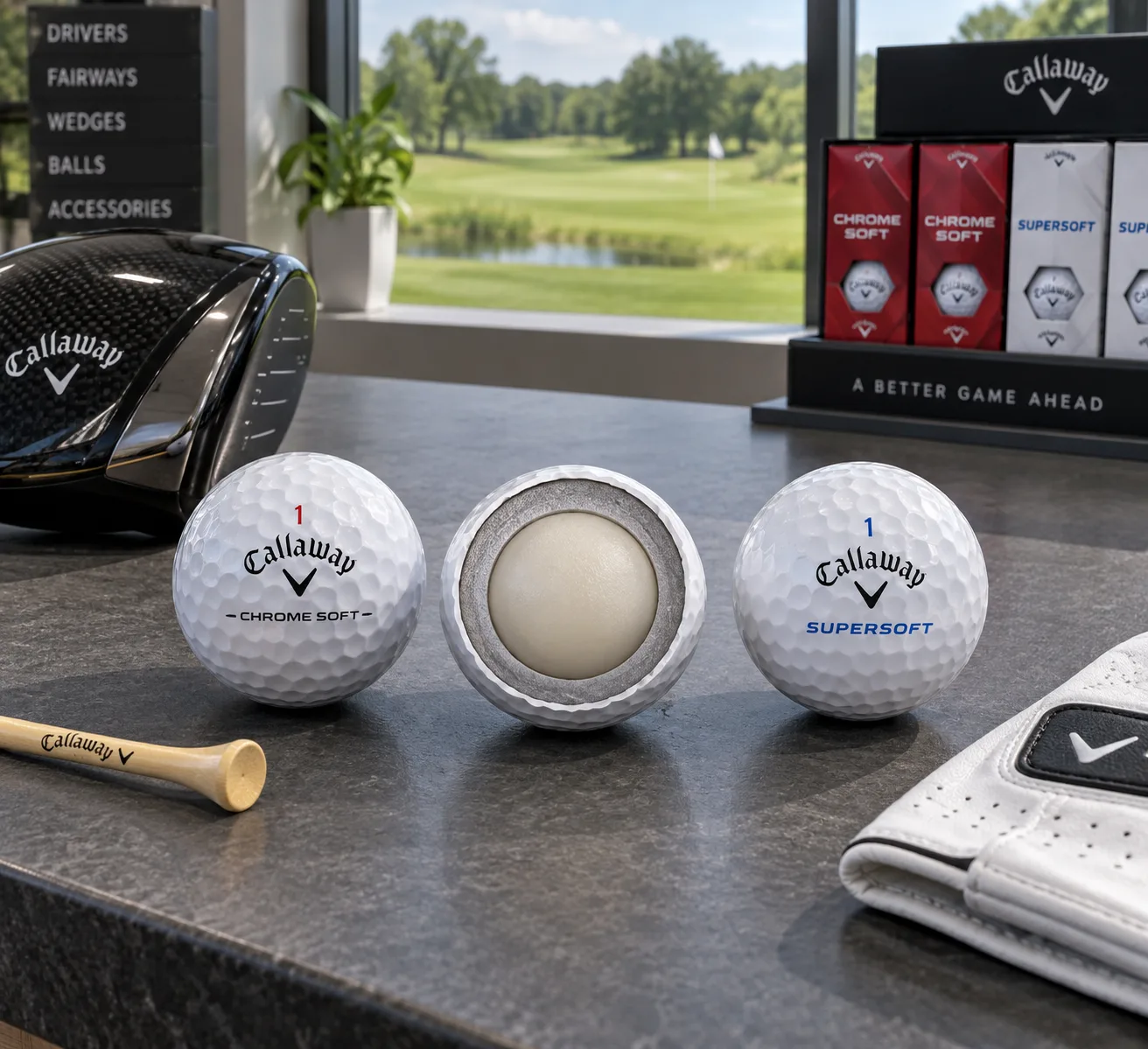
Chrome Soft is a premium four-piece ball built for players who generate real clubhead speed and want to shape shots. Supersoft is a two-piece ball designed around one goal: get slower swingers more distance with less effort and straighter flight.
Chrome Soft’s Layered Build
Chrome Soft uses a soft Dual SoftFast Core, an HEX Aerodynamics dimple pattern, and a urethane cover. That urethane cover is what gives it wedge grip and greenside stopping power. Compression sits in the mid-70s, which reads as soft off the putter but responds with real spin once you’re swinging over roughly 95mph with a driver.
Supersoft’s Two-Piece Simplicity
Supersoft strips things back. One large low-compression core (around 38 on the compression scale) wrapped in an ionomer cover. There’s no urethane, so it won’t grip a wedge the same way, but it compresses fully even at 70-80mph swing speeds, which is where a lot of weekend players and higher-handicap golfers actually live.
This is where the common myth falls apart. People assume “soft” always means “spinny.” It’s the opposite here — Supersoft’s low compression and ionomer cover actually reduce sidespin, which is why it flies straighter for players who slice or hook under normal-compression balls.
Which Swing Speed Suits Which Ball?
Your driver swing speed decides this, full stop. Under 90mph, Chrome Soft won’t compress properly and you’ll lose ball speed off the tee. Above 100mph, Supersoft can balloon and spin out, costing you both control and distance.
Golfers assume low-compression balls are “for beginners” only. That’s wrong. A skilled player with a smooth, slower tempo — plenty of low-handicap seniors fit this — gets more out of Supersoft’s compression match than out of Chrome Soft’s short-game spin, because they never generate enough speed to activate that spin anyway.
Here’s a rough guide based on typical driver swing speeds:
Swing Speed (Driver)
Better Fit
Why
Under 85mph
Supersoft
Low compression fully activates, adds ball speed
85-95mph
Either, test both
Overlap zone, feel preference decides
95-105mph
Chrome Soft
Compression matches, spin control kicks in
Over 105mph
Chrome Soft
Full compression, urethane holds up to speed
If you’re not sure where you land, a simple launch monitor session at a driving range or fitting bay (many UK golf retailers like American Golf offer this) will tell you in ten minutes, no guessing required.
Greenside Control and Feel Off the Club
Chrome Soft wins short game control outright — there’s no debate here. The urethane cover grips grooves on wedge shots, letting you spin the ball back on the green or hold a pitch shot tight to the pin. Supersoft’s ionomer cover releases off the clubface with far less friction, so it rolls out more and won’t stop as sharply.
Feel is where things get personal, and specs only tell half the story. Some players find Chrome Soft’s response off the putter face too soft and “dead,” while others love the muted click. Supersoft feels firmer at address but softer on full swings for slower-speed players, which surprises a lot of first-time testers.
Distance off the tee follows the compression story again. Slower swingers typically pick up 5-10 yards with Supersoft simply because the ball compresses properly at impact. Faster swingers see the reverse: Chrome Soft holds its flight better in wind and gives more workability off the tee.
Price, Handicap Fit, and What Golfyet Recommends
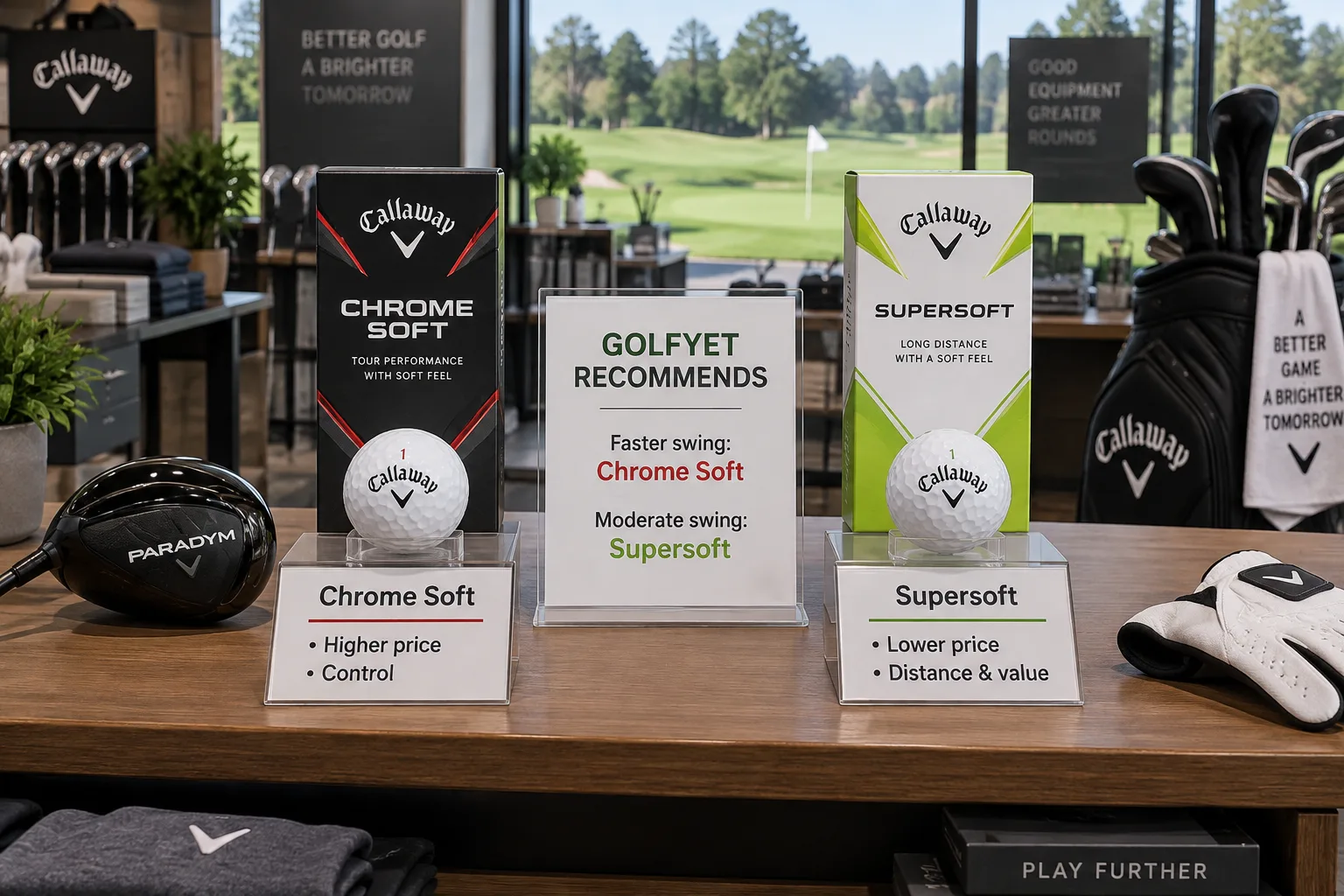
Chrome Soft costs around £44.99 per dozen; Supersoft runs about £29.99 per dozen. That gap matters over a season, especially if you lose three or four balls a round.
Work out your typical driver swing speed (range fitting, app, or rough estimate from carry distance).
If you’re under 90mph or a mid-to-high handicapper who slices often, start with Supersoft.
If you’re over 95mph or you play a lot of wedge and bunker shots inside 100 yards, go Chrome Soft.
Buy one dozen of each if you’re on the fence — testing beats spec-reading every time.
Play nine holes with each ball on the same course, same conditions, and compare scores and feel.
Check spin on chips and pitches specifically, since that’s where the covers differ most.
Reassess every year or two, since swing speed changes with fitness, age, and technique work.
For readers who want a wider comparison across the whole Callaway lineup — Chrome Soft X, Supersoft Max, and the rest — golfyet.com runs a fuller breakdown of how each model fits different swing profiles. Don’t assume the popular ball is the right ball for your bag; match the compression to your speed first, then worry about brand loyalty.
Frequently Asked Questions
Is Supersoft a cheaper, lower-quality version of Chrome Soft?
No. Supersoft isn’t a budget Chrome Soft — it’s built for a different swing profile entirely, using low compression and an ionomer cover to help slower swingers gain distance and control spin, not just to cut costs.
Can a low-handicap golfer play Supersoft?
Yes, if their swing speed is on the slower side. A smooth-tempo low-handicapper under 90mph often gets more distance and equal accuracy from Supersoft than from a premium ball their speed can’t fully compress.
Does Chrome Soft always spin more than Supersoft?
Only for players fast enough to activate it. Below roughly 90mph, Chrome Soft’s urethane cover and core barely engage, so spin and control advantages disappear and Supersoft can actually perform better around the green.
Golf is a game of precision and respect, and the use of a golf cart is an integral part of the experience for many players.The way you operate your cart can significantly impact the condition…
Bethpage Black Golf Course sits on Long Island, New York, and it doesn't pretend to be friendly. Before you even pull a club, a sign at the first tee tells you exactly what you're in…
The Skins game is an exciting betting format in golf that adds a competitive edge to each round.Players compete to win 'skins' based on their scores on individual holes, introducing a strategic element to the…