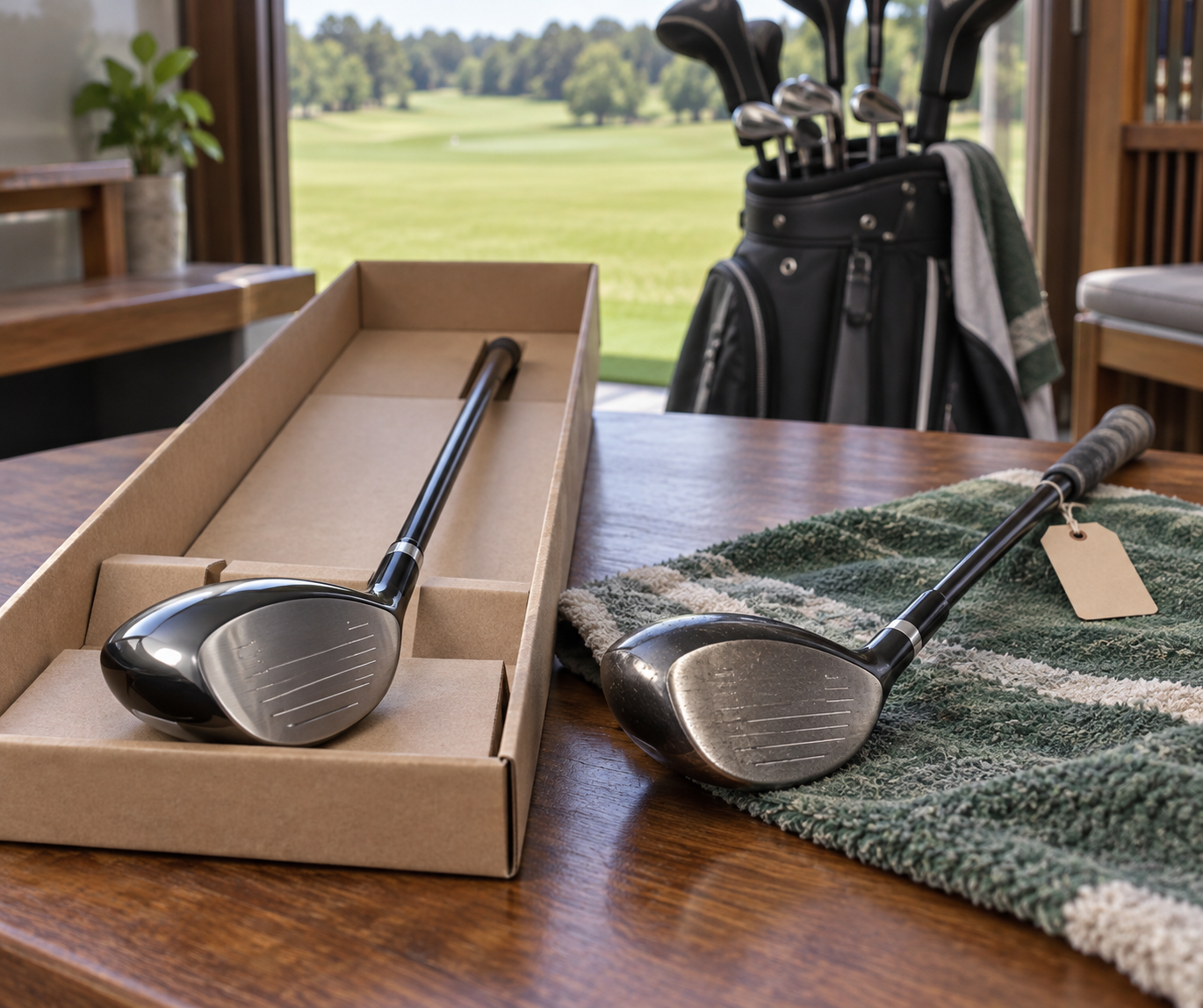
A 7 wood is a fairway wood with about 20-21 degrees of loft, sitting between a 5 wood and a hybrid. It launches the ball high and lands softly. That makes it a smart pick if you struggle with long irons or want an easier club from the fairway or light rough. The real question is not whether a 7 wood is trendy. It is whether it fills a yardage gap in your bag. Here are seven ways to decide.
Where a 7 wood earns its place
1. Replacing a 4 or 5 iron: best for easier height
If you hit your 4 iron low and short, swap it for a 7 wood. The extra loft gets the ball airborne with less effort, and the shaft is shorter than on a 3 wood, so contact feels more controlled. Replace long irons first, not your short irons. A 7 wood at about 21 degrees usually covers the job a 4 iron does for a mid-handicapper, with a steeper landing angle that holds greens better.
2. Replacing a hybrid: best when you need a higher flight
A 7 wood suits you if your hybrid flies low or hooks. The wood has a larger head and launches higher, so shots stop faster. Keep the hybrid if you like it from tight lies or want a lower, running shot. Choosing between the two comes down to ball flight and your gaps. If you want a second opinion on a specific model, you can send the Golf Yet team a question about it.
3. Playing from light rough: best for escaping grass
The rounded sole of a fairway wood glides through light rough where a long iron digs in. A 7 wood adds loft on top, so the ball climbs out of the grass and still travels a useful distance. In thicker rough, use a wedge or short iron instead. Even a 7 wood will twist if the grass wraps the hosel (where the shaft meets the head).
How a 7 wood compares with a 3 wood and a 5 wood
4. The 3, 5 and 7 wood compared: best for seeing the gaps
Lofts vary by brand, so judge by degrees and yardage, not the number on the sole. Fairway woods run from about 13 to 27 degrees overall. These figures are typical, and carry depends on your swing speed.
Club
Typical loft
Shaft length
Best job
3 wood
15°
Longest
Tee shots, long par 5s
5 wood
18°
Medium
Long approaches, tee
7 wood
21°
Shorter
High, soft landings
The big difference is that a 5 wood typically goes up to 30 yards further than a 7 wood. If your 5 wood carries 190 yards, expect roughly 160-170 from a 7 wood.
5. Gapping the bag: best for avoiding duplicate clubs
Add a 7 wood only after checking the yardage to the clubs on either side. Aim for 10-15 yards between clubs. If your 7 wood carries 165 yards and your 5 iron goes 160, you have a duplicate. Use these steps:
Hit ten shots with your longest working club and note the average carry.
Do the same with your 5 wood and your hybrid.
Test a 7 wood with a loft of 20-22 degrees.
Drop the club it overlaps with.
Check each gap is 10-15 yards.
Who should carry one and what to buy
6. Who benefits: best for slower swings and higher handicaps
A 7 wood helps players with slower swing speeds, because loft adds carry that speed would otherwise provide. Beginners, seniors and higher handicappers gain most. But it is not only for them. Tommy Fleetwood and Dustin Johnson have both carried one in major events. One limit: don’t treat it as a driver substitute. You can tee it up on a short par 3 or tight par 4, but you will give away a lot of distance on longer holes.
7. Buying new or pre-owned: best for saving money
Pre-owned is a smart route, because fairway woods lose value fast. Recent used listings from specialist retailers show a Callaway Paradym Ai Smoke Triple Diamond 7 wood at about £200 and a PXG 0311 XF Gen6 at about £140. Used Titleist GT2 and GTS 2 7 woods run above £330. For new models, look at TaylorMade, Callaway, Ping, Titleist and Cobra. The TaylorMade Qi4D Max, for example, has a 21-degree 7 wood. These are October 2026 listing prices, so check current stock. Buy a stiff or regular shaft to match your swing, and ask for a loft you can check.
Frequently Asked Questions
What loft is a 7 wood?
Most 7 woods sit between 20 and 22 degrees, with some ladies’ models closer to 25 degrees. Loft varies by brand, so check the number on the head and the gap to your next club.
How far should I hit a 7 wood?
Many amateurs carry a 7 wood roughly 150-185 yards, depending on swing speed. It typically lands 20-30 yards short of a 5 wood, so test it on a launch monitor or at the range.
Can you hit a 7 wood off the tee?
Yes. A 7 wood works well off a tee on short par 3s and tight par 4s, where accuracy matters more than length. It is not a replacement for your driver or 3 wood on long holes.
Lee Trevino learned golf hitting balls with a Dr Pepper bottle wrapped in tape, on a dirt-poor course outside Dallas, and grew up to beat Jack Nicklaus in an 18-hole playoff at the 1971 U.S.…
Harbour Town Golf Links opened in 1969 on Hilton Head Island, South Carolina, and it immediately changed how designers thought about what a great golf course could be. It's not long. It's not wide open.…
Every April, one tournament stops the golf world cold. If you're searching for when is the golf masters in 2026, the answer is April 6–12 at Augusta National Golf Club in Augusta, Georgia. That's the…