A brand-new set of Titleist irons can run past $1,200 before you’ve hit a single ball. That’s the reality of shopping for golf clubs right now, and it’s exactly why so many people freeze up the moment they walk into a pro shop or open a gear website. Golf clubs are the tools of the whole game, but the “right” set has almost nothing to do with the most expensive one on the rack.
This guide walks through what actually matters when buying golf clubs: sets versus half-sets, top brands worth your money, fitting basics like shaft flex, and when skipping a full purchase entirely is the smarter move.
Key Takeaways
A full set has 14 clubs max; beginners often only need 8-10 to start.
Renting or buying used clubs first can save $300-$800 before your swing settles.
Shaft flex and length affect accuracy more than brand name does.
Callaway, TaylorMade, Titleist, Ping, and Cobra dominate the market for good reason, but fit matters more than logo.
Left-handed golfers should never buy a right-handed set “to save money.”
A cheap fitting session (often free in-store) beats guessing at online sizing charts.
What’s Actually in a “Set” of Golf Clubs?
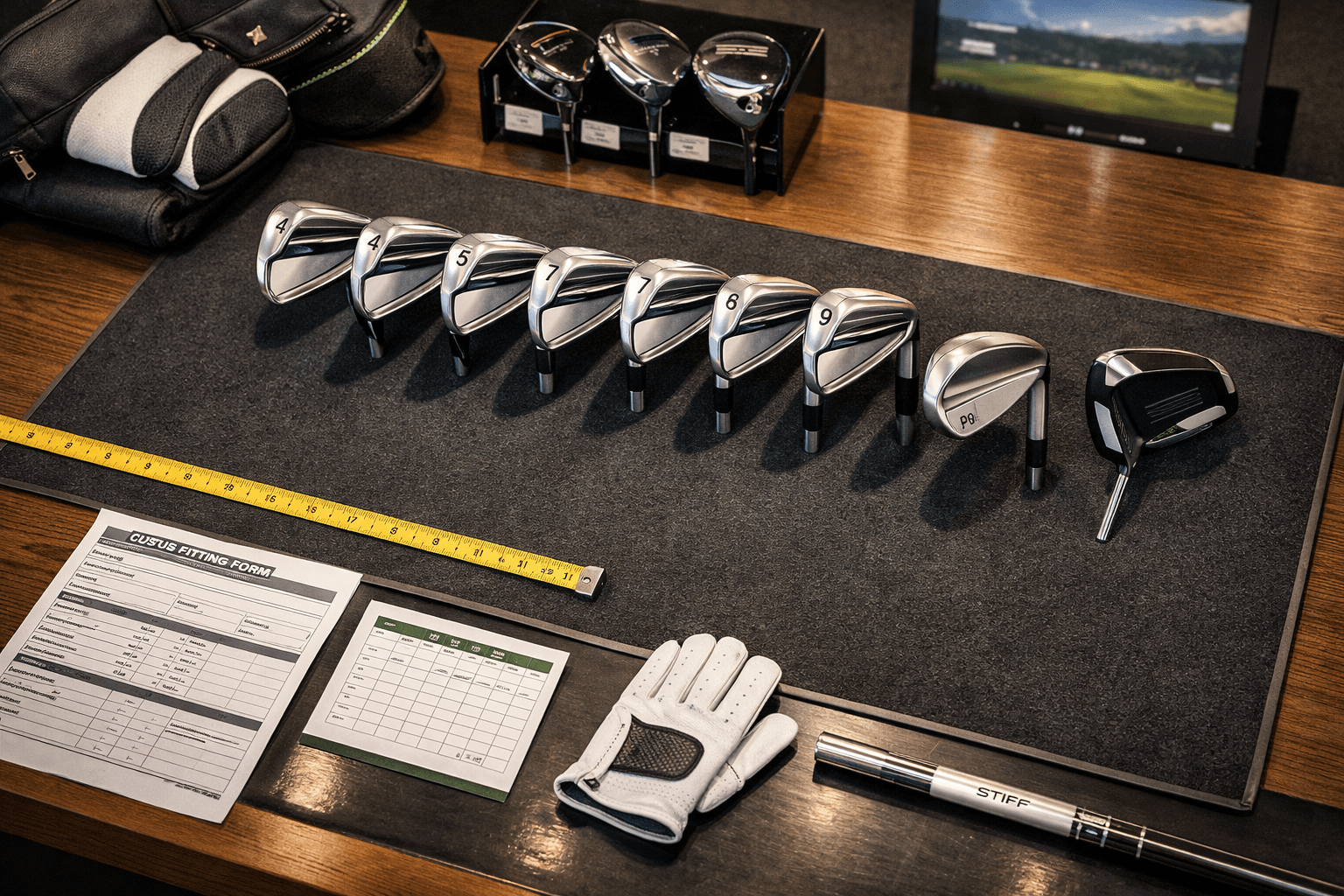
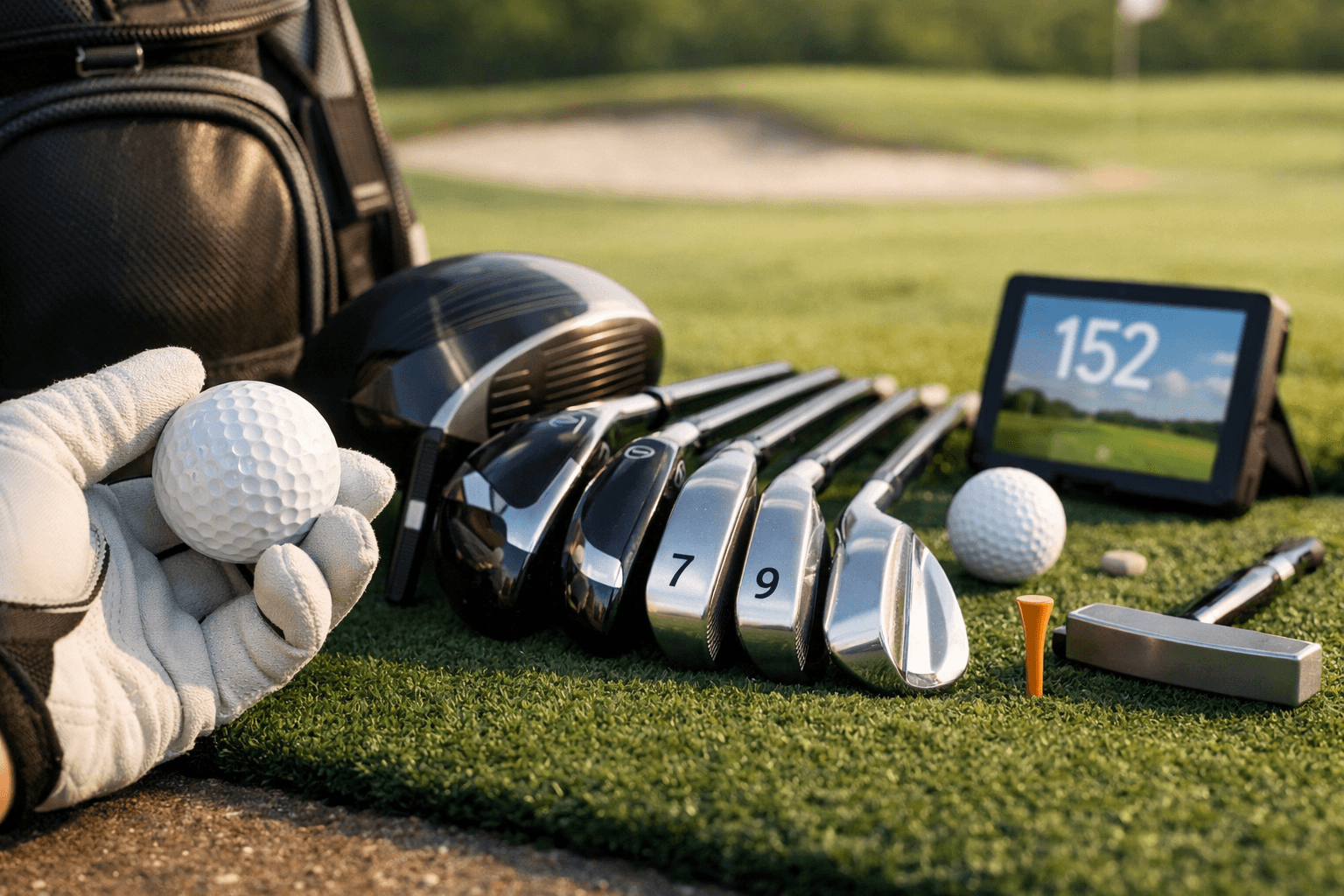
A complete golf club set typically includes a driver, a few fairway woods, hybrids, a run of irons (usually 4-iron through 9-iron or pitching wedge), a sand wedge, and a putter. The USGA caps the total at 14 clubs, and most manufacturer sets land between 11 and 14 pieces.
That said, “complete” doesn’t mean “necessary.” A lot of beginner sets pad the box with clubs you won’t touch for a year, like a 3-iron that’s brutally hard to hit well until your swing speed and contact improve.
The Standard Breakdown
Here’s what a typical box set from a brand like Callaway or Cobra includes: driver, 3-wood, one or two hybrids, irons from 5 through 9, a pitching wedge, a sand wedge, and a putter. Some throw in a bag. That’s roughly 10-11 clubs, which is plenty for someone learning the game.
Why Fewer Clubs Can Work Better
Fewer clubs means fewer decisions on the course. A beginner staring down 14 options in the bag often freezes over club selection instead of just swinging. Trimming to 8-10 clubs — driver, one hybrid, 6 through 9 irons, a pitching wedge, and a putter — covers almost every shot a new golfer faces on a normal course.
Long irons like the 3 and 4 are the hardest clubs in the bag to hit consistently well. Cutting them from a starter bag isn’t a compromise; it’s practical.
Should Beginners Even Buy a Full New Set?
No, not right away. Most golfers improve faster and spend less money by renting clubs, buying a used or half-set, or borrowing gear for the first 10-20 rounds before committing to a full retail set.
This is the piece most gear guides skip, and it matters more than which brand you pick.
Renting First
Almost every public course rents clubs for $15-$40 a round. If you’re not sure golf is going to stick, that’s a far better bet than dropping $400 on a set that sits in a garage after three outings. Driving ranges and simulator lounges also rent by the hour, which is a low-stakes way to feel out different clubs before buying anything.
Buying Used or a Half-Set
Used clubs from a couple seasons back can be 40-60% cheaper than new, and the technology gap between a 2021 iron and a 2024 iron is small compared to the gap between a fitted club and an unfitted one. A half-set (7-8 clubs) from a secondhand shop or a marketplace listing often costs $100-$200 and covers everything a first-year golfer needs.
Why This Saves Money Later
Your swing changes a lot in the first year. Swing speed increases, tempo settles, and your miss pattern shifts as you get reps in. Buying a $900 premium set before any of that stabilizes means you’re fitting the clubs to a swing that won’t exist in six months. Wait until you’ve played 20-30 rounds, then buy once, buy right.
A golf club fitting matched to your swing speed, height, and posture typically changes shot dispersion more than switching brands does.
Top Golf Club Brands Worth Knowing
Five brands dominate the shelves at almost every golf retailer: Callaway, TaylorMade, Titleist, Ping, and Cobra. Each has a distinct personality, and picking one over another is less about hype and more about which fits your swing and your budget.
Callaway and TaylorMade
Both brands lean into forgiveness and distance technology, which makes them popular with mid-handicap and beginner golfers. Callaway’sRogue and TaylorMade’sStealth lines use large clubheads and perimeter weighting that help mis-hits still travel reasonably straight. These are safe picks if you’re not sure what you need yet.
Titleist and Ping
Titleist built its reputation on irons and wedges preferred by better players, though its game-improvement lines (like the T-series) have gotten friendlier to mid-handicappers. Ping is known for consistency and custom fitting options that go deeper than most brands offer off the rack, including a wide range of stock lie angles.
Cobra
Cobra sits in a sweet spot: aggressive, colorful designs (working with drivers that look almost like a departure from tradition) paired with prices often 10-20% below Titleist or TaylorMade for comparable performance. It’s a brand worth checking if you like tech but don’t want to pay a premium name tax.
Brand
Known For
Best For
Typical Full Set Price
Callaway
Distance, forgiveness
Beginners, mid-handicap
$600-$1,000
TaylorMade
Driver innovation
Mid to low handicap
$700-$1,100
Titleist
Iron and wedge precision
Better players
$900-$1,400
Ping
Custom fitting, consistency
All skill levels
$700-$1,200
Cobra
Value, bold design
Budget-conscious buyers
$500-$900
Shaft Flex and Length Matter More Than the Logo
Shaft flex controls how much the shaft bends during your swing, and it has a bigger effect on accuracy than which brand made the club. Get the flex wrong and you’ll fight a slice or hook no matter how good the clubhead is.
Most shafts come in five flex categories: extra stiff, stiff, regular, senior (sometimes called “A-flex”), and ladies. Faster swing speeds need stiffer shafts to control the clubface; slower swings need more flex to load and release energy properly.
Matching Flex to Swing Speed
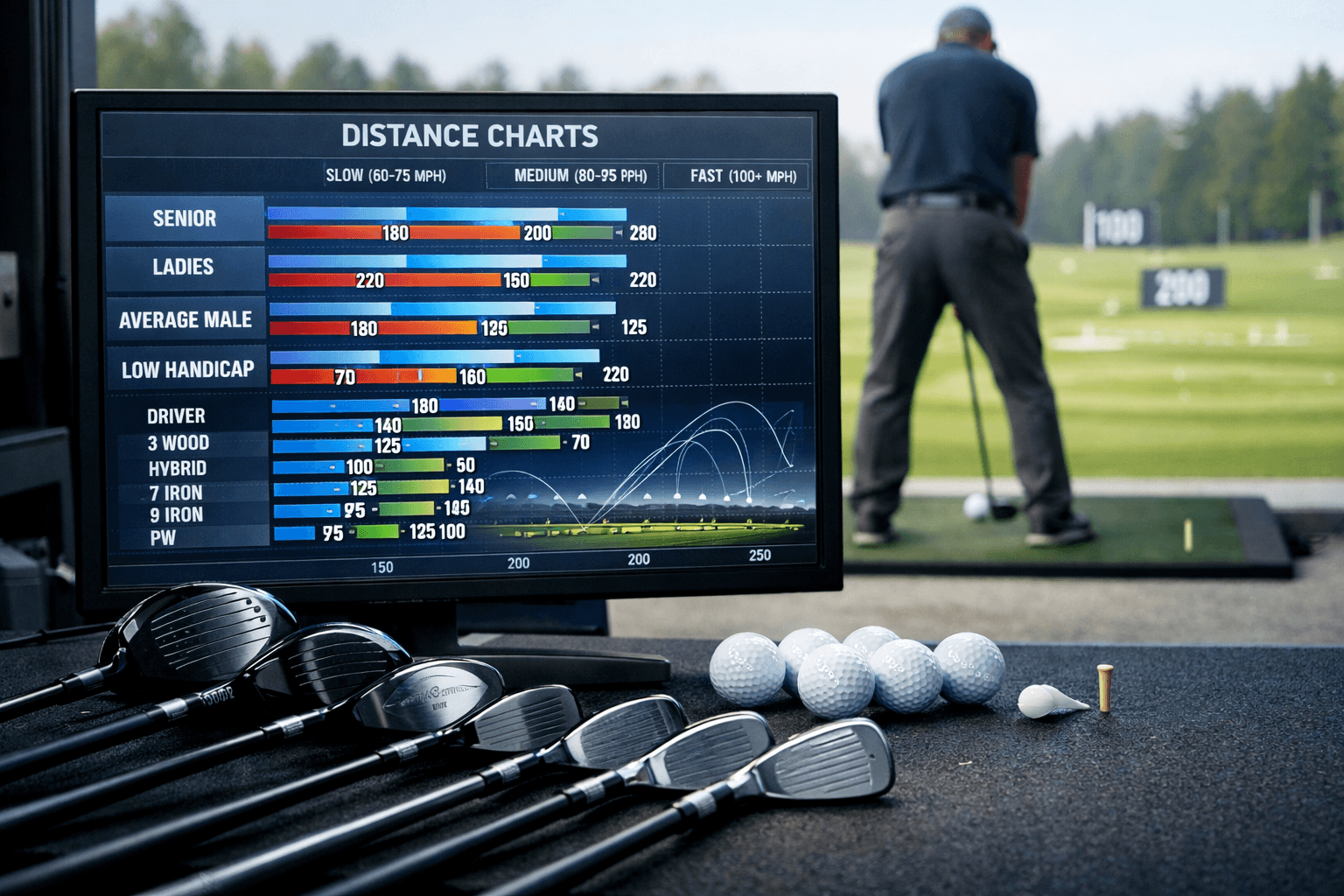
As a rough guide, driver swing speeds under 75 mph usually pair best with senior or regular flex, 75-95 mph fits regular to stiff, and anything above 95 mph often calls for stiff or extra stiff. These numbers vary by manufacturer, but they’re a reasonable starting point if you don’t have access to a launch monitor.
Club Length and Lie Angle
Length matters just as much. Standard men’s irons run around 37-38 inches for a 7-iron, but golfers over 6’2″ or under 5’6″ often need custom lengths to keep the clubhead flat at impact. A lie angle that’s off by even a few degrees can push shots consistently left or right, and that’s a fixable problem most golfers never think to check.
Do You Need a Professional Club Fitting?
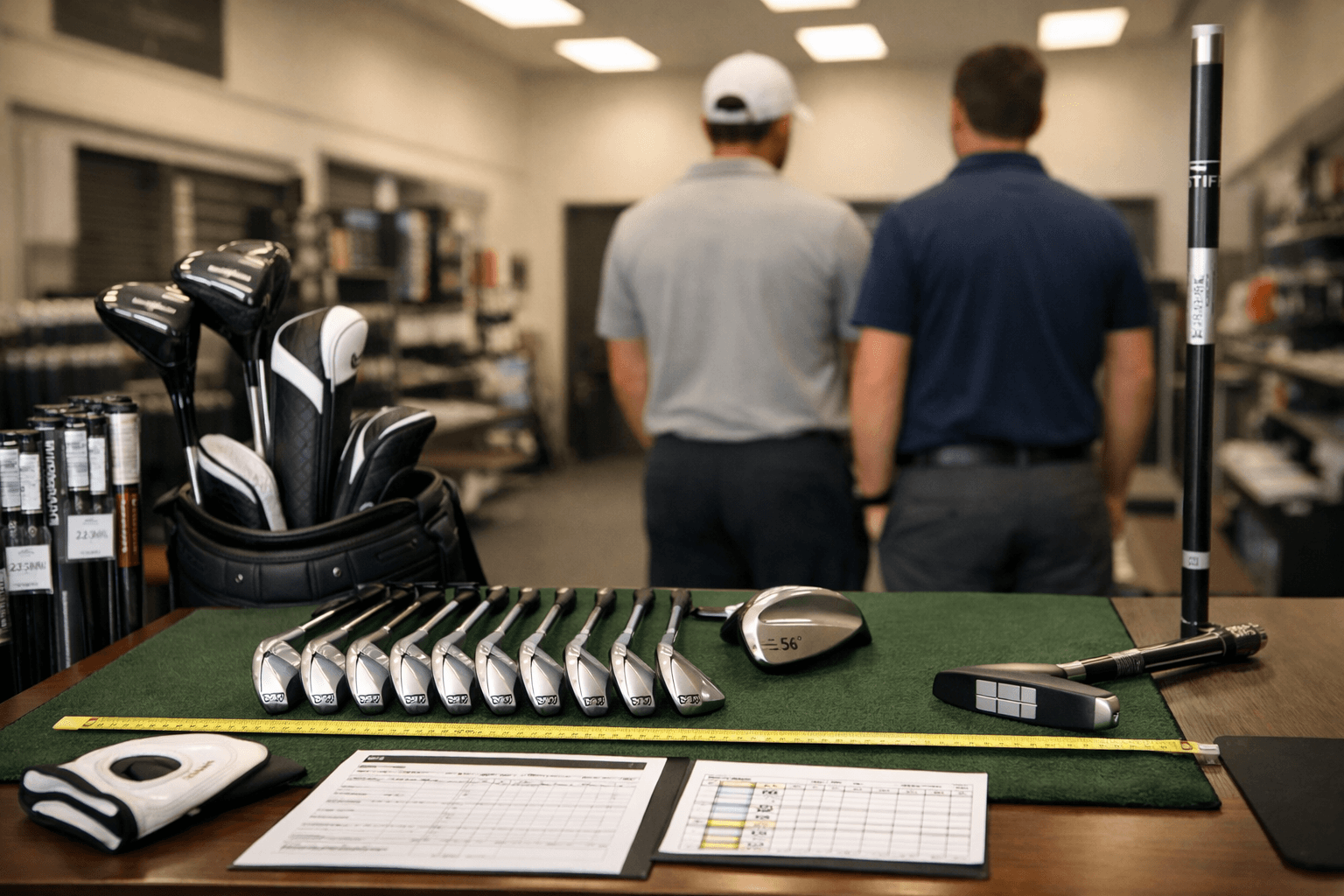
Yes, if you’re spending more than $300 on a set, a fitting is worth the hour it takes. Most golf retailers, including big chains, offer free or low-cost fittings ($50-$100, often credited toward a purchase) that measure swing speed, launch angle, and spin using a simulator.
Skipping this step is one of the most common — and costly — mistakes new buyers make.
What Happens During a Fitting
A fitter watches you hit shots with different shaft flexes, lengths, and clubhead designs while a launch monitor tracks ball speed, spin rate, and launch angle. The process usually takes 45-90 minutes for a full bag and can be done for just a driver if that’s all you’re testing.
What a Fitting Actually Fixes
Confirms the right shaft flex for your actual swing speed, not a guess.
Sets correct club length so your posture at address is neutral.
Adjusts lie angle to square the clubface at impact.
Identifies grip size, which affects hand action through the swing.
Flags whether you’re better served by a hybrid instead of a long iron.
Reveals your real ball speed and carry distance per club, useful for club selection on the course.
For readers who want a simple explainer on how to prep for a fitting session before spending money, golfyet.com has a beginner breakdown that walks through what to expect step by step.
Left-Handed vs. Right-Handed Clubs: Don’t Cut Corners Here
Left-handed golfers need left-handed clubs, full stop. Trying to “make do” with right-handed clubs because they’re cheaper or more available almost always backfires, since it forces an unnatural swing pattern from day one.
This sounds obvious, but it’s a real problem in the used market and at big-box retailers.
Why Selection Is Thinner for Lefties
Roughly 10% of golfers play left-handed, and inventory reflects that. Left-handed sets are harder to find used, often cost slightly more new, and get discontinued faster when a brand refreshes a model line. If you’re left-handed and see a good deal on a lefty set from Ping or Cobra, it’s worth grabbing before it disappears.
Checking Before You Buy
Always confirm handedness on the product listing before checkout, especially with box sets that sometimes bundle both options under one product page. A wrong-handed set isn’t something you can fix with a repair shop visit; it’s a return-and-reorder situation, and return shipping on a full set of clubs isn’t cheap.
Budget vs. Premium Sets: What You’re Actually Paying For
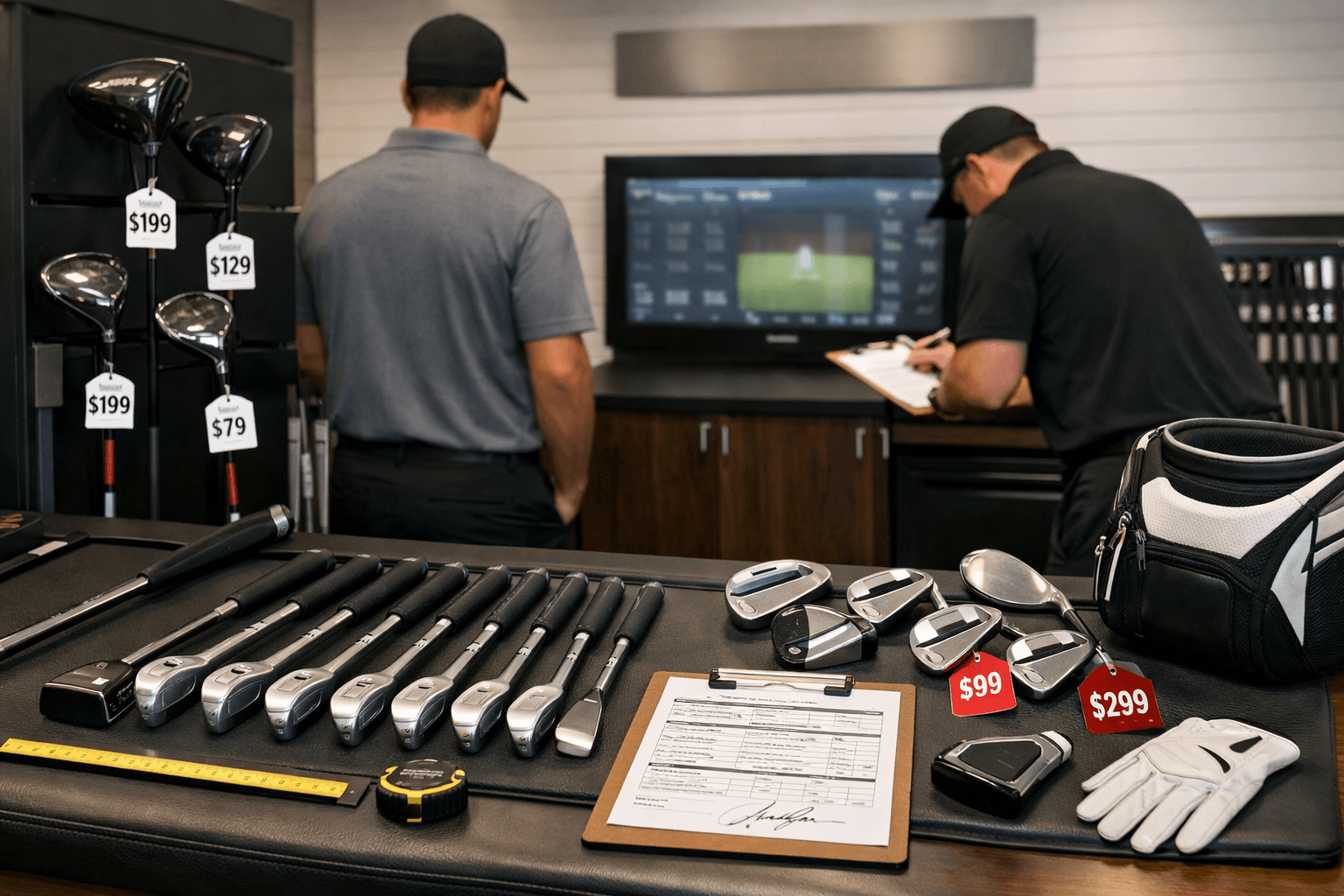
A $500 box set and a $1,300 premium set aren’t separated mainly by performance ceiling; they’re separated by material quality, adjustability, and how forgiving the clubface is on off-center hits. More expensive doesn’t automatically mean better for your specific swing.
Budget sets from brands like Wilson or entry lines from Cobra use cast clubheads and simpler shaft materials, which keep costs down but also cap how much you can fine-tune the feel. Premium sets from Titleist or Ping often use forged irons, multi-material construction, and adjustable hosels on drivers that let you tweak loft and face angle by a couple degrees.
When Budget Makes Sense
If you’re still working on consistent contact, the tighter forgiveness window of a premium forged iron won’t help you yet. A cast, cavity-back iron from a budget set is more forgiving on the mis-hits you’re still making regularly, and it costs a fraction of the price.
When Premium Pays Off
Once you’re breaking 90 consistently and shaping shots on purpose, the extra control from premium clubs starts to show up on the scorecard. That’s usually the point where a proper fitting and a step up in clubhead quality make a measurable difference, not before.
Frequently Asked Questions
How many golf clubs do I actually need to start?
Start with 8-10 clubs: a driver, one hybrid, irons from 6 through 9, a pitching wedge, and a putter. Add long irons and extra wedges once your contact gets consistent, usually after a season of regular play.
Is it better to buy used golf clubs as a beginner?
Yes, in most cases. Used clubs cost 40-60% less than new and perform nearly the same for learning-stage golfers, since technology gaps between recent model years are small compared to fitting gaps.
How much should a beginner spend on their first set of golf clubs?
Plan on $150-$400 for a used or entry-level half-set. Skip anything over $600 until you’ve played at least 20 rounds and know your swing speed and typical miss pattern.
Does shaft flex really make that big a difference?
Yes. A shaft flex mismatched to your swing speed causes real accuracy problems, often more than switching between brands like Callaway and TaylorMade would. A regular-flex shaft on a 105 mph swing speed, for example, tends to produce a weak, ballooning ball flight.
A 90 mph swing speed hits a driver about 220 to 230 yards. A 105 mph swing speed clears 280. That gap explains more about your golf game than your age or gender ever will,…
You shot 82 last Saturday, your best round of the year, and your Handicap Index barely moved. That's not a glitch in the GHIN app. That's the soft cap quietly doing its job, and it's…
A brand-new driver with a 460cc head and 12 degrees of loft will save your ego more than any lesson in your first six months of golf. That's the truth nobody tells new golfers at…